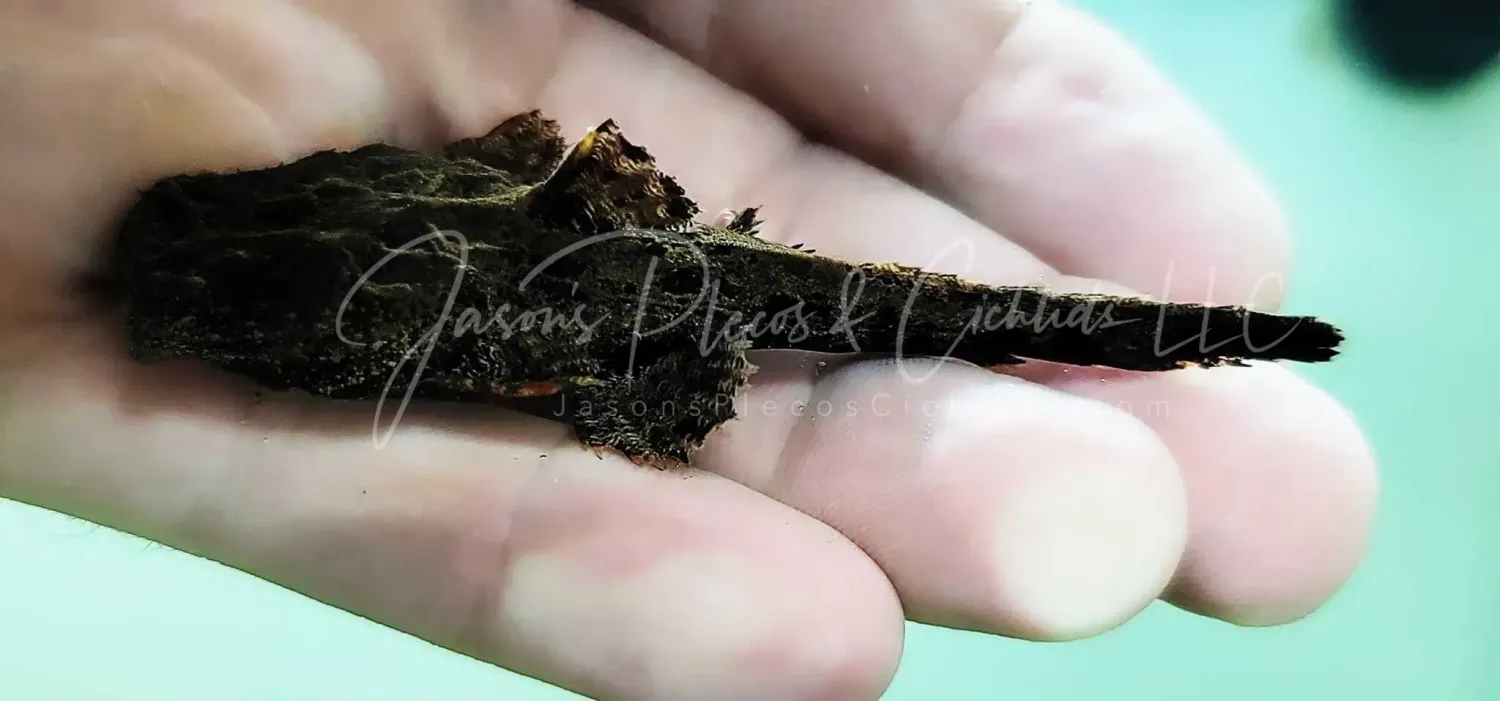
Frogmouth Catfish - (Chaca chaca)
$30.00
Sold out
was $50.00 Save 40%
Size
Price of shipping is not included.
Sold out
Save this fish to my favorites.
Customer reviews
Reviews only from verified customers
No reviews yet. You can buy this product and be the first to leave a review.
Frogmouth Catfish - (Chaca chaca)
Fish Details, Description and Information Below:
🐟 Frogmouth Catfish – (Chaca chaca) – Rare Asian Ambush Catfish
The Frogmouth Catfish (Chaca chaca) is one of the most unusual freshwater catfish available in the aquarium hobby. Known for its enormous flattened head, extremely wide mouth, rough leaf-like appearance, and incredible camouflage, this species is a specialized ambush predator that spends much of its time motionless on the aquarium bottom waiting for prey to approach.
Native to parts of South and Southeast Asia, the Frogmouth Catfish naturally inhabits rivers, canals, ponds, and other slow-moving freshwater habitats where soft substrate allows it to remain concealed.
Its strange appearance and fascinating hunting behavior make it an excellent oddball species for experienced aquarists who understand its specialized feeding and tankmate requirements.
🔎 Quick Facts – Frogmouth Catfish
- 📛 Common Name: Frogmouth Catfish, Squarehead Catfish
- 🔬 Scientific Name: Chaca chaca
- 🐟 Family: Chacidae
- 🌍 Origin: South and Southeast Asia
- 💧 Water Type: Freshwater
- 📏 Maximum Documented Size: Approximately 8 inches / 20 cm
- 🏠 Recommended Aquarium: 30+ gallons
- 🌡️ Temperature: Approximately 72–79°F
- 💧 pH: Approximately 6.0–8.0
- 🍽️ Diet: Carnivorous
- 😈 Temperament: Predatory but generally sedentary
- 🌙 Behavior: Bottom-dwelling ambush predator
- ⭐ Care Level: Intermediate to Advanced
- 🎯 Special Feature: Extraordinary camouflage and extremely wide predatory mouth
👀 One of the Strangest Catfish in the Hobby
The Frogmouth Catfish looks very different from a typical aquarium catfish.
Its body is adapted for remaining nearly invisible against the aquarium bottom.
Distinctive features include:
- Extremely broad, flattened head
- Large frog-like mouth
- Small eyes
- Rough-textured body
- Brown and mottled coloration
- Leaf-like camouflage
- Short, stocky body shape
When resting among leaves, wood, and substrate, this fish can be surprisingly difficult to see.
🎯 Specialized Ambush Predator
Rather than actively chasing prey through the aquarium, Chaca chaca relies heavily on camouflage.
The fish typically remains nearly motionless on the bottom until potential prey comes within striking distance.
Its enormous mouth allows it to rapidly engulf appropriately sized prey.
Because of this feeding strategy, small fish should never be considered safe tankmates.
If another fish can fit into the Frogmouth Catfish's mouth, it should be considered potential food.
📏 Adult Size
FishBase documents a maximum total length of approximately:
8 INCHES / 20 CM
Although it is not an exceptionally long catfish, its very broad head and large mouth make it a substantial fish for its length.
Aquarium planning should therefore consider its overall body mass and predatory behavior, not just its length.
🏠 Aquarium Size
We recommend:
30+ GALLONS
for an individual specimen, with larger aquariums preferred when keeping compatible tankmates.
An aquarium for this species should prioritize:
- Bottom space
- Soft substrate
- Hiding areas
- Low-stress surroundings
- Stable water quality
Because the Frogmouth Catfish is relatively sedentary, it does not require a large amount of open swimming space, but adequate floor space is important.
🪵 Aquarium Setup
A natural-style aquarium works particularly well for this species.
Recommended furnishings include:
- Fine sand or another soft substrate
- Driftwood
- Leaf litter
- Smooth rocks
- Shaded areas
- Caves or covered resting areas
- Moderate to subdued lighting
A soft substrate is especially appropriate because wild Chaca chaca are known to conceal themselves in soft bottom material.
Avoid sharp substrate or decorations that could damage the fish while it rests or buries itself.
💧 Water Parameters
A practical aquarium range is:
- 🌡️ Temperature: Approximately 72–79°F
- 💧 pH: Approximately 6.0–8.0
- ☠️ Ammonia: 0 ppm
- ☠️ Nitrite: 0 ppm
- 🔄 Nitrate: Keep controlled through routine maintenance
Stable, clean water is more important than trying to maintain one exact pH value.
💨 Filtration & Water Movement
Provide reliable biological filtration while avoiding excessively powerful flow directly across the bottom.
The Frogmouth Catfish naturally spends much of its time resting in calmer areas.
Good aquarium maintenance should include:
- Regular water changes
- Removal of uneaten food
- Substrate cleaning when necessary
- Consistent filtration
- Monitoring ammonia and nitrite
Because this fish may remain motionless for long periods, low activity should not automatically be mistaken for illness.
🍽️ Diet
The Frogmouth Catfish is a specialized carnivore.
Suitable foods may include:
- Appropriate frozen fish foods
- Earthworms
- Shrimp from safe sources
- Other aquatic invertebrates
- Suitable meaty foods
- Appropriately sized whole prey items
Some individuals may initially be reluctant to accept prepared foods, particularly newly imported or wild-caught specimens.
Patience may be required while transitioning the fish to suitable captive foods.
Avoid routinely using feeder fish because they may introduce:
- Parasites
- Disease
- Nutritional deficiencies
A varied diet from safe sources is preferred.
😈 Behavior & Temperament
The Frogmouth Catfish is generally not an aggressive fish in the traditional territorial sense.
However, it is a:
PREDATORY AMBUSH FEEDER
This distinction is important.
It may sit peacefully beside another fish for extended periods and still attempt to consume that fish if it becomes vulnerable or fits into its mouth.
The Frogmouth Catfish spends much of its time:
- Resting on the substrate
- Hiding
- Remaining motionless
- Waiting for food
- Becoming more active when feeding opportunities occur
🐟 Tankmates
Tankmates must be selected carefully.
Avoid:
- Small fish
- Slender fish
- Shrimp
- Small bottom dwellers
- Fish that can fit inside the Frogmouth Catfish's mouth
Any tankmate must be substantially too large to swallow and compatible with the same water conditions.
A species-focused aquarium is often the safest option.
Do not assume that a fish is safe simply because the Frogmouth Catfish appears inactive around it.
🌙 Natural Camouflage
One of the most fascinating behaviors of Chaca chaca is its reliance on concealment.
In nature, it may rest partially buried in soft substrate and remain almost completely motionless.
Its mottled body pattern helps it blend with:
- Mud
- Dead leaves
- Wood
- Debris
- Dark substrate
This is not an active open-water predator—it waits for prey to come to it.
🥚 Breeding
Captive breeding of Frogmouth Catfish is uncommon in the aquarium hobby.
Reliable breeding information is limited compared with many commonly kept catfish.
For most aquarists, this species should be maintained primarily for its unusual appearance and natural predatory behavior rather than as a breeding project.
⭐ Who Should Keep a Frogmouth Catfish?
This species is best suited for aquarists who:
- Enjoy unusual freshwater fish
- Understand predatory catfish
- Can provide appropriate meaty foods
- Are comfortable keeping a relatively sedentary species
- Can select tankmates carefully
- Maintain stable water quality
- Appreciate natural camouflage and ambush behavior
It is not a typical community catfish.
📦 Live Fish Shipping
Frogmouth Catfish may be shipped via UPS Next Day Air or approved airline cargo, depending on fish size, destination, weather conditions, and current shipping eligibility.
Shipping is not included in the listed fish price unless specifically stated otherwise.
Please review our current:
- Shipping & Payment Information
- Live Arrival Guarantee
- DOA Policy
- Terms & Conditions
before placing an order.
🛡️ Important Buyer Information
Please research this species thoroughly before purchasing.
Frogmouth Catfish are predatory ambush feeders with extremely large mouths relative to their body size.
Buyers are responsible for providing:
- Appropriate aquarium size
- Soft substrate
- Proper filtration
- Stable water quality
- Appropriate diet
- Safe tankmates
- Suitable hiding areas
- Any permits or ownership requirements applicable to their location
Individual fish may naturally vary in coloration, pattern, body shape, size, and behavior.
✨ Why Keep a Frogmouth Catfish?
The Frogmouth Catfish combines:
- Extreme natural camouflage
- A bizarre frog-like appearance
- Fascinating ambush-predator behavior
- Manageable adult length
- Unusual bottom-dwelling habits
- True oddball appeal
For aquarists looking for something completely different from a typical aquarium catfish, Chaca chaca is one of the most distinctive freshwater species in the hobby.
Below are fish you may also like.
Wild Caught
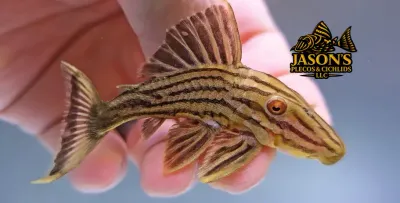
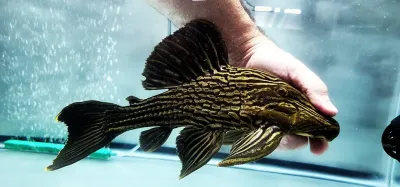
L027 Xingu Royal Pleco - (Panaque cf. armbrusteri xingu)
L027 Xingu Royal Pleco - (Panaque cf. armbrusteri xingu)
Price of shipping is not included.
$150.00
Out of stock
Captive Bred
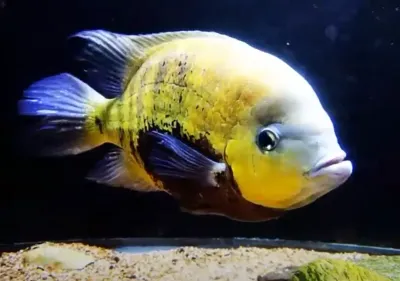
Pearsi Cichlid/Pantano Cichlid - (Cincelichthys pearsei)
Pearsi Cichlid/Pantano Cichlid - (Cincelichthys pearsei)
Price of shipping is not included.
$150.00
Out of stock
Wild Caught
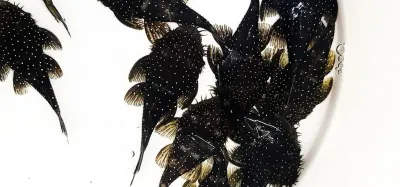
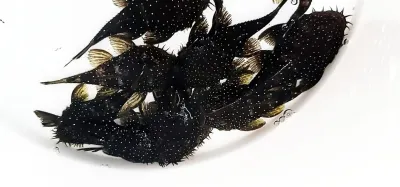
L255 Spotted Medusa Pleco - (Ancistrus sp.)
L255 Spotted Medusa Pleco - (Ancistrus sp.)
Price of shipping is not included.
$60.00
Out of stock
Wild Caught
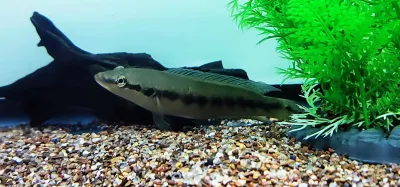
Common Pike Cichlid - (Crenicichla sp. Belly Crawler)
Common Pike Cichlid - (Crenicichla sp. Belly Crawler)
Price of shipping is not included.
$25.00
Out of stock
Wild Caught
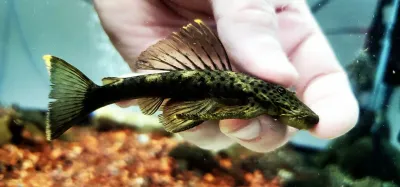
L244 Black Spotted Orinoco-Ancistrus - (Pseudolithoxus dumus)
L244 Black Spotted Orinoco-Ancistrus - (Pseudolithoxus dumus)
Price of shipping is not included.
$40.00
Out of stock
Captive Bred
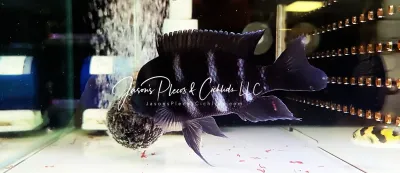
Kitumba Blue Zaire Frontosa - (Cyphotilapia frontosa)
Kitumba Blue Zaire Frontosa - (Cyphotilapia frontosa)
Price of shipping is not included.
$180.00
Out of stock
Wild Caught
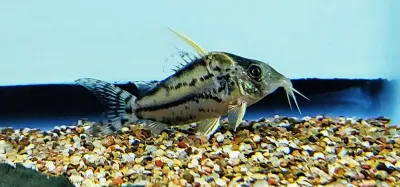
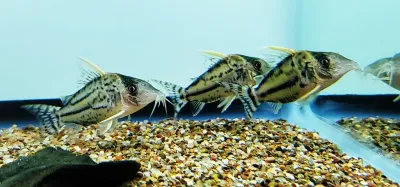
Pretty Cory - (Corydoras pulcher)
Pretty Cory - (Corydoras pulcher)
Price of shipping is not included.
$35.00
Out of stock
Captive Bred
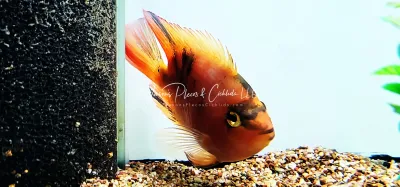
Red Tiger Parrot Cichlid - (Cichlasoma Sp.)
Red Tiger Parrot Cichlid - (Cichlasoma Sp.)
Price of shipping is not included.
was $90.00
Save 11%
$80.00
Out of stock
Wild Caught
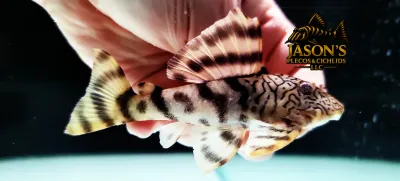
L121 Worm Line Pleco - (Peckoltia braueri)
L121 Worm Line Pleco - (Peckoltia braueri)
Price of shipping is not included.
was $90.00
Save 6%
$85.00
Out of stock
Wild Caught
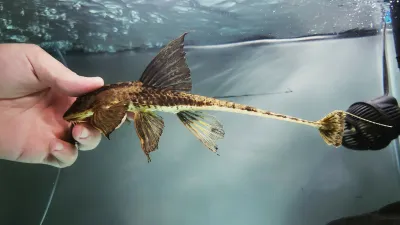
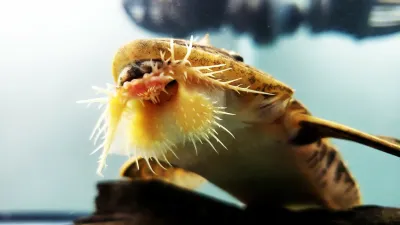
Crying Whiptail - (Loricaria nimairaco)
Crying Whiptail - (Loricaria nimairaco)
Price of shipping is not included.
was $120.00
Save 8%
$110.00
Out of stock
Captive Bred
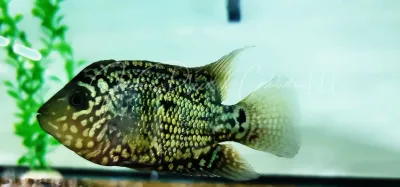
Thailand Kamfa Flowerhorn
Thailand Kamfa Flowerhorn
Price of shipping is not included.
was $100.00
Save 25%
$75.00
Out of stock
Powered by Lightspeed
Display prices in:USD