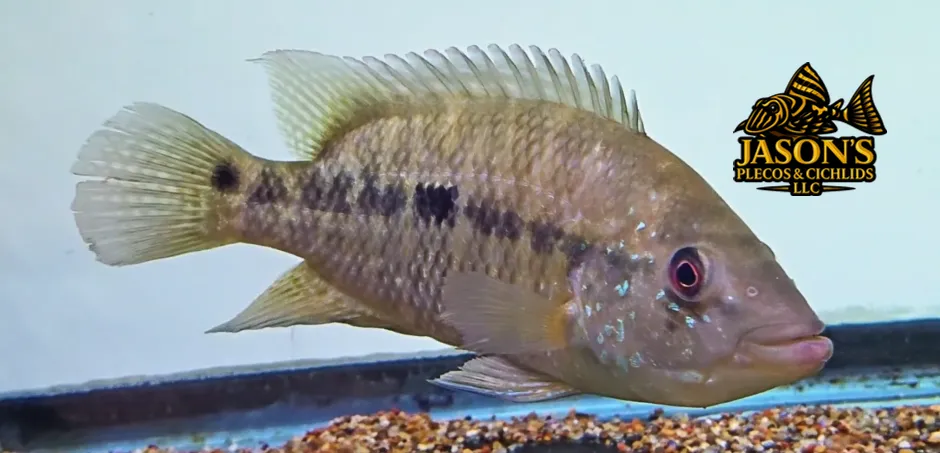
Blue Umbee/Turquoise Cichlid - (Kronoheros umbrifer)
5.0
1 review
Reviews from verified customers who have purchased products at this store.
$190.00
Sold out
was $220.00 Save 14%
Size
Special Bag
3 Digit Airport Code
Questions, Comments, Concerns? Let us know!
Enter your text
Price of shipping is not included.
Sold out
Save this fish to my favorites.
Customer reviews
Reviews only from verified customers
Reviews are only accepted from verified customers who have signed in and purchased the products. This ensures that each review is based on genuine customer experiences. All reviews are checked before publication to prevent spam.
Roman C.
Pacifica,
United States
Dec 10, 2025
The Umbee is a beast of a fish w/ great color and perfect finnage. Quite the masterpiece in my tank. Communication throughout was spot on and packaging in this cold weather was excellent. Highly recommend Jason for your rare fish!
Blue Umbee/Turquoise Cichlid - (Kronoheros umbrifer)
Fish Details, Description and Information Below:
🔵 Blue Umbee / Turquoise Cichlid – (Kronoheros umbrifer) – Giant Panama & Colombia Predator Cichlid
The Blue Umbee, also known as the Turquoise Cichlid (Kronoheros umbrifer), is one of the largest, most powerful, and most visually impressive cichlids native to Panama and Colombia.
Adult males can develop spectacular:
- Electric turquoise-blue spotting
- Metallic blue-green scales
- Brilliant blue facial markings
- Dark blue to black body coloration
- Long dorsal and anal-fin extensions
- Large, powerful head and jaw structure
The exact coloration varies considerably according to collection locality, sex, maturity, genetics, and condition, making locality information especially valuable when available.
This is a very large predatory cichlid with substantial permanent housing requirements and the potential for extreme territorial aggression as it matures.
🔎 Quick Facts – Blue Umbee / Turquoise Cichlid
- 📛 Common Name: Blue Umbee
- 📛 Other Name: Turquoise Cichlid, Umbee Cichlid
- 🔬 Current Scientific Name: Kronoheros umbrifer
- 📚 Older Scientific Names: Cichlasoma umbriferum, Caquetaia umbrifera
- 🐟 Family: Cichlidae
- 🧬 Subfamily: Cichlinae
- 📏 Current Listing Size: Approximately 8 inches
- 🌎 Native Countries: Panama & Colombia
- 🇵🇦 Panama Drainages: Río Tuíra and Río Chucunaque
- 🇨🇴 Colombia Drainages: Río Atrato and Río Magdalena
- 📍 Type Locality: Río Cupe at Cituro, Panama
- 💧 Water Type: Freshwater
- 📏 Scientific Maximum: 47.5 cm / approximately 18.7 inches standard length
- 📏 Adult Planning Size: Approximately 20–24 inches total length
- ♂️ Male Size: Considerably larger than females
- ♀️ Female Size: Generally substantially smaller than mature males
- 🏠 Minimum Adult Aquarium: Approximately 250 gallons for one large specimen
- 🏠 Preferred Adult Aquarium: 300+ gallons
- 👫 Pair / Large Tankmates: Approximately 400–500+ gallons may be necessary
- 📐 Aquarium Length: 8 feet or longer strongly preferred for large adults
- 🌡️ Temperature: Approximately 72–82°F
- 💧 pH: Approximately 7.0–7.9
- 💦 Natural Hardness: Soft water, approximately 1–5 dH
- 💨 Oxygenation: Good to High
- 🌊 Water Movement: Low to Moderate with open swimming space
- 🍽️ Diet: Predatory Carnivore / Piscivore
- 🐟 Natural Prey: Fish
- 🦐 Additional Natural Foods: Shrimp & Crabs
- 🚫 Feeder Fish: Not Recommended
- 😠 Temperament: Highly Territorial / Aggressive
- 🚨 Adult Aggression: Can be Extreme
- 🐠 Small Tankmates: Will likely be viewed as prey
- 🥚 Breeding: Open-Substrate Spawner
- 🥚 Potential Spawn: Several thousand eggs
- 👩👧 Female Role: Guards eggs and larvae
- 👨👩👧 Male Role: Defends the breeding territory
- ⭐ Care Level: Advanced
- 🌎 IUCN Status: Least Concern
🧬 Important Scientific Name Correction
The currently accepted scientific name is:
Kronoheros umbrifer
not:
Kronoheros umbriferum
and not:
Kronoheros Umbriferum
Scientific genus names are capitalized, but species names remain lowercase.
The correct presentation is:
Kronoheros umbrifer
📚 Older Scientific Names
This species has moved through several scientific classifications over the years.
Older references may call it:
- Cichlasoma umbriferum
- Caquetaia umbrifera
- Petenia umbrifera
- Other historical combinations
Modern taxonomy places it in the genus:
Kronoheros
The genus currently contains only this species.
👑 Why Kronoheros?
The genus name references:
KRONOS
the powerful Titan of Greek mythology.
The name reflects the enormous size of this cichlid compared with most other Neotropical cichlids.
The Blue Umbee is among the largest cichlids native to the Americas.
🌎 Important Origin Correction
The older listing says:
Panama & Costa Rica
That should be changed.
The verified natural range is:
PANAMA & COLOMBIA
There is no need to list Costa Rica as part of the established native range.
🇵🇦 Panama Distribution
In Panama, Kronoheros umbrifer occurs in the:
RÍO TUÍRA BASIN
and:
RÍO CHUCUNAQUE BASIN
of eastern Panama.
The type locality is:
RÍO CUPE AT CITURO, PANAMA
🇨🇴 Colombia Distribution
In Colombia, the species occurs in the:
RÍO ATRATO BASIN
and:
RÍO MAGDALENA BASIN
These different river systems are important because Umbee populations can show noticeable differences in:
- Color
- Spotting
- Adult appearance
- Body coloration
🧬 Locality Matters
Blue Umbees are well known among serious cichlid keepers for geographic variation.
Different populations may develop different combinations of:
- Turquoise spotting
- Blue coloration
- Dark body coloration
- Yellow coloration
- Facial spotting
- Red or dark facial markings
When locality information is available:
PRESERVE IT
Do not assume every Blue Umbee is visually identical.
🎨 Adult Male Appearance
Large mature males are particularly impressive.
Adult males may develop:
- Massive head
- Powerful jaw structure
- Metallic turquoise body
- Numerous electric-blue spots
- Blue-green scale centers
- Long dorsal-fin extensions
- Long anal-fin extensions
- Dark vertical or irregular body markings
A dominant male in full condition can become one of the most visually dramatic fish in a large freshwater aquarium.
♀️ Female Appearance
Females generally remain:
- Smaller
- Less intensely turquoise
- More gray, olive, brown, or subdued
- Shorter-finned
than mature dominant males.
However, females can still display attractive:
- Blue spots
- Turquoise markings
- Patterning
depending on locality.
⚠️ Exact Color Cannot Be Guaranteed
Because coloration varies by:
- Collection locality
- Genetics
- Sex
- Age
- Dominance
- Stress
- Lighting
- Diet
- Aquarium background
the exact adult color of an individual fish cannot be guaranteed.
A juvenile may also look dramatically different once sexually mature.
📏 Adult Size – Giant Cichlid
FishBase documents:
47.5 CM / 18.7 INCHES STANDARD LENGTH
Standard length:
DOES NOT INCLUDE THE FULL TAIL FIN
Therefore, responsible aquarium planning should account for a fish approaching approximately:
20–24 INCHES TOTAL LENGTH
particularly large mature males.
⚠️ Do Not Underestimate Adult Size
An 8-inch juvenile or subadult still has:
A LOT OF GROWING LEFT TO DO
This is not an appropriate permanent fish for:
- 75-gallon aquariums
- 90-gallon aquariums
- 125-gallon aquariums
even if a juvenile temporarily fits.
🏠 Adult Aquarium Size
For one large adult:
250 GALLONS SHOULD BE CONSIDERED A PRACTICAL MINIMUM
with:
300+ GALLONS PREFERRED
for a very large male.
A larger aquarium provides:
- Better swimming room
- More stable water quality
- More territory
- Greater safety during maintenance
👫 Pair Housing
Keeping an adult pair requires considerably more planning.
For a mature pair:
400–500+ GALLONS
may be appropriate.
Even a very large aquarium does not guarantee pair compatibility.
🚨 Pair Aggression Can Be Dangerous
A male Umbee may seriously injure or kill:
- An unreceptive female
- A subordinate female
- Another male
- A previously tolerated tankmate
especially during:
- Pair formation
- Breeding
- Territorial disputes
Experienced keepers may need:
- Strong dividers
- Visual barriers
- Separate tanks
- Emergency housing
📐 Aquarium Dimensions Matter
For a large adult, aquarium:
LENGTH + WIDTH
matter more than excessive height.
An aquarium approximately:
8 FEET LONG OR LONGER
is strongly preferred for large mature specimens.
Large males need room to:
- Turn comfortably
- Patrol territory
- Swim naturally
- Avoid constantly interacting with the glass
🌊 Open-Water Swimmer
Unlike cichlids that spend nearly all their time around caves, the Blue Umbee is an:
OPEN-WATER SWIMMER
Provide substantial unobstructed swimming room.
The aquarium should not be filled completely with:
- Rocks
- Wood
- Decorations
🪨 Aquarium Setup
A suitable setup can include:
- Large smooth rocks
- Heavy driftwood
- Large shelters
- Open swimming areas
- Sand or smooth gravel
- Strong filtration
- Good oxygenation
Arrange décor primarily around:
THE SIDES AND BACK
while leaving substantial open swimming space.
⚠️ Secure Everything
A mature Umbee is:
- Large
- Powerful
- Territorial
- Capable of moving décor
Secure:
- Rocks
- Driftwood
- Heaters
- Filter intakes
- Aquarium equipment
🔥 Heater Protection
Large aggressive cichlids can:
- Strike heaters
- Break glass heaters
- Move equipment
Use:
- Protected heaters
- Sump-mounted heaters
- Heater guards
whenever possible.
🌿 Plants
Blue Umbees are generally not ideal for delicate planted aquariums.
They may:
- Dig
- Uproot plants
- Move substrate
- Rearrange the aquarium
Any plants used should be selected with this behavior in mind.
💧 Water Parameters
Verified natural water information includes:
- 🌡️ Temperature: Approximately 66–82°F in its broader natural range
- 💧 pH: Approximately 7.0–7.9
- 💦 Hardness: Approximately 1–5 dH
For normal aquarium maintenance:
72–82°F
is a practical range.
⚠️ Important Hardness Correction
The older listing states:
MODERATELY HARD TO HARD WATER
That is not supported by the natural-water information.
FishBase gives approximately:
1–5 dH
which is:
SOFT WATER
The species is nevertheless robust and captive fish can adapt to somewhat different stable water conditions.
Do not constantly chase exact numbers.
Stable, clean water is more important than continuously altering chemistry.
💨 Oxygenation
Provide:
GOOD TO HIGH OXYGENATION
using:
- Strong surface agitation
- Large filter returns
- Air stones when useful
- Sump filtration
Large predatory fish consume significant oxygen.
🌊 Water Movement
Natural habitat includes everything from:
- Relatively calm water
to:
- More turbulent river habitat
so extreme current throughout the aquarium is unnecessary.
Provide:
GOOD CIRCULATION
without turning the entire tank into a high-speed river.
💩 Heavy Bioload
A 20+ inch predatory cichlid produces:
A VERY LARGE AMOUNT OF WASTE
Plan filtration accordingly.
💩 Filtration
Excellent options include:
- Large sump systems
- High-capacity canister filters
- Strong mechanical filtration
- Large biological filtration chambers
- Prefilters
For a giant Umbee:
OVER-FILTRATION IS PREFERRED
🔄 Water Changes
Large regular water changes are important.
The exact schedule depends on:
- Aquarium volume
- Fish size
- Feeding
- Tankmates
- Filtration
Monitor nitrate and organic waste rather than relying only on a fixed calendar.
🍽️ Diet – Predatory Carnivore / Piscivore
The older listing describes the Blue Umbee as:
OMNIVOROUS
That significantly understates its natural feeding ecology.
Wild Kronoheros umbrifer feed primarily on:
OTHER FISH
along with:
- Shrimp
- Crabs
- Other aquatic animal prey
The species is best described as a:
PREDATORY CARNIVORE / PISCIVORE
🐟 Natural Fish Prey
Wild Umbees commonly prey upon smaller fish such as:
Astyanax
species.
Their:
- Large mouth
- Powerful jaws
- Predatory body shape
are well adapted to taking fish prey.
🦐 Crustaceans
Natural diets also include:
- Shrimp
- Crabs
making crustacean-based aquarium foods an excellent choice.
🍽️ Recommended Captive Foods
A captive Blue Umbee can be maintained on a varied diet including:
- High-quality large-cichlid pellets
- Carnivore pellets
- Shrimp
- Prawn
- Mysis shrimp
- Krill
- Mussel
- Appropriate fish fillet
- Insect-based foods
- Other quality frozen or prepared aquatic foods
🚫 Avoid Live Feeder Fish
There is generally no nutritional need to feed live feeder fish.
Feeder fish can introduce:
- Parasites
- Bacteria
- Disease
- Poor nutrition
A quality prepared and frozen-food diet is safer.
⚠️ Avoid Mammalian Meat
Do not make foods such as:
- Beef heart
- Chicken
- Pork
the foundation of the diet.
Use appropriate aquatic and formulated foods instead.
🐠 Small Fish Will Be Food
Any tankmate small enough to fit into the Umbee's mouth should be considered:
POTENTIAL PREY
This species should never be trusted with:
- Small tetras
- Small catfish
- Small cichlids
- Livebearers
- Other bite-sized fish
😠 Temperament – Important Correction
The older listing describes Blue Umbee as:
MODERATELY AGGRESSIVE
I would remove that.
A mature Umbee can be:
EXTREMELY TERRITORIAL AND AGGRESSIVE
especially after sexual maturity.
🚨 Adult Males Can Dominate an Entire Aquarium
A dominant male may treat the entire aquarium as:
HIS TERRITORY
and attack:
- Other cichlids
- Similar-sized fish
- Females
- Fish that were previously tolerated
⚠️ Aggression Can Increase Suddenly
Juveniles can initially appear:
- Shy
- Calm
- Tolerant
and then change substantially as:
- Size increases
- Sexual maturity develops
- Territorial behavior begins
Do not assume juvenile temperament predicts adult behavior.
🐠 Tankmates
The safest long-term approach for a very large male may be:
SPECIES-ONLY OR SOLO HOUSING
Large robust tankmates are sometimes possible in:
VERY LARGE AQUARIUMS
but compatibility is never guaranteed.
🚫 Do Not Use Tankmates as an Aggression Test
If another fish is being:
- Repeatedly chased
- Pinned into a corner
- Bitten
- Prevented from feeding
- Forced to remain at the surface
remove it.
Waiting for fish to “work it out” can result in serious injury or death.
♂️ Male vs. Female
Sex differences become dramatic with maturity.
Mature Males
Typically develop:
- Much larger adult size
- Intense turquoise-blue coloration
- Longer dorsal-fin extensions
- Longer anal-fin extensions
- More massive head
- More powerful body
- Strong territorial behavior
Mature Females
Generally:
- Remain significantly smaller
- Are more subdued in coloration
- Have shorter fins
- Develop fuller abdomen when carrying eggs
📏 Sexual Size Difference
Female Blue Umbees can reach maturity at approximately:
10 CM
while males may mature around:
15 CM
but both continue growing significantly after sexual maturity.
🥚 Breeding – Open-Substrate Spawner
The Blue Umbee is an:
OPEN-SUBSTRATE SPAWNING CICHLID
It does not require a cave in the same manner as many plecos.
Pairs typically select and clean a:
- Large rock
- Flat stone
- Other open horizontal surface
for spawning.
🥚 Several Thousand Eggs
A mature female can deposit:
SEVERAL THOUSAND EGGS
during a successful spawn.
This is a highly productive large cichlid.
👩👧 Female Parental Role
Scientific observations describe the:
FEMALE GUARDING THE EGGS AND LARVAE
She remains close to the brood and actively protects it.
👨👩👧 Male Parental Role
The male primarily:
DEFENDS THE TERRITORY
around the spawning site.
This division of parental responsibilities can be extremely impressive to observe.
🚨 Breeding Aggression
A breeding Umbee pair can become:
EXTREMELY AGGRESSIVE
toward virtually anything entering its territory.
That includes:
- Other fish
- Aquarium tools
- Hands near the aquarium
- Fish visible through adjacent glass
⚠️ Female Safety
Even bonded pairs should be monitored.
A male can turn against a female unexpectedly.
Experienced keepers often use:
- Strong dividers
- Female escape areas
- Multiple shelters
- Very large aquariums
👶 Fry
Once free swimming, the parents protect large schools of fry.
Suitable fry foods include:
- Baby brine shrimp
- Fine high-protein foods
- Crushed quality pellets
- Appropriate small frozen foods
Growth can be rapid under good conditions.
🧬 Locality Preservation
Different Umbee populations can have noticeably different adult appearance.
When locality is documented, keep records such as:
- Magdalena
- Atrato
- Tuíra
- Chucunaque
- Specific tributary or collection locality
Do not intentionally mix known locality lines and later market offspring as a pure locality strain.
🌎 Conservation Status
Kronoheros umbrifer is currently assessed as:
LEAST CONCERN
The IUCN assessment dates to:
2019
Its distribution includes several major river drainages across Panama and Colombia.
🚨 Never Release a Blue Umbee
This is a:
- Large predator
- Aggressive cichlid
- Fish capable of consuming native species
Never release an unwanted Umbee into:
- Rivers
- Lakes
- Ponds
- Canals
- Streams
- Storm drains
- Natural waterways
If permanent housing becomes impossible:
- Rehome the fish
- Contact an experienced large-cichlid keeper
- Contact an aquarium store
- Contact an aquatic rescue
- Contact the appropriate wildlife authority
⭐ Why Keep a Blue Umbee?
For aquarists equipped to care for a genuinely giant cichlid, the Blue Umbee offers:
- 🔵 Spectacular turquoise coloration
- ✨ Brilliant iridescent spotting
- 👑 Massive adult presence
- 🧠 Intelligent interactive behavior
- 🐟 Natural predatory behavior
- 🌎 Fascinating Panama and Colombia locality variation
- 🥚 Impressive reproductive behavior
- 👨👩👧 Strong parental care
- 😠 Powerful territorial personality
- 📏 Potential 20–24 inch adult size
Few freshwater fish combine this degree of:
SIZE + COLOR + PERSONALITY + POWER
⚠️ Important Considerations
Before purchasing a Blue Umbee / Turquoise Cichlid:
- The current accepted scientific name is Kronoheros umbrifer.
- Do not use Kronoheros umbriferum as the current name.
- Older literature may use Cichlasoma umbriferum or Caquetaia umbrifera.
- The native range is Panama and Colombia.
- Remove Costa Rica from the origin information.
- Panama populations occur in the Tuíra and Chucunaque drainages.
- Colombian populations occur in the Atrato and Magdalena drainages.
- Preserve locality information whenever known.
- The current listing size is approximately 8 inches.
- FishBase documents 47.5 cm standard length before the tail.
- Plan for approximately 20–24 inches total adult size.
- Mature males become substantially larger than females.
- Provide approximately 250 gallons minimum for one large adult.
- 300+ gallons is preferred.
- Pair housing may require approximately 400–500+ gallons.
- An 8-foot or longer aquarium is strongly preferred for large adults.
- Provide substantial open swimming room.
- Secure rocks, décor, heaters, and equipment.
- Maintain approximately 72–82°F.
- Natural pH is approximately 7.0–7.9.
- Natural hardness is approximately 1–5 dH.
- Remove the claim that this species requires moderately hard to hard water.
- Provide excellent filtration.
- Expect very high waste production.
- Feed as a predatory carnivore / piscivore.
- Natural foods include fish, shrimp, and crabs.
- Quality pellets and frozen aquatic foods work well in captivity.
- Avoid unnecessary feeder fish.
- Small tankmates may be eaten.
- Remove “moderately aggressive.”
- Mature Umbees can become extremely territorial and aggressive.
- Solo housing may ultimately be safest.
- Breeding pairs require careful monitoring.
- The species is an open-substrate spawner.
- Females can deposit several thousand eggs.
- The female guards eggs and larvae.
- The male primarily defends the breeding territory.
- The species is currently classified as Least Concern.
- Never release aquarium fish into natural waterways.
🧬 Taxonomy
The currently accepted scientific name is:
Kronoheros umbrifer (Meek & Hildebrand, 1913)
Classification:
- Order: Cichliformes
- Family: Cichlidae
- Subfamily: Cichlinae
- Genus: Kronoheros
- Species: umbrifer
Original scientific combination:
Cichlasoma umbriferum
Other older combinations include:
Caquetaia umbrifera
Current accepted identification:
Blue Umbee / Turquoise Cichlid – (Kronoheros umbrifer)
🌎 Locality & Identification Disclaimer
Kronoheros umbrifer occurs across several major drainages in:
PANAMA & COLOMBIA
Different populations may develop noticeably different:
- Blue coloration
- Facial markings
- Body spotting
- Adult appearance
When a collection locality is known, preserve it.
Do not mix documented geographic lines and later represent offspring as a pure locality strain unless parentage is known.
🚚 Live Fish Shipping
Live fish are professionally packed for safe transport.
Shipping availability depends on:
- Fish size
- Destination
- Weather conditions
- Carrier availability
- Applicable state and local regulations
Larger Blue Umbees may require:
- Larger insulated shipping boxes
- Additional water
- Heavy-duty or specialized shipping bags
- Multiple protective bag layers
- Specialized packing
- Airline cargo shipping depending on size and destination
Please review our Shipping & Payment Information and Live Arrival Guarantee / DOA Policy before ordering.
⚠️ Buyer Responsibility
Customers are responsible for confirming that Kronoheros umbrifer may legally be purchased, possessed, transported, and received in their state or local jurisdiction before ordering.
Never release aquarium fish into natural waterways.
Powered by Lightspeed
Display prices in:USD