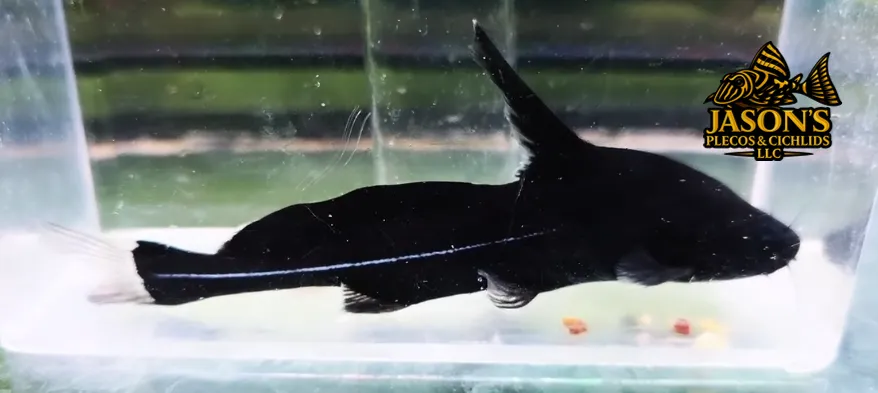
Black Lancer Catfish - (Bagrichthys macracanthus)
$100.00
Captive Bred
was $110.00 Save 9%
Size
3 Digit Airport Code
Questions, Comments, Concerns? Let us know!
Enter your text
Price of shipping is not included.
In stock: 1 available
1
Save this fish to my favorites.
Customer reviews
Reviews only from verified customers
No reviews yet. You can buy this product and be the first to leave a review.
Black Lancer Catfish - (Bagrichthys macracanthus)
Fish Details, Description and Information Below:
🐟 Black Lancer Catfish (Bagrichthys macracanthus)
The Black Lancer Catfish (Bagrichthys macracanthus) is a fascinating and unusual freshwater catfish native to Southeast Asia. Known for its deep black to dark brown coloration, impressive elongated dorsal fin, and prominent whiskers, this species makes an eye-catching addition to larger freshwater aquariums.
Unlike many common aquarium catfish, the Black Lancer has a distinctive appearance and secretive personality. Primarily nocturnal, it spends much of the day resting among driftwood, caves, or other sheltered areas before becoming more active during the evening.
Its unique body shape, peaceful behavior toward suitable midwater fish, and interesting feeding habits make it an excellent choice for experienced aquarium hobbyists looking for something different.
🔍 Quick Facts
- 🧬 Scientific Name: Bagrichthys macracanthus
- 🏷️ Common Name: Black Lancer Catfish
- 🐟 Family: Bagridae
- 🌍 Origin: Southeast Asia, particularly Sumatra, Indonesia
- 📏 Maximum Size: Approximately 9–10 inches
- ⏳ Lifespan: Not well documented in captivity
- 🌙 Activity Level: Primarily nocturnal
- 🕊️ Temperament: Peaceful toward suitable midwater fish but territorial toward other bottom-dwellers
- 🏡 Care Level: Intermediate
- 🍽️ Diet: Omnivore
🌍 Natural Habitat & Origin
The Black Lancer Catfish naturally inhabits large freshwater river systems throughout parts of Southeast Asia.
- 🌊 Found in large, slow-moving rivers with muddy or silty bottoms
- 🌳 Often associated with submerged wood, roots, and sheltered river habitats
- 🪵 Uses natural structures for protection and resting areas
- 🌧️ Moves into seasonally flooded areas during the rainy season
- 🌙 Primarily searches for food along the riverbed during low-light periods
In the wild, this species feeds on small aquatic invertebrates, crustaceans, and organic material found along the bottom.
Recreating a natural river-bottom environment with subdued lighting, driftwood, and plenty of hiding places helps encourage natural behavior in captivity.
🕊️ Behavior & Temperament
- 🌙 Nocturnal Lifestyle: Most active during the evening and nighttime hours
- 🪵 Secretive Nature: Prefers hiding beneath driftwood, inside caves, or among aquarium decorations
- ⚔️ Territorial Behavior: May become aggressive toward other catfish competing for the same bottom territory
- 🐠 Generally Peaceful: Typically ignores appropriately sized fish occupying the middle and upper portions of the aquarium
- 🏡 Prefers Its Own Space: Often best maintained individually, particularly in smaller setups
- 👀 Interesting Personality: May gradually become more visible once comfortable with its environment
Providing multiple sheltered areas and maintaining a consistent aquarium routine can help reduce stress and encourage more natural activity.
🏡 Tank Requirements
- 🛁 Minimum Tank Size: Approximately 65 gallons, with a 48-inch-long aquarium footprint recommended
- 🌡️ Temperature: 75–82°F (24–28°C)
- 💧 pH Range: 5.5–7.0
- 🧪 Water Hardness: 1–15 dGH
- 🪨 Substrate: Fine sand or smooth gravel
- 🌿 Plants: Optional, but beneficial for providing shade and shelter
- 🪵 Decorations: Driftwood, caves, smooth rocks, and sheltered hiding places
- 💦 Water Flow: Gentle to moderate
- 💡 Lighting: Subdued lighting preferred
Recommended Aquarium Setup:
A natural-looking aquarium featuring driftwood, scattered rocks, and open sandy areas provides an ideal environment for this species. Caves or hollow driftwood should be included to create secure resting locations.
Avoid overly bright lighting or strong currents, as these conditions may cause unnecessary stress.
A well-established aquarium with stable water quality is highly recommended. Provide adequate filtration and perform regular partial water changes to maintain a clean, healthy environment.
🍽️ Diet & Feeding
Black Lancer Catfish are omnivorous bottom-feeders that consume a variety of small aquatic organisms and organic materials in their natural environment.
Recommended Foods:
- 🦐 Frozen or live brine shrimp
- 🪱 Bloodworms and other aquatic worms
- 🐟 High-quality sinking catfish pellets
- 🦀 Small crustaceans and appropriately sized invertebrate foods
- 🌱 Spirulina-enriched sinking wafers
- 🍽️ Quality prepared foods formulated for omnivorous bottom-feeding fish
Feeding Tips:
- 🌙 Offer food during the evening or shortly after aquarium lights are turned off
- 🐠 Ensure faster-moving tank mates do not consume all available food
- 🍤 Provide a varied diet combining protein-rich and plant-based ingredients
- ⚠️ Avoid overfeeding, and remove uneaten food to protect water quality
Newly introduced specimens may be shy feeders until they become comfortable in their surroundings.
🤝 Tank Mates & Compatibility
The Black Lancer Catfish is generally peaceful toward appropriately sized fish that occupy different areas of the aquarium. However, its territorial nature should be considered when selecting other bottom-dwelling species.
✅ Suitable Tank Mates:
- Larger peaceful rasboras
- Medium-sized peaceful barbs
- Other nonaggressive midwater schooling fish
- Peaceful fish that do not compete for bottom territory
⚠️ Use Caution With:
- Other territorial catfish
- Multiple male Black Lancer Catfish
- Aggressive cichlids
- Fish that compete for the same caves and hiding spots
- Very small or delicate fish
Although typically peaceful, each individual may display different territorial behavior depending on aquarium size, decorations, and tank mates.
For most hobbyists, keeping a single Black Lancer Catfish is the simplest option. Multiple specimens require considerably more space, careful monitoring, and separate territories.
🧬 Appearance & Unique Characteristics
One of the most distinctive features of the Black Lancer Catfish is its elongated dorsal-fin spine, which gives this species its common name.
- 🖤 Dark Coloration: Typically black to deep brown, sometimes displaying lighter markings along the body
- 🐟 Elongated Dorsal Fin: A prominent dorsal spine creates its recognizable lancer appearance
- 🪶 Long Whiskers: Sensitive barbels help locate food in dark or murky environments
- 🐠 Streamlined Body: Adapted for navigating river-bottom environments
- 👀 Subtle Patterns: Some individuals display faint bands or lighter coloration
Its unusual appearance makes it especially appealing to collectors and enthusiasts interested in uncommon catfish species.
🐣 Breeding & Reproduction
Breeding Black Lancer Catfish in home aquariums is uncommon, and successful captive reproduction has not been reliably documented in standard aquarium references.
- 🌧️ Wild spawning is associated with the rainy season
- 🌳 Adults move into temporarily flooded riverbank areas to reproduce
- 🐟 Sexually mature females generally develop fuller bodies
- 🧬 Males possess longer barbels and a distinctive genital papilla
- 🏡 No established, consistently successful home-aquarium breeding method is available
This species is primarily maintained as an ornamental aquarium fish rather than a commonly bred aquarium catfish.
⚠️ Important Care Considerations
- 🏡 Provide Hiding Places: A secure shelter is essential for reducing stress
- 🌡️ Maintain Stable Conditions: Sudden temperature or water chemistry changes should be avoided
- 🪵 Respect Territorial Behavior: Other bottom-dwellers may be chased away from preferred shelters
- 💦 Maintain Clean Water: Regular maintenance and appropriate filtration are important
- 🌙 Expect Nocturnal Activity: This species may remain hidden for extended periods during the day
- 🐟 Plan for Adult Size: Choose an aquarium suitable for its eventual 9–10-inch length
- 🛡️ Handle Carefully: Its strong, serrated fin spines can become caught in nets and may cause injury during handling
⭐ Why Choose a Black Lancer Catfish?
The Black Lancer Catfish is an outstanding choice for aquarium enthusiasts seeking a distinctive and uncommon bottom-dwelling species.
Its sleek dark coloration, dramatic dorsal fin, and mysterious nocturnal habits create a fascinating presence in a well-maintained freshwater aquarium. Unlike more frequently encountered catfish, this species offers a unique combination of appearance, behavior, and personality.
With adequate swimming space, plenty of hiding areas, peaceful tank mates, and a varied diet, the Black Lancer Catfish can make a rewarding addition to a larger freshwater aquarium.
Whether you're an experienced catfish collector or simply looking for an unusual species to add to your aquarium, the Black Lancer Catfish is definitely worth considering!
Powered by Lightspeed
Display prices in:USD