
African Tiger Fish - (Hydrocynus Vittatus)
$120.00
Sold out
Size
Price of shipping is not included.
Sold out
Save this fish to my favorites.
Customer reviews
Reviews only from verified customers
No reviews yet. You can buy this product and be the first to leave a review.
African Tiger Fish - (Hydrocynus Vittatus)
Fish Details, Description and Information Below:
🐅 African Tiger Fish – (Hydrocynus vittatus) – Giant African Freshwater Predator
The African Tiger Fish (Hydrocynus vittatus) is one of Africa's most impressive freshwater predators, famous for its streamlined silver body, dark horizontal stripes, powerful forked tail, incredible swimming speed, and unmistakable interlocking fang-like teeth.
Native to major rivers and lakes across a huge portion of sub-Saharan Africa, the African Tiger Fish is built for chasing prey through open water.
This is an:
EXPERT-LEVEL MONSTER FISH
that requires an enormous aquarium, exceptionally strong filtration, high dissolved oxygen, substantial open swimming space, a secure cover, and an experienced keeper who understands the needs of large predatory fish.
🔎 Quick Facts – African Tiger Fish
- 📛 Common Name: African Tiger Fish
- 📛 Other Names: African Tigerfish, Tiger Fish, Striped Tigerfish
- 🔬 Scientific Name: Hydrocynus vittatus
- 🐟 Family: Alestidae
- 🌎 Origin: Africa
- 🌊 Habitat: Large rivers, lakes and major freshwater systems
- 💧 Water Type: Freshwater
- 📏 Maximum Documented Size: Approximately 105 cm / 41.3 inches fork length
- ⚖️ Maximum Published Weight: Approximately 28 kg / 62 lb
- 📏 Adult Aquarium Planning Size: Approximately 30–40+ inches
- 🏠 Permanent Adult Aquarium: Approximately 650+ gallons
- 🏠 Preferred Adult Housing: 1,000+ gallons or a custom large aquarium
- 📐 Aquarium Length: Approximately 8–10+ feet strongly preferred
- 📐 Aquarium Width: Approximately 3–4+ feet strongly preferred
- 🌡️ Temperature: Approximately 75–82°F
- 💧 pH: Approximately 6.5–7.5
- 💨 Oxygenation: Very High
- 🌊 Water Movement: Moderate to Strong
- 🍽️ Diet: Carnivore / Piscivore
- 🐟 Natural Adult Diet: Primarily Fish
- 🦐 Other Foods: Crustaceans and insects
- 🚫 Feeder Fish: Not Recommended
- ⚠️ Temperament: Highly Predatory
- 🐟 Social Behavior: Juveniles naturally form schools; largest adults become more solitary
- 🏊 Swimming Style: Extremely fast, active open-water swimmer
- 🚨 Jumping Risk: Very High
- 🦷 Teeth: Large, sharp and capable of causing serious injury
- 🥚 Reproduction: Egg Layer / Seasonal Flood-Spawning Species
- 🐣 Captive Breeding: Not established as a normal home-aquarium breeding species
- ⭐ Care Level: Expert
- 🌎 IUCN Status: Least Concern
- 🚫 Texas: Prohibited except where specifically authorized
- 🚫 Florida: Prohibited species; not legal as an ordinary personal pet
- 🚫 Utah: Prohibited species
🧬 Valid Scientific Species
The correct scientific name is:
Hydrocynus vittatus
The species was described by:
Castelnau in 1861
and belongs to the African tetra family:
Alestidae
The correct product title is:
African Tiger Fish – (Hydrocynus vittatus)
The species name:
vittatus
should always use a lowercase v when written as part of the scientific name.
🆚 African Tiger Fish vs. Goliath Tigerfish
The African Tiger Fish should not be confused with:
Goliath Tigerfish – Hydrocynus goliath
They are separate species.
African Tiger Fish – Hydrocynus vittatus
- Extremely large predator
- Maximum documented length approximately 41 inches
- Widespread across numerous African river systems
- Distinct horizontal dark stripes
- Massive predatory teeth
Goliath Tigerfish – Hydrocynus goliath
- Even larger species
- Primarily associated with the Congo Basin
- Heavier-bodied
- Capable of considerably greater maximum size
Although H. vittatus is smaller than the Goliath Tigerfish:
IT IS STILL A GIANT AQUARIUM FISH
and requires enormous permanent housing.
🐅 Appearance
The African Tiger Fish has a powerful:
TORPEDO-SHAPED BODY
built for high-speed pursuit.
Typical coloration includes:
- Bright silver
- Metallic gray
- Bronze-silver
- Golden highlights
with prominent:
DARK HORIZONTAL STRIPES
running along the body.
🔴 Fins
The fins can develop:
- Yellow
- Orange
- Red
- Reddish-orange
coloration.
The deeply forked caudal fin frequently develops:
DARK OR BLACK EDGING
which adds to the fish's dramatic appearance.
🦷 Famous Tigerfish Teeth
The African Tiger Fish is instantly recognizable by its:
LARGE, SHARP, CONICAL TEETH
The teeth remain clearly visible even when the mouth is closed.
They overlap between the:
- Upper jaw
- Lower jaw
creating the classic Tigerfish appearance.
⚠️ Serious Bite Hazard
These teeth are functional predatory weapons.
A large African Tiger Fish is capable of causing:
SERIOUS LACERATIONS
to a person.
Never:
- Hand-feed a large specimen
- Place hands near the mouth
- Attempt to grab the fish
- Corner it unnecessarily
- Handle it casually during aquarium maintenance
Use appropriate tools and barriers when working around large adults.
🏊 Built for Speed
The African Tiger Fish is not a slow-moving ambush predator.
It is an:
EXTREMELY FAST OPEN-WATER HUNTER
with a powerful tail designed for:
- Acceleration
- Pursuit
- Sudden strikes
- Long-distance swimming
This is one reason aquarium length is so important.
⚠️ Aquarium Size Is About More Than Body Length
A 36-inch Tiger Fish cannot be housed like a relatively sedentary 36-inch bottom-dwelling fish.
It needs enough room to:
- Accelerate
- Cruise
- Turn safely
- Avoid crashing into aquarium walls
Therefore:
SWIMMING SPACE IS CRITICAL
📏 Maximum Adult Size – Major Correction
Your older page states:
UP TO 30 INCHES
That size is possible, but it is not the species' documented maximum.
FishBase records:
105 CM / APPROXIMATELY 41.3 INCHES FORK LENGTH
for male/unsexed specimens.
A published maximum weight of:
28 KG / APPROXIMATELY 62 POUNDS
has also been recorded.
📏 Responsible Aquarium Planning
Not every captive African Tiger Fish will reach the scientific maximum.
However, permanent housing should not be designed around the hope that the fish remains unusually small.
For customer planning:
EXPECT A POTENTIAL 30–40+ INCH PREDATORY FISH
🚨 180 Gallons Is Not Permanent Adult Housing
The current page recommends:
180+ GALLONS
That should be removed as an adult recommendation.
A 180-gallon aquarium may temporarily house a:
SMALL JUVENILE
but it does not provide adequate permanent swimming space for a fish potentially exceeding three feet.
🏠 Permanent Adult Aquarium
For a mature specimen:
APPROXIMATELY 650+ GALLONS
should be considered a serious starting point.
For long-term housing of a very large adult:
1,000+ GALLONS IS PREFERRED
A professionally designed:
- Monster aquarium
- Custom indoor aquarium
- Large heated indoor pond
may ultimately be more practical than a conventional glass aquarium.
📐 Aquarium Dimensions
Gallons alone are not enough.
For an adult, prioritize approximately:
8–10+ FEET OF SWIMMING LENGTH
with:
3–4+ FEET OF FRONT-TO-BACK WIDTH
whenever possible.
Larger is better.
📏 Width Matters
An adult Tiger Fish must be able to:
TURN WITHOUT DIFFICULTY
A narrow aquarium can contain hundreds of gallons while still being unsuitable.
Prioritize:
LENGTH + WIDTH
rather than:
HEIGHT
🏊 Open Swimming Space
The center of the aquarium should contain substantial:
OPEN WATER
Avoid filling the aquarium with:
- Dense rock piles
- Large amounts of wood
- Excessive decoration
- Sharp structures
that reduce swimming room.
🪨 Aquarium Setup
A suitable setup may include:
- Large open swimming area
- Smooth rocks around the perimeter
- Limited large driftwood
- Sand or smooth gravel
- Very strong filtration
- Powerful circulation
- High dissolved oxygen
- Secure cover
Keep décor:
LOW + SMOOTH + SECURE
⚠️ Avoid Sharp Decorations
Tiger Fish can accelerate extremely quickly when frightened.
Sharp décor can cause:
- Facial injuries
- Eye injuries
- Scale damage
- Internal trauma
A relatively open aquarium is safer.
😨 Skittish Behavior
Despite being a powerful predator, African Tiger Fish can also be:
VERY SKITTISH
Sudden movement may trigger a high-speed escape response.
Possible triggers include:
- People approaching suddenly
- Dogs or cats near the aquarium
- Lights switching on abruptly
- Loud impacts
- Aggressive tankmates
- Sudden maintenance activity
💥 Collision Risk
A startled Tiger Fish may strike:
- Aquarium glass
- Covers
- Rocks
- Equipment
at considerable speed.
Repeated collisions can cause serious injury.
🌙 Lighting
Avoid sudden transitions from:
COMPLETE DARKNESS → BRIGHT LIGHT
Use:
- Gradual room lighting
- Dimmer lighting
- Timed lighting transitions where possible
to reduce startle responses.
🚨 Extremely Powerful Jumper
A Tiger Fish can:
LEAP FROM THE WATER
This is not a minor risk.
Wild Hydrocynus vittatus have even been scientifically observed:
LEAPING FROM THE WATER TO CAPTURE BIRDS
🔒 Secure Lid Is Mandatory
The aquarium must have a:
HEAVY, SECURE, ESCAPE-PROOF COVER
Cover openings around:
- Filters
- Plumbing
- Wires
- Overflow boxes
A large Tiger Fish can strike a lightweight lid with substantial force.
🌎 Native Distribution
Hydrocynus vittatus has an extremely broad distribution across:
SUB-SAHARAN AFRICA
It occurs in numerous large river and lake systems.
🌊 Major River Systems
Documented populations include portions of the:
- Congo Basin
- Zambezi Basin
- Okavango Basin
- Niger Basin
- Benue Basin
- Senegal Basin
- Chad Basin
- Limpopo system
- Nile system
- Omo system
- Rovuma system
- Shire system
🏞️ Major Lakes
The species is also found in major lakes and reservoirs including:
- Lake Tanganyika
- Lake Rukwa
- Lake Kariba
- Lake Mweru
- Lake Bangweulu
among other freshwater systems.
This is one of the more geographically widespread African predatory fishes.
🌊 Natural Habitat
African Tiger Fish primarily inhabit:
- Large rivers
- Major tributaries
- Lakes
- Reservoirs
- Open-water environments
They prefer:
WARM, WELL-OXYGENATED WATER
💨 High Oxygen Requirement
A large active predator consumes substantial oxygen.
Maintain:
VERY HIGH DISSOLVED OXYGEN
using:
- Strong surface agitation
- Large air stones
- Powerheads
- High-volume filter returns
- Sump filtration
- Circulation pumps
🌡️ Warm Water + Oxygen
A practical long-term temperature range is:
75–82°F / 24–28°C
As water becomes warmer:
ITS OXYGEN-HOLDING CAPACITY DECREASES
Therefore, strong aeration becomes even more important near the upper end of the temperature range.
💧 Water Parameters
A practical aquarium range is:
- 🌡️ Temperature: Approximately 75–82°F
- 💧 pH: Approximately 6.5–7.5
- 💨 Oxygenation: Very High
- 🌊 Water Movement: Moderate to Strong
- ☠️ Ammonia: 0 ppm
- ☠️ Nitrite: 0 ppm
- 🔄 Nitrate: Keep as low as reasonably practical
🌊 Water Movement
Provide:
MODERATE TO STRONG CIRCULATION
with sufficient open space for the fish to swim naturally.
Strong current should not create a situation where the fish is forced to constantly fight a jet of water.
The goal is:
CIRCULATION + OXYGEN + CLEAN WATER
💩 Massive Filtration Requirements
A large predatory fish eating high-protein foods produces:
A LARGE BIOLOAD
Permanent housing requires powerful:
- Mechanical filtration
- Biological filtration
- Water circulation
💧 Sump Filtration
For very large systems:
LARGE SUMP FILTRATION
is often one of the most practical options.
Benefits include:
- High biological capacity
- Large mechanical filtration area
- Increased total water volume
- Strong oxygen exchange
- Easier equipment management
🔄 Water Changes
Large regular water changes are important.
The exact schedule depends on:
- Aquarium volume
- Fish size
- Feeding
- Filtration
- Stocking
- Nitrate production
Monitor water quality rather than relying solely on a fixed calendar.
🍽️ Diet – Piscivorous Carnivore
The African Tiger Fish is:
A HIGHLY PREDATORY CARNIVORE
and becomes increasingly:
PISCIVOROUS
as it grows.
Scientific diet information indicates that fish larger than roughly:
90–100 MM
may become predominantly or essentially fish-eating predators.
🐟 Natural Diet
Wild prey includes various:
- Small fish
- Characins
- Barbs
- Sardine-like fishes
depending on the river system.
The species may also consume:
- Shrimp
- Other crustaceans
- Aquatic insects
🍽️ Captive Feeding
Suitable foods can include appropriately sized:
- Whole frozen fish
- Fish fillets
- Shrimp
- Prawns
- Krill
- Insect-based predator foods
- Quality carnivore pellets if accepted
🚫 Avoid Routine Live Feeder Fish
Although Tiger Fish naturally prey on fish:
LIVE FEEDER FISH ARE NOT NECESSARY
Routine feeder-fish use can introduce:
- Parasites
- Bacteria
- Disease
- Nutritional deficiencies
Whenever possible, condition the fish to accept:
- Frozen foods
- Prepared predator foods
- Quality whole-food alternatives
⚠️ Do Not Overfeed
Large carnivores can easily be overfed in captivity.
Overfeeding increases:
- Obesity risk
- Water pollution
- Nitrate
- Organic waste
Feed according to:
- Fish size
- Body condition
- Water temperature
- Growth stage
🐟 Predator – Not a Normal Community Fish
Any fish small enough to fit into the Tiger Fish's mouth should be considered:
POTENTIAL PREY
Do not rely on apparent peaceful behavior from a juvenile.
Predatory behavior increases dramatically as the fish grows.
👥 Social Behavior – Important Correction
The older page simply calls the African Tiger Fish:
AGGRESSIVE AND TERRITORIAL
That does not fully describe its natural behavior.
Scientific observations indicate:
SMALLER AND MEDIUM-SIZED TIGER FISH FORM ROVING SCHOOLS OF SIMILAR-SIZED INDIVIDUALS
while:
THE LARGEST ADULTS BECOME MORE SOLITARY
🐟 Juveniles
Young Tiger Fish naturally benefit from the presence of:
SIMILAR-SIZED CONSPECIFICS
However, maintaining a group in captivity requires an enormous system.
⚠️ Size Matching Is Critical
Smaller Tiger Fish may become:
PREY
for substantially larger individuals.
Do not combine dramatically different sizes.
🏠 Group Housing
A group requires:
MUCH MORE THAN 650 GALLONS
because every additional fish requires:
- Swimming space
- Feeding space
- Oxygen
- Filtration capacity
A true adult group is generally better suited to:
PUBLIC-AQUARIUM-SCALE OR CUSTOM SYSTEMS
🐠 Tankmates
Tankmate selection is extremely difficult.
Potential companions must be:
- Too large to swallow
- Extremely robust
- Comfortable in open water
- Compatible with high flow and high oxygen
- Not overly aggressive toward the Tiger Fish
⚠️ “Too Big to Eat” Is Not a Guarantee
Even a fish too large to swallow can potentially be:
- Bitten
- Chased
- Injured
- Stressed
A species-only setup is often the easiest way to reduce compatibility problems.
🦷 Feeding Safety
Because the Tiger Fish has exposed, interlocking teeth:
DO NOT HAND FEED
Use:
- Long feeding tongs
- Appropriate feeding tools
- Safe feeding techniques
especially with large specimens.
🛡️ Aquarium Maintenance Safety
Before placing your hands in an aquarium containing a large Tiger Fish:
- Know exactly where the fish is
- Avoid trapping it
- Avoid sudden movements
- Use dividers when necessary
- Never intentionally provoke a feeding response
🚑 Handling
Large Tiger Fish should not normally be:
HANDLED DIRECTLY
Moving one may require:
- Large rigid containers
- Heavy-duty fish bags
- Large transport tubs
- Professional handling equipment
Their combination of:
- Speed
- Strength
- Teeth
makes improper handling dangerous to both the fish and keeper.
♂️ Male vs. Female
Sexual dimorphism is not especially useful for normal aquarium sales.
Scientific records indicate that:
MALES CAN REACH GREATER MAXIMUM SIZE
with FishBase documenting:
- Male/unsexed maximum: approximately 105 cm fork length
- Female maximum: approximately 74 cm fork length
Juveniles generally cannot be reliably sexed by appearance.
Unless confidently identified:
SELL AS UNSEXED
🥚 Reproduction in the Wild
The African Tiger Fish is:
OVIPAROUS / EGG-LAYING
and reproduction is associated with seasonal changes in river conditions.
🌧️ Rainy-Season Spawning
Wild spawning is associated with:
RISING WATER DURING THE RAINY SEASON
Adults move into suitable spawning areas as rivers and floodplains expand.
🌿 Shallow Vegetated Spawning Areas
Eggs are associated with:
- Flooded vegetation
- Shallow marginal habitat
- Seasonally inundated areas
Young fish initially use these vegetated areas for:
- Food
- Protection
- Nursery habitat
🐣 Juveniles
As floodwaters decline, young Tiger Fish move progressively into:
- Larger channels
- Deeper water
- Permanent river habitat
🥚 Captive Breeding
African Tiger Fish are:
NOT A ROUTINELY CAPTIVE-BRED HOME-AQUARIUM SPECIES
Their natural reproductive cycle involves:
- Seasonal floods
- Large migration areas
- Vast volumes of water
- Floodplain nursery habitat
Do not advertise this species as:
AN EASY AQUARIUM BREEDING PROJECT
🌎 Conservation Status
The current global IUCN assessment classifies:
Hydrocynus vittatus AS LEAST CONCERN
The updated assessment date is:
FEBRUARY 14, 2025
The species remains broadly distributed across Africa.
⚠️ Least Concern Does Not Mean Every Population Is Secure
Local populations can still experience pressure from:
- Overfishing
- Water pollution
- Dams
- Habitat alteration
- Agricultural runoff
- Declining water quality
Conservation conditions vary considerably throughout its enormous range.
🚨 LEGAL RESTRICTIONS IN THE UNITED STATES
African Tiger Fish are not legal everywhere.
Current official state regulations specifically restrict:
TEXAS
Texas classifies:
ALL HYDROCYNUS SPECIES
as harmful or potentially harmful exotic fish.
Ordinary private possession is prohibited unless specifically authorized under applicable state rules.
🚫 FLORIDA
Florida lists:
ALL SPECIES OF HYDROCYNUS
as:
PROHIBITED NONNATIVE SPECIES
They cannot be acquired or kept as ordinary personal aquarium pets.
Limited permits may exist for qualifying:
- Research
- Public exhibition
- Eradication/control
purposes.
🚫 UTAH
Utah specifically lists:
Hydrocynus vittatus
as a:
PROHIBITED FISH
Therefore, ordinary live aquarium possession should not be treated as legal.
⚠️ Do Not Ship Without Checking Destination Laws
State and local laws can change.
Before fulfilling an African Tiger Fish order:
VERIFY THE DESTINATION
At minimum:
DO NOT SHIP FOR ORDINARY PRIVATE AQUARIUM POSSESSION TO TEXAS, FLORIDA, OR UTAH
under the current regulations reviewed for this listing.
Other state or local restrictions may also apply.
🌎 Never Release
Never release an African Tiger Fish into:
- Lakes
- Rivers
- Ponds
- Streams
- Canals
- Reservoirs
- Storm drains
- Natural waterways
If permanent housing becomes impossible:
- Contact an experienced monster-fish keeper
- Contact a public aquarium
- Contact an aquatic rescue
- Contact the appropriate state wildlife agency
NEVER RELEASE AQUARIUM FISH INTO THE WILD.
⭐ Why Keep an African Tiger Fish?
For the small number of expert aquarists capable of providing proper permanent housing, Hydrocynus vittatus offers:
- 🐅 Iconic African Tiger Fish appearance
- 🦷 Massive interlocking teeth
- ⚡ Incredible swimming speed
- 🏊 Open-water predatory behavior
- 🔴 Attractive orange-to-red fins
- ⚫ Strong horizontal body stripes
- 🌍 Broad African distribution
- 📏 Potential 30–40+ inch adult size
- 🐟 Fascinating schooling behavior in younger fish
- 🌊 True large-river predator behavior
Few freshwater aquarium fish have the same physical presence.
⚠️ Important Considerations
Before purchasing an African Tiger Fish:
- The correct scientific name is Hydrocynus vittatus.
- Do not confuse it with Hydrocynus goliath.
- FishBase documents a maximum of approximately 105 cm / 41.3 inches fork length.
- Maximum published weight is approximately 28 kg / 62 lb.
- Do not use 30 inches as a hard maximum.
- Plan for a potential 30–40+ inch adult.
- A 180-gallon aquarium is not appropriate permanent adult housing.
- Plan for approximately 650+ gallons.
- 1,000+ gallons or a custom system is strongly preferred for very large adults.
- Aquarium length and width are extremely important.
- Provide approximately 8–10+ feet of swimming length whenever possible.
- Maintain large areas of open water.
- Avoid sharp aquarium décor.
- African Tiger Fish can be extremely skittish.
- High-speed glass collisions can cause severe injury.
- Use a heavy, secure aquarium cover.
- This species is an extremely capable jumper.
- Maintain approximately 75–82°F.
- Maintain very high dissolved oxygen.
- Provide moderate to strong circulation.
- Use exceptionally strong filtration.
- Maintain ammonia and nitrite at zero.
- Keep nitrate low.
- Feed a carnivorous / piscivorous diet.
- Frozen and prepared predator foods are preferable to routine feeder fish.
- Do not hand-feed large specimens.
- Their teeth can cause serious injury.
- Fish small enough to swallow should be considered prey.
- Juveniles naturally school with similar-sized individuals.
- The largest adults become increasingly solitary.
- Groups require enormous custom systems.
- Captive breeding is not established as a normal aquarium practice.
- The species is currently IUCN Least Concern.
- African Tigerfish are prohibited under current Texas regulations.
- African Tigerfish are prohibited species in Florida.
- Hydrocynus vittatus is prohibited in Utah.
- Check every customer's state and local laws before shipping.
- Never release aquarium fish into natural waterways.
🧬 Taxonomy
The currently accepted scientific name is:
Hydrocynus vittatus Castelnau, 1861
Classification:
- Order: Characiformes
- Family: Alestidae
- Genus: Hydrocynus
- Species: vittatus
For this product, use:
African Tiger Fish – (Hydrocynus vittatus)
🚨 Restricted-Species Disclaimer
African Tiger Fish are regulated in several U.S. jurisdictions.
Current official regulations reviewed for this listing specifically prohibit or heavily restrict Hydrocynus / Hydrocynus vittatus in:
- Texas
- Florida
- Utah
Limited permits or authorized institutional exceptions may exist, but these should not be interpreted as allowing ordinary private aquarium ownership.
Jason's Plecos & Cichlids will not knowingly ship fish where possession or receipt is prohibited.
Customers remain responsible for confirming all applicable:
- Federal regulations
- State regulations
- Local regulations
before ordering.
🚚 Live Fish Shipping
Live fish are professionally packed for safe transport.
Shipping availability depends on:
- Fish size
- Destination
- Weather conditions
- Carrier availability
- Applicable state and local regulations
As African Tiger Fish grow, shipping requirements can increase substantially because of their:
- Speed
- Teeth
- Strength
- Body size
- Oxygen requirements
Larger specimens may require:
- Larger insulated boxes
- Additional water
- Heavy-duty bags
- Multiple bag layers
- Specialized packing
- Airline cargo shipping
Please review our Shipping & Payment Information and Live Arrival Guarantee / DOA Policy before ordering.
⚠️ Buyer Responsibility
Customers are responsible for confirming that Hydrocynus vittatus may legally be purchased, possessed, transported, and received in their state or local jurisdiction before ordering.
Current regulations specifically prohibit or restrict ordinary private possession in Texas, Florida, and Utah.
Never release aquarium fish into natural waterways.
Below are fish you may also like.
Wild Caught
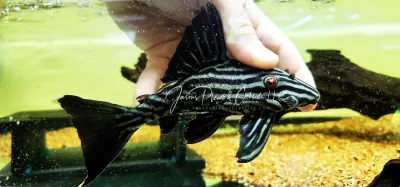
L027 Xingu Royal Pleco - (Panaque cf. armbrusteri xingu)
L027 Xingu Royal Pleco - (Panaque cf. armbrusteri xingu)
Price of shipping is not included.
5.0
(1)
was $95.00
Save 11%
$85.00
Out of stock
Wild Caught
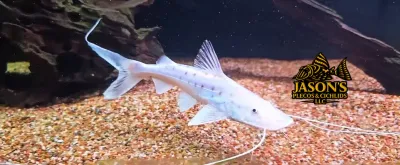
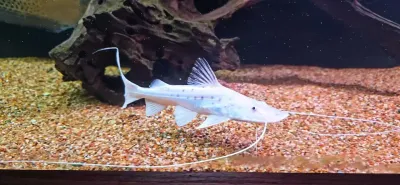
Piraiba Catfish - (Brachyplatystoma filamentosum) Brazil
Piraiba Catfish - (Brachyplatystoma filamentosum) Brazil
Price of shipping is not included.
was $450.00
Save 11%
$400.00
Out of stock
Captive Bred
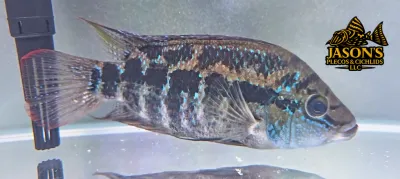
Salvini Cichlid/Yellow belly Cichlid/Salvin's Cichlid - (Trichromis Salvini)
Salvini Cichlid/Yellow belly Cichlid/Salvin's Cichlid - (Trichromis Salvini)
Price of shipping is not included.
was $65.00
Save 8%
$60.00
Out of stock
Wild Caught
L082 Opal Spot Pleco - (Scobinancistrus raoni)
L082 Opal Spot Pleco - (Scobinancistrus raoni)
Price of shipping is not included.
was $650.00
Save 8%
$600.00
Out of stock
Captive Bred
Blue Acara - (Andinoacara pulcher)
Blue Acara - (Andinoacara pulcher)
Price of shipping is not included.
was $20.00
Save 25%
$15.00
Out of stock
Captive Bred
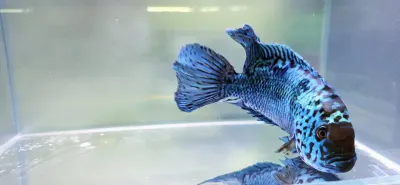
Electric Blue Jack Dempsey - (Rocio octofasciata)
Electric Blue Jack Dempsey - (Rocio octofasciata)
Price of shipping is not included.
was $130.00
Save 8%
$120.00
Out of stock
Wild Caught
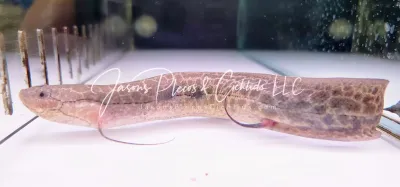
Marbled Lungfish - (Protopterus aethiopicus)
Marbled Lungfish - (Protopterus aethiopicus)
Price of shipping is not included.
$160.00
Out of stock
Wild Caught
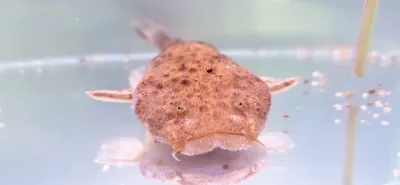
Pac-man Catfish - (Lophiosilurus alexandri)
Pac-man Catfish - (Lophiosilurus alexandri)
Price of shipping is not included.
$500.00
Out of stock
Captive Bred
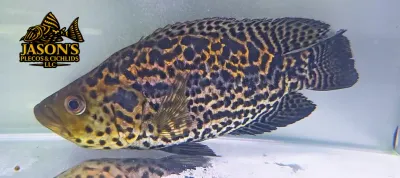
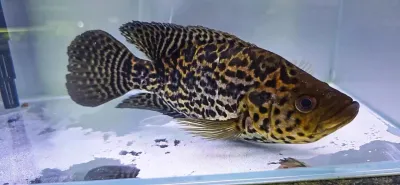
Jaguar Cichlid - (Parachromis managuensis)
Jaguar Cichlid - (Parachromis managuensis)
Price of shipping is not included.
5.0
(1)
was $100.00
Save 10%
$90.00
Out of stock
Wild Caught
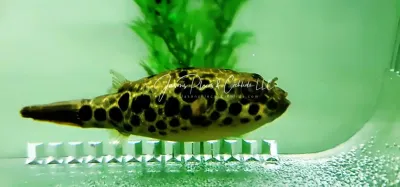
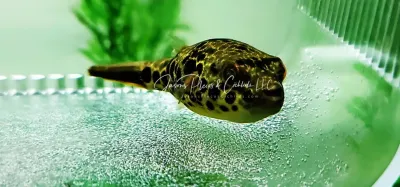
Spotted Congo Puffer - (Tetraodon schoutedeni)
Spotted Congo Puffer - (Tetraodon schoutedeni)
Price of shipping is not included.
was $150.00
Save 20%
$120.00
Out of stock
Wild Caught
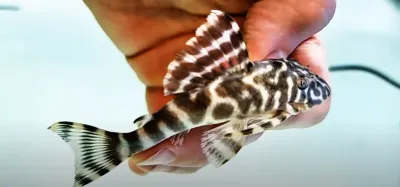
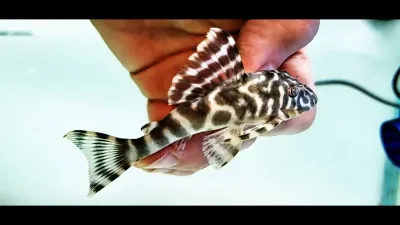
L015 Candy Striped Pleco - (Peckoltia vittata)
L015 Candy Striped Pleco - (Peckoltia vittata)
Price of shipping is not included.
was $50.00
Save 10%
$45.00
Out of stock
Wild Caught

Frogmouth Catfish - (Chaca chaca)
Frogmouth Catfish - (Chaca chaca)
Price of shipping is not included.
was $50.00
Save 40%
$30.00
Out of stock
Powered by Lightspeed
Display prices in:USD