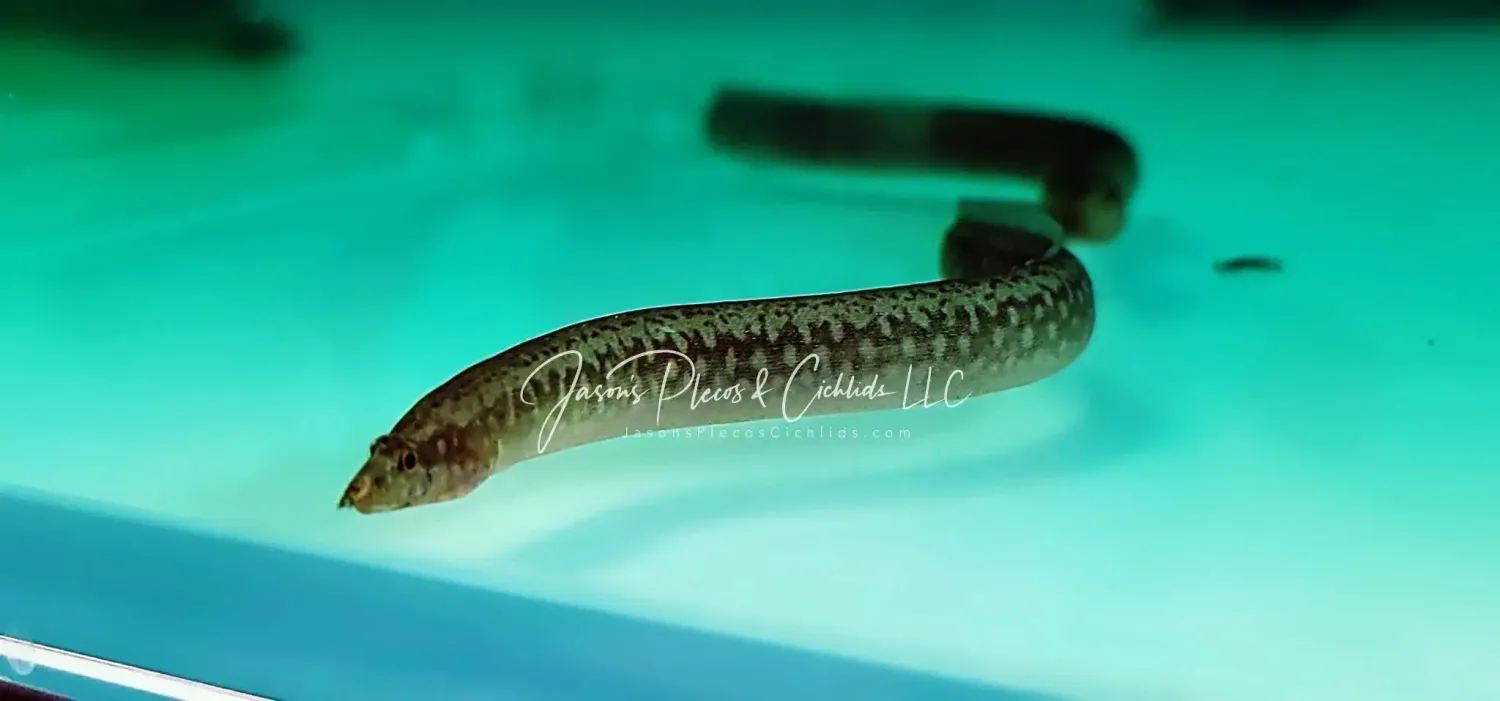
African Starry Night Eel - (Mastacembelus frenatus)
$40.00
Sold out
Size
Questions, Comments, Concerns? Let us know!
Enter your text
Price of shipping is not included.
Sold out
Save this fish to my favorites.
Customer reviews
Reviews only from verified customers
No reviews yet. You can buy this product and be the first to leave a review.
African Starry Night Eel - (Mastacembelus frenatus)
Fish Details, Description and Information Below:
🌌 African Starry Night Eel – (Mastacembelus frenatus) – African Longtail Spiny Eel
The African Starry Night Eel (Mastacembelus frenatus), also known as the Longtail Spiny Eel or East African Spiny Eel, is a fascinating African freshwater fish known for its long eel-like body, pointed snout, secretive personality, and highly variable dark pattern.
Depending on the individual, its coloration can include combinations of:
- Brown
- Tan
- Olive
- Dark chocolate
- Black
- Cream
- Yellow-brown
with:
- Spots
- Blotches
- Reticulated markings
- Broken lines
- Irregular star-like patterns
running along the body.
Despite the common name:
THIS IS NOT A TRUE EEL
It belongs to the freshwater spiny eel family Mastacembelidae, rather than the true eel order Anguilliformes.
🔎 Quick Facts – African Starry Night Eel
- 📛 Common Name: African Starry Night Eel
- 📛 Other Names: Longtail Spiny Eel, East African Spiny Eel
- 🔬 Scientific Name: Mastacembelus frenatus
- 📅 Described: 1901
- 🐟 Family: Mastacembelidae
- 🧬 Order: Synbranchiformes
- 📏 Current Offered Size: Approximately 4–5 inches
- 🌍 Origin: Africa
- 🌊 Native Range: East, Central and Southern African freshwater systems
- 🏞️ Major Systems: Lake Victoria, Lake Tanganyika, upper Congo, upper Zambezi and Okavango
- 💧 Water Type: Freshwater
- 📏 Scientific Maximum: 40 cm / approximately 15.7 inches standard length
- 📏 Adult Planning Size: Approximately 16–18 inches total length
- 🏠 Minimum Permanent Aquarium: Approximately 75 gallons
- 🏠 Preferred Adult Aquarium: 90+ gallons
- 📐 Aquarium Shape: Long aquarium strongly preferred
- 🌡️ Temperature: Approximately 73–81°F
- 💧 pH: Approximately 7.4–8.4
- 💦 Hardness: Approximately 7–30 dH
- 💨 Oxygenation: Good to High
- 🌊 Water Movement: Gentle to Moderate with good circulation
- 🏖️ Substrate: Fine, soft sand strongly recommended
- 🪨 Shelter: Caves, rocks, roots and driftwood
- 🔒 Secure Lid: Absolutely Essential
- 🍽️ Diet: Predatory Carnivore / Invertebrate Feeder
- 🪱 Primary Foods: Worms, insect larvae, shrimp and other aquatic invertebrates
- 🐟 Small Fish: May be eaten
- 🌙 Activity: Primarily Nocturnal
- 😌 Temperament: Generally peaceful toward fish too large to swallow
- ⚠️ Spines: Dorsal spines can snag nets and injure careless handlers
- 🥚 Breeding: Flood-season spawner in nature
- 🧪 Captive Breeding: Rare / poorly documented
- ⭐ Care Level: Intermediate
- 🌎 Conservation Status: Least Concern
🧬 Valid Scientific Species
The currently accepted scientific name is:
Mastacembelus frenatus
The species was described by:
George Albert Boulenger in 1901
Modern taxonomic references continue to recognize:
Mastacembelus frenatus
as the valid species name.
Some aquarium sources may use:
Afromastacembelus frenatus
but modern taxonomic work does not support maintaining Afromastacembelus as a separate genus.
For this product, use:
African Starry Night Eel – (Mastacembelus frenatus)
⚠️ Not a True Eel
Although it has an eel-like body, Mastacembelus frenatus is:
NOT A TRUE EEL
True eels belong to:
ORDER ANGUILLIFORMES
The African Starry Night Eel belongs to:
ORDER SYNBRANCHIFORMES
and:
FAMILY MASTACEMBELIDAE
These fish are commonly known as:
SPINY EELS
🦔 Why Is It Called a Spiny Eel?
Along the back of the fish are numerous individual:
DORSAL SPINES
before the soft dorsal fin.
Mastacembelus frenatus can have approximately:
18–35 DORSAL SPINES
These spines are part of the reason members of this family are called:
SPINY EELS
⚠️ Spines Are Not Venomous
The dorsal spines should be respected because they can:
- Prick skin
- Catch in aquarium nets
- Become tangled during handling
However:
THE SPECIES IS NOT CONSIDERED VENOMOUS
Care is still required whenever handling or transferring the fish.
👃 Specialized Snout
The African Starry Night Eel has an unusual:
ELONGATED, FLESHY SNOUT
The anterior nostrils form short tubular structures.
The fish uses its sensitive snout while searching through:
- Sand
- Crevices
- Vegetation
- Rocks
for prey.
🎨 Appearance
Mastacembelus frenatus is naturally:
EXTREMELY VARIABLE IN COLOR
The base coloration is usually some shade of:
- Brown
- Tan
- Olive-brown
- Chocolate
- Gray-brown
with variable:
- Spots
- Blotches
- Reticulations
- Broken stripes
- Dark bands
🌌 Why “Starry Night”?
The aquarium name:
STARRY NIGHT EEL
refers to individuals whose body pattern contains numerous contrasting:
- Pale spots
- Small markings
- Broken patterns
that can resemble stars scattered across a dark background.
However:
NOT EVERY M. frenatus WILL HAVE AN IDENTICAL STARRY PATTERN
The species is naturally variable.
⚠️ Pattern Disclaimer
Exact coloration and pattern cannot be guaranteed.
Individual specimens may differ substantially in:
- Spot size
- Number of spots
- Body darkness
- Reticulated pattern
- Stripe development
- Contrast
Appearance can also change with:
- Stress
- Shipping
- Lighting
- Substrate color
- Age
- Acclimation
- Water conditions
🌍 Native Distribution
The African Starry Night Eel has an unusually broad African distribution.
It occurs from:
EAST AFRICA
through:
CENTRAL AFRICA
and into portions of:
SOUTHERN AFRICA
🌊 Lake Victoria Basin
The species occurs throughout portions of the:
LAKE VICTORIA BASIN
and associated river systems.
Records include waters associated with:
- Uganda
- Kenya
- Tanzania
🌊 Lake Tanganyika Region
Mastacembelus frenatus also occurs in:
LAKE TANGANYIKA
and its associated drainage systems.
This does not mean the species is exclusively a Lake Tanganyika eel.
Its distribution is much broader.
🌊 Upper Congo Basin
The species is also documented in the:
UPPER CONGO RIVER BASIN
including records from:
- Democratic Republic of the Congo
- Zambia
🌊 Upper Zambezi
The range extends southward into the:
UPPER ZAMBEZI SYSTEM
with records from portions of:
- Zambia
- Zimbabwe
- Angola
- Namibia
🌊 Okavango
The species is also found within the:
OKAVANGO RIVER SYSTEM
making this one of the more geographically widespread African spiny eels.
🇹🇿 East-Flowing Tanzanian Rivers
Populations are additionally documented from:
EASTWARD-FLOWING RIVERS OF TANZANIA
For the product page, the most accurate concise origin is:
EAST, CENTRAL & SOUTHERN AFRICA
rather than simply:
African Rivers
🌊 Natural Habitat
The African Starry Night Eel occupies a surprisingly broad range of freshwater habitats.
It is primarily a:
RIVERINE SPECIES
but is also found in:
- Lakes near river mouths
- Vegetated lake margins
- Swamps
- Flooded areas
- Rocky streams
- Rapids
🪨 Rapids & Rocks
The species has been documented in:
RAPIDS
where individuals shelter among:
- Rocks
- Crevices
- Submerged structure
This shows that the species can tolerate and occupy flowing water.
🌿 Vegetated Margins
It can also inhabit quieter:
- Vegetated margins
- Swamps
- Flooded habitats
Therefore, the aquarium does:
NOT
need to reproduce an extreme high-current river throughout the entire tank.
🏠 Aquarium Setup
A suitable African Starry Night Eel aquarium should contain:
- Fine sand
- Smooth rocks
- Caves
- Driftwood
- Root structures
- Shaded areas
- Plants when desired
- Open feeding areas
- Good filtration
- Good oxygenation
🏖️ Soft Sand Is Strongly Recommended
One of the most important aquarium requirements is:
SOFT, FINE SAND
Spiny eels naturally:
- Dig
- Burrow
- Push beneath the substrate
- Search the bottom for food
A soft sand substrate allows these behaviors without damaging the skin.
🚫 Avoid Sharp Gravel
Avoid substrates containing:
- Sharp gravel
- Jagged stones
- Crushed coral with sharp edges
- Rough decorative rock fragments
Repeated contact with abrasive material can damage the eel's:
- Skin
- Snout
- Belly
and potentially create sites for infection.
🕳️ Burrowing Behavior
Do not be surprised if your Starry Night Eel:
DISAPPEARS INTO THE SAND
Sometimes only the:
- Head
- Snout
- Eyes
remain visible.
This is normal spiny eel behavior.
🪨 Hiding Places
Provide multiple secure hiding places such as:
- Smooth caves
- PVC-style shelters hidden by décor
- Driftwood tunnels
- Rock overhangs
- Root structures
The fish should always have somewhere dark and secure to retreat.
🌑 Dim Lighting
Because this species is naturally:
NOCTURNAL
subdued lighting can help it feel more secure.
Useful options include:
- Floating plants
- Shaded caves
- Dark backgrounds
- Gradual sunrise/sunset lighting
🔒 EXTREME ESCAPE ARTIST
One of the most important warnings for any spiny eel is:
THE AQUARIUM MUST BE COMPLETELY SECURE
Mastacembelus can escape through surprisingly small openings.
🚨 Cover Every Opening
Check carefully around:
- Filter hoses
- Heater cords
- Airline tubing
- Overflow boxes
- Plumbing
- Lid gaps
- Feeding openings
If the head fits through:
THE REST OF THE FISH MAY FOLLOW
⚠️ Do Not Rely on a Loose Glass Lid
A proper setup should have:
A TIGHT-FITTING, ESCAPE-RESISTANT COVER
This is not optional.
Escaped spiny eels can quickly become:
- Dehydrated
- Injured
- Lost behind furniture or aquarium stands
📏 Adult Size
FishBase documents Mastacembelus frenatus at:
40 CM STANDARD LENGTH
or approximately:
15.7 INCHES
📏 What Is Standard Length?
Standard length measures from the front of the fish to the end of the vertebral body and:
DOES NOT INCLUDE THE FULL TAIL FIN
Therefore, a 40 cm standard-length fish can have a somewhat greater:
TOTAL LENGTH
📏 Responsible Adult Planning
For permanent housing, customers should plan for approximately:
16–18 INCHES TOTAL LENGTH
with unusually large individuals potentially approaching:
20 INCHES
This is more useful than promising that every specimen will stop at exactly 15 inches.
🏠 Aquarium Size
The older recommendation of:
55 GALLONS
is possible for a smaller individual but is tight for a fully mature 16–18 inch fish.
For permanent adult housing:
75 GALLONS SHOULD BE CONSIDERED A GOOD MINIMUM
with:
90+ GALLONS PREFERRED
📐 Length Matters More Than Height
The African Starry Night Eel spends most of its time:
- Along the bottom
- Under structure
- Searching substrate
- Moving horizontally
Therefore:
AQUARIUM LENGTH + BOTTOM AREA
are more useful than a tall aquarium.
A:
4-FOOT OR LONGER AQUARIUM
is strongly preferred for an adult.
👥 Keeping More Than One
More than one African Starry Night Eel may be possible in a sufficiently large aquarium.
However, mature spiny eels can become:
TERRITORIAL WITH ONE ANOTHER
For multiple adults:
A MUCH LARGER AQUARIUM IS RECOMMENDED
with:
- Multiple shelters
- Large bottom area
- Visual barriers
- Several feeding locations
💧 Important Water-Chemistry Correction
The older product page listed:
pH 6.5–7.5
Current FishBase information gives a natural range of approximately:
pH 7.4–8.4
Therefore, I would not describe this primarily as an acidic-water fish.
💧 Water Parameters
A practical long-term range is:
- 🌡️ Temperature: Approximately 73–81°F
- 💧 pH: Approximately 7.4–8.4
- 💦 Hardness: Approximately 7–30 dH
- 💨 Oxygenation: Good to High
- 🌊 Water Movement: Gentle to Moderate
- ☠️ Ammonia: 0 ppm
- ☠️ Nitrite: 0 ppm
- 🔄 Nitrate: Keep reasonably low
⚠️ Stability Matters
Avoid sudden changes in:
- Temperature
- pH
- Hardness
- Salinity
A stable, mature aquarium is much safer than constantly attempting to chase exact numbers.
🧂 Freshwater Species
The African Starry Night Eel is a:
FRESHWATER FISH
Routine addition of aquarium salt is:
NOT REQUIRED
Do not assume that an eel-like fish needs brackish water.
🌊 Water Movement
The species naturally occurs in habitats ranging from:
- Rapids
to:
- Quieter vegetated areas
Therefore, a good aquarium provides:
GOOD CIRCULATION WITHOUT FORCING EXTREME CURRENT THROUGHOUT THE ENTIRE TANK
💨 Oxygenation
Maintain:
GOOD TO HIGH DISSOLVED OXYGEN
through:
- Surface agitation
- Air stones when useful
- Filter returns
- Proper circulation
💩 Filtration
Use reliable:
- Mechanical filtration
- Biological filtration
Predatory fish fed frozen and meaty foods can create substantial organic waste.
Remove uneaten food promptly.
🔄 Water Changes
Regular partial water changes are important.
Maintain:
AMMONIA = 0
and:
NITRITE = 0
at all times.
Do not allow uneaten:
- Worms
- Shrimp
- Fish pieces
to decay beneath décor.
🍽️ Diet – Predatory Carnivore
Wild Mastacembelus frenatus feed primarily on animal prey.
Documented natural foods include:
- Aquatic insect larvae
- Insects associated with rocks
- Shrimp
- Oligochaete worms
- Small fish
Only occasional vegetable matter has been recorded.
The best aquarium description is:
PREDATORY CARNIVORE / INVERTEBRATE FEEDER
🪱 Worms Are Excellent Foods
Spiny eels often respond exceptionally well to:
- Earthworms
- Nightcrawler pieces
- Blackworms
- Bloodworms
appropriately sized for the individual fish.
🦐 Crustacean Foods
Good foods also include:
- Mysis shrimp
- Krill
- Chopped shrimp
- Prawn
- Brine shrimp for smaller specimens
🐟 Fish Foods
Wild Starry Night Eels will consume small fish.
In captivity, appropriate alternatives include:
- Quality frozen fish
- Fish flesh
- Carnivore pellets once accepted
🚫 Avoid Routine Feeder Fish
There is no need to regularly feed live feeder fish.
Feeder fish can introduce:
- Parasites
- Bacteria
- Disease
- Poor nutritional balance
Frozen, fresh and prepared foods are generally safer.
🥩 Prepared Foods
Some established individuals learn to accept:
- Sinking carnivore pellets
- Soft sinking sticks
- Gel foods
- Other prepared predatory-fish foods
However, newly imported or newly acquired fish may initially prefer:
FROZEN OR LIVE INVERTEBRATE FOODS
🍽️ Can Be a Slow Feeder
African spiny eels can be:
DELIBERATE FEEDERS
Fast or aggressive tankmates may consume everything before the eel has an opportunity to eat.
🌙 Feed Near Dusk
Useful feeding times include:
- Shortly before lights out
- During dim evening lighting
- After aquarium lights turn off
Food can also be placed close to the eel's shelter.
🎯 Target Feeding
A feeding:
- Pipette
- Tongs
- Turkey baster
can be useful for delivering food near a shy eel.
Avoid striking or startling the fish with feeding equipment.
😌 Temperament
Toward fish too large to swallow, the African Starry Night Eel is generally:
PEACEFUL
It is not normally an aggressive community predator that attacks large tankmates.
⚠️ Small Fish Are Food
The important exception is:
ANY FISH SMALL ENOUGH TO SWALLOW
Potential prey can include:
- Tiny tetras
- Small rasboras
- Small livebearers
- Very small catfish
- Small fry
🐠 Tankmates
Good tankmates should be:
- Too large to swallow
- Not excessively aggressive
- Not fin-nipping
- Not extremely competitive at feeding time
Potential compatible fish depend on aquarium size and water requirements.
🚫 Avoid Aggressive Cichlids That Harass It
The eel's elongated body and relatively slow feeding style make it vulnerable to persistent harassment.
Avoid fish that repeatedly:
- Bite the eel
- Nip fins
- Attack its snout
- Prevent it from feeding
🌙 Nocturnal Hunter
Mastacembelus frenatus is naturally:
NOCTURNAL
In the wild it often remains relatively sedentary inside cover and waits for prey to:
- Swim nearby
- Drift within range
- Move past its shelter
The eel then darts forward to capture it.
☀️ May Learn Daytime Feeding
Established aquarium specimens can become accustomed to:
- Their keeper
- Feeding schedules
- Daytime activity
Some eventually emerge readily when food is offered.
🥚 Natural Reproduction
Unlike many aquarium species where reproduction is poorly understood, some natural reproductive information is available for Mastacembelus frenatus.
The species breeds during:
THE FLOOD SEASON
🌧️ Flooded Habitat Spawning
Wild breeding occurs in:
INUNDATED / FLOODED AREAS
Seasonal rising water likely provides:
- Expanded habitat
- Vegetation
- Food
- Protected nursery areas
for eggs and young fish.
🥚 Eggs
The eggs have been described as:
LARGE AND YELLOW
and are believed to be deposited among:
AQUATIC VEGETATION
⚠️ Captive Breeding Is Rare
Despite what is known from the wild:
ROUTINE HOME-AQUARIUM BREEDING IS NOT WELL ESTABLISHED
I would not advertise this as an easily bred aquarium species.
🚫 Do Not Invent a Captive Breeding Formula
Avoid promising that breeding can be achieved simply by:
- Raising temperature
- Adding caves
- Performing one large water change
- Keeping a male and female together
Reliable species-specific captive breeding information remains limited.
♂️ Male vs. Female
African Starry Night Eels are:
DIFFICULT TO SEX VISUALLY
External sexual differences are not dependable enough for normal retail sexing.
Unless sex is confidently known:
SELL AS UNSEXED
🛡️ Handling
Spiny eels should be handled carefully.
Potential problems include:
- Dorsal spines snagging nets
- Skin abrasion
- Escape attempts
- Powerful twisting
🚫 Avoid Fine Nets When Possible
The separate dorsal spines can become tangled in:
FINE NETTING
For larger specimens, a:
- Smooth container
- Appropriate fish bag
- Large rigid transfer container
may be safer.
⚠️ Protect the Slime Coat
Do not handle the fish unnecessarily with dry hands.
Its skin and protective mucus layer can be damaged by:
- Rough handling
- Dry surfaces
- Sharp substrate
- Abrasive decorations
🩹 Skin Damage Matters
Because spiny eels spend substantial time:
- Burrowing
- Rubbing through substrate
- Entering narrow spaces
small skin injuries can become problematic in poor water quality.
Use:
SMOOTH DÉCOR + CLEAN WATER + SOFT SUBSTRATE
🌎 Conservation Status
Mastacembelus frenatus is currently assessed as:
LEAST CONCERN
The current FishBase listing references a global assessment dated:
FEBRUARY 19, 2025
Its broad African distribution contributes to its current conservation classification.
⭐ Why Keep an African Starry Night Eel?
The African Starry Night Eel combines:
- 🌌 Beautiful variable star-like patterning
- 🐍 Fascinating eel-like body shape
- 👃 Specialized sensory snout
- 🏖️ Natural burrowing behavior
- 🌙 Nocturnal hunting behavior
- 🪱 Interesting invertebrate-based feeding
- 🌍 Broad African distribution
- 📏 Approximately 16–18 inch adult potential
- 😌 Generally peaceful behavior toward larger fish
- 🧬 True African spiny eel biology
into an extremely interesting centerpiece fish for a properly designed freshwater aquarium.
⚠️ Important Considerations
Before purchasing an African Starry Night Eel:
- The correct scientific name is Mastacembelus frenatus.
- Some older or aquarium references may use Afromastacembelus frenatus.
- Modern taxonomy recognizes Mastacembelus frenatus.
- This is a spiny eel, not a true eel.
- The species was described in 1901.
- Its body coloration is naturally extremely variable.
- Do not guarantee one specific starry pattern.
- The species has a broad African distribution.
- It occurs in Lake Victoria and Lake Tanganyika drainage systems.
- It also occurs in the upper Congo, upper Zambezi and Okavango systems.
- It is primarily riverine but also occupies lakes, swamps, vegetated margins and rapids.
- FishBase documents 40 cm / approximately 15.7 inches standard length.
- Standard length excludes the full tail.
- Plan for approximately 16–18 inches total length.
- Some unusually large specimens may approach 20 inches.
- Provide approximately 75 gallons minimum for permanent adult housing.
- 90+ gallons is preferred.
- Prioritize aquarium length and bottom area.
- Use fine, soft sand.
- Avoid sharp gravel.
- Provide multiple secure hiding places.
- Expect natural burrowing behavior.
- Use a completely secure aquarium lid.
- Seal even small gaps around plumbing and equipment.
- Maintain approximately 73–81°F.
- Maintain approximately pH 7.4–8.4.
- Do not describe this primarily as an acidic-water fish.
- Routine salt addition is unnecessary.
- Maintain good dissolved oxygen.
- Feed a carnivorous, invertebrate-oriented diet.
- Worms, insect larvae and shrimp are excellent foods.
- The species may eat small fish.
- Avoid routine feeder fish.
- Ensure shy specimens receive enough food.
- Feed near dusk when necessary.
- Choose tankmates too large to swallow.
- Avoid aggressive or persistent fin-nipping fish.
- The dorsal spines can snag nets.
- Captive breeding is uncommon.
- Wild breeding occurs during the flood season.
- Eggs are large and yellow and are believed to be deposited among vegetation.
- The species is currently classified as Least Concern.
- Never release aquarium fish into natural waterways.
🧬 Taxonomy
The currently accepted scientific name is:
Mastacembelus frenatus Boulenger, 1901
Classification:
- Class: Actinopterygii
- Order: Synbranchiformes
- Family: Mastacembelidae
- Genus: Mastacembelus
- Species: frenatus
For this product, use:
African Starry Night Eel – (Mastacembelus frenatus)
🔬 Scientific Name Disclaimer
Some aquarium sources may still use:
Afromastacembelus frenatus
Modern taxonomic work does not support maintaining Afromastacembelus as a separate genus, and current major fish databases recognize:
Mastacembelus frenatus
as the valid name.
🚚 Live Fish Shipping
Live fish are professionally packed for safe transport.
Shipping availability depends on:
- Fish size
- Destination
- Weather conditions
- Carrier availability
- Applicable state and local regulations
African Starry Night Eels require careful packing because of their:
- Long flexible bodies
- Escape ability
- Dorsal spines
- Sensitivity to abrasion
Larger specimens may require:
- Larger insulated shipping boxes
- Additional water
- Heavy-duty shipping bags
- Multiple protective bag layers
- Specialized packing
Please review our Shipping & Payment Information and Live Arrival Guarantee / DOA Policy before ordering.
⚠️ Buyer Responsibility
Customers are responsible for confirming that Mastacembelus frenatus may legally be purchased, possessed, transported, and received in their state or local jurisdiction before ordering.
Never release aquarium fish into natural waterways.
Below are fish you may also like.
Wild Caught
Blue Eyed Royal Pleco - (Panaque cochliodon)
Blue Eyed Royal Pleco - (Panaque cochliodon)
Price of shipping is not included.
$270.00
Out of stock
Wild Caught
Nsess - (Stomatepia mariae)
Nsess - (Stomatepia mariae)
Price of shipping is not included.
$10.00
Out of stock
Wild Caught
Snoring Catfish - (Wertheimeria maculata)
Snoring Catfish - (Wertheimeria maculata)
Price of shipping is not included.
was $300.00
Save 17%
$250.00
Out of stock
Wild Caught
L020 Acari Bola Branca - (Spectracanthicus zuanoni)
L020 Acari Bola Branca - (Spectracanthicus zuanoni)
Price of shipping is not included.
was $55.00
Save 9%
$50.00
Out of stock
Captive Bred
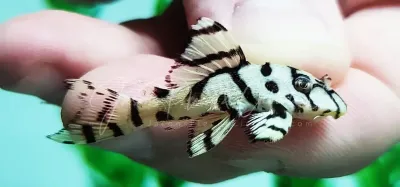
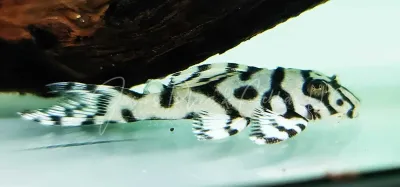
L236 Super White - (Hypancistrus seideli)
L236 Super White - (Hypancistrus seideli)
Price of shipping is not included.
was $280.00
Save 11%
$250.00
Out of stock
Captive Bred
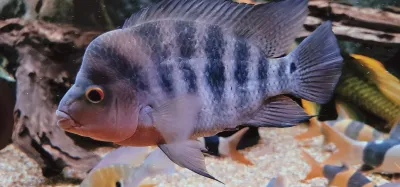
Red isletas Cichlid - (Amphilophus sp.)
Red isletas Cichlid - (Amphilophus sp.)
Price of shipping is not included.
$100.00
Out of stock
Wild Caught
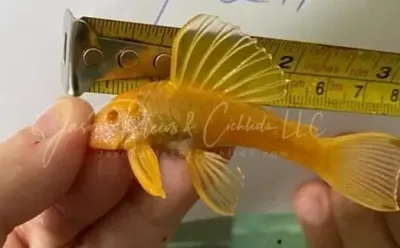
Albino Luteus Pleco/Golden Sailfin Pleco - (Hypostomus Luteus)
Albino Luteus Pleco/Golden Sailfin Pleco - (Hypostomus Luteus)
Price of shipping is not included.
$4 000.00
Out of stock
Captive Bred
Super Red Longfin Bristlenose Pleco - (Ancistrus cf. cirrhosus)
Super Red Longfin Bristlenose Pleco - (Ancistrus cf. cirrhosus)
Price of shipping is not included.
$17.00
Out of stock
Wild Caught
L024 Red Fin Cactus Pleco - (Pseudacanthicus pitanga)
L024 Red Fin Cactus Pleco - (Pseudacanthicus pitanga)
Price of shipping is not included.
$120.00
Out of stock
Wild Caught
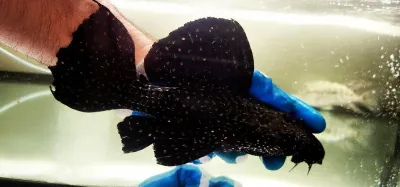
L097 Polka Dot Cactus Pleco - (Pseudacanthicus sp.)
L097 Polka Dot Cactus Pleco - (Pseudacanthicus sp.)
Price of shipping is not included.
$225.00
Out of stock
Captive Bred
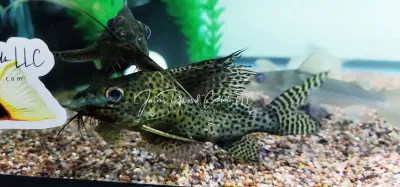
Featherfin squeaker - (Featherfin Synodontis Eupterus)
Featherfin squeaker - (Featherfin Synodontis Eupterus)
Price of shipping is not included.
was $30.00
Save 33%
$20.00
Out of stock
Captive Bred
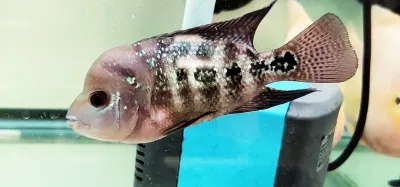
Kamfa x Super Red Dragon Hybrid Flowerhorn
Kamfa x Super Red Dragon Hybrid Flowerhorn
Price of shipping is not included.
$50.00
Out of stock
Powered by Lightspeed
Display prices in:USD