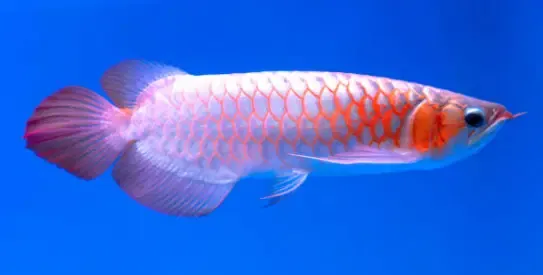
Asian Arowana - (Scleropages formosus) ILLEGAL IN USA!
$10 000.00
Sold out
Asian Arowana is ILLEGAL IN USA! This is for informational purposes ONLY!
Sold out
Save this fish to my favorites.
Customer reviews
Reviews only from verified customers
No reviews yet. You can buy this product and be the first to leave a review.
Asian Arowana - (Scleropages formosus) ILLEGAL IN USA!
Fish Details, Description and Information Below:
🐉 Asian Arowana – (Scleropages formosus) – Federally Endangered Dragon Fish – NOT FOR SALE IN THE USA
The Asian Arowana (Scleropages formosus), also known as the Asian Bonytongue, Dragon Fish, Golden Arowana, Red Arowana, or Green Arowana, is one of the most famous and highly valued freshwater fish in the world.
Known for its:
- Enormous metallic scales
- Long streamlined body
- Upturned mouth
- Two prominent lower-jaw barbels
- Powerful surface-swimming behavior
- Red, gold, green, or metallic coloration
the Asian Arowana has become an iconic aquarium fish throughout much of Asia.
However, this species is subject to extremely strict conservation laws.
🚨 NOT FOR SALE IN THE UNITED STATES
ASIAN AROWANAS CANNOT BE LEGALLY IMPORTED OR SOLD THROUGH THE NORMAL U.S. PET TRADE
The Asian Arowana is federally listed as:
ENDANGERED – WHEREVER FOUND
under the:
UNITED STATES ENDANGERED SPECIES ACT
These federal protections apply throughout:
ALL 50 STATES
Ordinary members of the U.S. public cannot legally import or purchase Asian Arowanas through the normal aquarium trade.
U.S. Fish & Wildlife Service permits or registrations for otherwise prohibited activities are limited to qualifying purposes such as:
- Scientific research
- Conservation
- Enhancement of propagation
- Enhancement of species survival
- Approved captive-breeding programs
Qualifying:
- Zoos
- Public aquariums
- Research institutions
- Conservation organizations
- Approved captive-breeding programs
- Other federally authorized entities
may sometimes possess or work with Asian Arowanas under the appropriate federal authorization.
USFWS DOES NOT ISSUE ENDANGERED-SPECIES CAPTIVE-BREEDING REGISTRATIONS FOR KEEPING THESE FISH AS PETS.
This page is therefore provided for:
EDUCATIONAL AND SPECIES-INFORMATION PURPOSES ONLY
and does:
NOT REPRESENT AN OFFER TO SELL ASIAN AROWANAS IN THE UNITED STATES.
🔎 Quick Facts – Asian Arowana
- 📛 Common Name: Asian Arowana
- 📛 Other Names: Asian Bonytongue, Dragon Fish, Golden Arowana, Red Arowana, Green Arowana
- 🔬 Scientific Name: Scleropages formosus
- 📚 Older Scientific Combination: Osteoglossum formosum
- 🐟 Family: Osteoglossidae
- 🌎 Origin: Southeast Asia
- 🌊 Natural Habitat: Forest streams, blackwater rivers, peat-associated wetlands and slow-moving freshwater
- 📏 Maximum Documented Size: Approximately 90 cm / 35.4 inches total length
- 📏 Adult Planning Size: Approximately 30–36 inches
- 🏠 Adult Aquarium: Approximately 250–300+ gallons where legally maintained
- 📐 Preferred Aquarium Dimensions: Approximately 8 feet long with substantial front-to-back width
- 🔒 Lid: Extremely secure lid absolutely required
- 🌡️ Temperature: Approximately 75–86°F
- 💧 pH: Approximately 6.0–7.5
- 💦 Water: Soft to moderately mineralized
- 🍽️ Diet: Carnivorous
- 🦗 Natural Foods: Insects, fish and other small aquatic or terrestrial prey
- 🐠 Swimming Level: Primarily upper water / surface
- 😠 Temperament: Territorial / Predatory
- ⚠️ Tankmates: Only large compatible species where legally maintained
- 🥚 Reproduction: Mouthbrooder
- ♂️ Parental Care: Male mouthbroods eggs and young
- 🌎 IUCN Status: Endangered
- 🚨 CITES: Appendix I
- 🇺🇸 U.S. ESA Status: Endangered – Wherever Found
- 🚫 Normal U.S. Pet Trade: Prohibited
- 🚫 U.S. Import for Ordinary Hobbyists: Prohibited
- 🚫 Normal Interstate Sale: Prohibited
- 🚫 Jason's Plecos & Cichlids U.S. Sales: NOT AVAILABLE
- 🏛️ Exceptions: Only qualifying federally authorized activities/entities
- ⭐ Care Level: Advanced / Institutional-level planning in the United States
🚨 U.S. LEGAL STATUS – READ BEFORE CONTINUING
The Asian Arowana is:
FEDERALLY PROTECTED THROUGHOUT THE UNITED STATES
The species has been listed under the U.S. Endangered Species Act since:
1976
and remains listed as:
ENDANGERED – WHEREVER FOUND
This means the federal protection applies regardless of whether the fish originated from:
- Indonesia
- Malaysia
- Singapore
- Thailand
- Another foreign country
- A captive-breeding facility
🚫 What Is Prohibited Without Federal Authorization?
For endangered wildlife such as Scleropages formosus, federal law restricts activities including:
- Importing the fish into the United States
- Exporting it from the United States
- Selling or offering it for sale in interstate or foreign commerce
- Commercially delivering it through interstate or foreign commerce
- Commercially receiving it through interstate or foreign commerce
- Commercially transporting or shipping it through interstate or foreign commerce
- Other prohibited activities involving endangered wildlife
Therefore:
A U.S. AQUARIUM STORE CANNOT LEGALLY IMPORT ASIAN AROWANAS AND SELL THEM TO ORDINARY HOBBYISTS.
🇺🇸 All 50 States Are Covered by Federal Law
The Endangered Species Act is:
FEDERAL LAW
It is not limited to one individual state.
Therefore, ordinary hobbyists cannot simply travel to another state where Asian Arowanas are supposedly “legal” and legally purchase or import one through the normal pet trade.
The federal restrictions apply:
NATIONWIDE
⚠️ Important Legal Accuracy – Possession vs. Acquisition
There is an important legal distinction.
It would be inaccurate to state:
“MERE POSSESSION IS AUTOMATICALLY ILLEGAL IN EVERY STATE UNDER FEDERAL LAW.”
U.S. Fish & Wildlife Service explains that possession itself is not necessarily an Endangered Species Act violation when a specimen was lawfully acquired and no otherwise-prohibited activity occurred.
However:
THAT DOES NOT CREATE A NORMAL PET-OWNERSHIP PATHWAY.
For an ordinary U.S. hobbyist, legally obtaining an Asian Arowana through:
- Import
- Interstate commercial sale
- Normal aquarium-store purchase
is prohibited without the required federal authorization.
Individual states may impose additional possession restrictions.
🚨 Practical Rule for U.S. Customers
For customers reading this page:
DO NOT ATTEMPT TO PURCHASE, IMPORT, ORDER, SHIP, OR SMUGGLE AN ASIAN AROWANA INTO THE UNITED STATES.
Do not assume that:
- A foreign seller offering one online
- A fish having a microchip
- A fish having a CITES certificate
- A fish being captive bred
- A seller claiming it is “legal”
- A seller agreeing to ship it
makes the transaction legal in the United States.
🏛️ Who Can Receive Federal Authorization?
Federal authorization for activities involving endangered wildlife may be issued for qualifying purposes such as:
- Scientific purposes
- Enhancement of propagation
- Enhancement of survival
- Conservation breeding
This may involve qualifying:
- Zoos
- Public aquariums
- Universities
- Research institutions
- Conservation organizations
- Specialized breeding programs
- Other properly authorized entities
However:
A ZOO OR INSTITUTION IS NOT AUTOMATICALLY EXEMPT JUST BECAUSE IT IS A ZOO.
The appropriate federal authorization must still apply to the activity.
🚫 Pet Permits Are Not the Purpose of the Program
U.S. Fish & Wildlife Service makes an especially important point:
CAPTIVE-BRED WILDLIFE REGISTRATIONS ARE NOT ISSUED TO KEEP OR BREED ENDANGERED ANIMALS AS PETS.
The federal program exists to support:
CONSERVATION AND SPECIES RECOVERY
not private pet ownership.
🌎 CITES APPENDIX I
The Asian Arowana is also listed under:
CITES APPENDIX I
CITES is the:
Convention on International Trade in Endangered Species of Wild Fauna and Flora
Appendix I contains species receiving the convention's highest level of international trade protection.
🚨 Wild Commercial Trade Is Not Allowed
Normal commercial international trade involving:
WILD-CAUGHT ASIAN AROWANAS
is prohibited.
Wild Asian Arowanas should never be represented as ordinary legal export aquarium fish.
🧬 Captive-Bred CITES Asian Arowanas
There is an important distinction outside the United States.
CITES has registered commercial captive-breeding operations for:
Scleropages formosus
in countries including:
- Indonesia
- Malaysia
- Singapore
Qualifying captive-bred Asian Arowanas produced through registered operations may enter regulated international trade under specific CITES provisions.
💾 Microchipped Fish
Legitimate internationally traded captive-bred Asian Arowanas commonly have:
- Individual identification
- CITES documentation
- Coded microchips / PIT tags
- Breeder or farm records
This helps verify their captive-bred origin and legal international trade status.
⚠️ CITES Documentation Does NOT Make Them Legal U.S. Pets
This distinction is extremely important:
A CITES-LEGAL ASIAN AROWANA OUTSIDE THE UNITED STATES IS NOT AUTOMATICALLY LEGAL TO IMPORT INTO THE UNITED STATES.
The U.S. Endangered Species Act provides additional federal protection.
Therefore:
CAPTIVE BRED + MICROCHIPPED + CITES CERTIFIED ≠ LEGAL U.S. PET IMPORT
🚫 Jason's Plecos & Cichlids Will Not Sell Asian Arowanas
Because of U.S. federal restrictions:
JASON'S PLECOS & CICHLIDS DOES NOT SELL ASIAN AROWANAS TO THE U.S. PUBLIC.
We will not:
- Import Asian Arowanas for normal retail sale
- Ship Asian Arowanas to hobbyists
- Arrange interstate retail sales
- Help customers bypass federal regulations
- Misidentify an Asian Arowana as another legal species
- Assist with unlawful importation
⚠️ Do Not Confuse Asian Arowanas With Other Arowanas
Not every fish called an:
AROWANA
is an Asian Arowana.
Other species include:
Silver Arowana
Osteoglossum bicirrhosum
Black Arowana
Osteoglossum ferreirai
Jardini / Australian Arowana
Scleropages jardinii
Southern Saratoga
Scleropages leichardti
These species have different legal classifications.
Never assume that restrictions applying to:
Scleropages formosus
automatically apply identically to every arowana species.
State and local restrictions can still apply to other species.
🧬 Valid Scientific Species
The currently accepted scientific name is:
Scleropages formosus
Older scientific literature may use:
Osteoglossum formosum
The species belongs to the ancient freshwater fish family:
OSTEOGLOSSIDAE
commonly known as the:
AROWANAS / BONYTONGUES
🐉 Why Is It Called the Dragon Fish?
The Asian Arowana is frequently called the:
DRAGON FISH
because its:
- Large metallic scales
- Long body
- Prominent barbels
- Powerful swimming style
are considered reminiscent of traditional Asian depictions of dragons.
🧧 Cultural Importance
In several Asian cultures, the Asian Arowana has become associated with:
- Prosperity
- Wealth
- Good fortune
- Power
- Protection
- Success
This cultural significance helped make certain color forms among the most valuable aquarium fish in the world.
🎨 Color Forms
The Asian Arowana includes several geographically and selectively developed color forms.
Common aquarium names include:
- Green Arowana
- Golden Arowana
- Red-Tail Golden
- Crossback Golden
- Super Red
- Chili Red
- Blood Red
The exact taxonomy and geographic relationships among some historic color populations have been debated.
For general identification:
Scleropages formosus
remains the appropriate species name for the Asian Arowana forms included within this species.
🔴 Red Asian Arowana
Red forms are especially famous for developing:
- Red scales
- Red fins
- Orange-red coloration
- Deep crimson coloration
depending on:
- Genetics
- Age
- Line
- Diet
- Lighting
- Development
🟡 Golden Asian Arowana
Golden forms can develop:
- Metallic gold scales
- Golden scale rims
- Yellow-gold fins
- Deep metallic coloration
Some selectively bred lines are especially prized in Asian markets.
🟢 Green Asian Arowana
Green forms generally show:
- Olive-green
- Silver-green
- Bronze-green
- Gray-green
scales and are often less intensely colored than highly selected red or golden strains.
⚠️ Color Does Not Change U.S. Legal Status
Whether an Asian Arowana is:
- Red
- Green
- Gold
- Crossback
- Super Red
- Red-Tail Golden
- Platinum
- Albino
- Leucistic
does not remove the federal protection applying to:
Scleropages formosus
🌎 Native Distribution
The Asian Arowana is native to:
SOUTHEAST ASIA
Its historic distribution includes portions of:
- Myanmar
- Thailand
- Cambodia
- Vietnam
- Malaysia
- Indonesia
with different populations occurring in geographically separated river systems.
🌿 Natural Habitat
Asian Arowanas occur in tropical freshwater environments including:
- Forest streams
- Slow-moving rivers
- Blackwater habitats
- Peat-associated waters
- Flooded forests
- Swamps
- Wetland systems
Many habitats contain:
- Tannins
- Submerged roots
- Overhanging vegetation
- Dark water
- Surface insects
🐟 Surface-Oriented Predator
The Asian Arowana spends considerable time near the:
WATER SURFACE
Its:
- Upturned mouth
- Long body
- Surface patrol behavior
are adaptations for capturing food from above and near the surface.
📏 Adult Size
FishBase documents Scleropages formosus reaching approximately:
90 CM / 35.4 INCHES TOTAL LENGTH
For practical planning where the species is legally maintained:
EXPECT APPROXIMATELY 30–36 INCHES
🏠 Aquarium Size
Where legally maintained outside ordinary U.S. pet ownership:
250 GALLONS SHOULD BE CONSIDERED A MINIMUM STARTING POINT FOR AN ADULT
and:
300+ GALLONS IS PREFERRED
especially for a full-sized specimen.
📐 Aquarium Dimensions Matter More Than Gallons Alone
An adult Arowana needs enough room to:
- Swim continuously
- Turn comfortably
- Accelerate
- Surface-feed
A good adult enclosure should ideally be approximately:
8 FEET LONG
with substantial:
FRONT-TO-BACK WIDTH
↔️ Width Is Extremely Important
An aquarium can contain many gallons and still be:
TOO NARROW
for a three-foot surface predator.
Approximately:
30–36+ INCHES OF FRONT-TO-BACK WIDTH
is much more appropriate for a large adult.
🚀 Extremely Powerful Jumper
Asian Arowanas are:
POWERFUL JUMPERS
An adult can launch from the water with tremendous force.
A secure top is:
ABSOLUTELY REQUIRED
🔒 Secure Heavy Lid
The aquarium should have a:
- Strong lid
- Securely fastened cover
- Minimal escape gaps
Openings around:
- Filters
- Plumbing
- Electrical cables
must be carefully secured.
⚠️ Jumping Can Cause Serious Injury
A startled Arowana can strike:
- Glass
- Lighting
- Covers
- Hard décor
causing:
- Scale loss
- Mouth injuries
- Spinal injuries
- Death
Keep the upper swimming area open and safe.
💧 Water Parameters
Where legally maintained, practical conditions include:
- 🌡️ Temperature: Approximately 75–86°F
- 💧 pH: Approximately 6.0–7.5
- 💦 Hardness: Soft to moderately mineralized
- 💨 Oxygenation: Good to High
- 🌊 Water Movement: Moderate
- ☠️ Ammonia: 0 ppm
- ☠️ Nitrite: 0 ppm
- 🔄 Nitrate: Keep low
🌡️ Temperature
FishBase gives a tropical temperature range around:
24–30°C / 75–86°F
A common maintenance target is approximately:
78–82°F
💩 Heavy Bioload
A three-foot predatory fish creates:
SUBSTANTIAL WASTE
Use powerful:
- Mechanical filtration
- Biological filtration
- Sump filtration where practical
- Strong water turnover
🔄 Water Quality
Maintain:
AMMONIA = 0
and:
NITRITE = 0
at all times.
Regular partial water changes are essential.
🍽️ Diet – Carnivore
The Asian Arowana is a:
CARNIVORE
Young fish naturally consume substantial numbers of:
- Insects
- Surface prey
- Small aquatic organisms
Adults consume:
- Fish
- Crustaceans
- Insects
- Other appropriately sized prey
- Small vertebrates in the wild
🦐 Appropriate Captive Foods
Where legally maintained, suitable foods can include:
- Quality floating Arowana pellets
- Shrimp
- Prawn
- Krill
- Insects
- Earthworms
- Appropriate fish flesh
A varied prepared and frozen diet is preferable.
⚠️ Avoid Feeder Fish
There is no need to rely on live feeder fish.
Feeder fish can introduce:
- Parasites
- Bacteria
- Disease
- Nutritional problems
High-quality prepared and frozen foods are safer.
🚫 Avoid Mammalian Meat as a Staple
Foods such as:
- Beef
- Chicken
- Beef heart
should not form the regular staple diet.
Arowanas are better fed aquatic prey, insects, and appropriately formulated carnivore foods.
😠 Temperament
Asian Arowanas can be:
TERRITORIAL
and:
PREDATORY
Any fish small enough to swallow may become food.
🐠 Tankmates
Where legally maintained, tankmates require careful selection.
Potential companions must be:
- Large enough not to be swallowed
- Compatible with warm water
- Robust
- Non-fin-nipping
- Not excessively aggressive
⚠️ Keeping Multiple Arowanas
Conspecific aggression can be severe.
Single-specimen housing is often the safest option unless an extremely large enclosure and experienced management are available.
♂️ Male vs. Female
Asian Arowanas can be difficult to sex visually.
Mature females may become:
- Fuller-bodied
- Broader through the abdomen
while males may develop subtle differences in:
- Head shape
- Mouth dimensions
However:
VISUAL SEXING IS NOT ALWAYS RELIABLE
🥚 Breeding – Male Mouthbrooder
Asian Arowanas have a fascinating reproductive strategy.
The species is a:
PATERNAL MOUTHBROODER
💕 Spawning
During reproduction:
- The female releases a relatively small number of large eggs.
- The male fertilizes them.
- The male collects the eggs into his mouth.
- The eggs develop inside his mouth.
- Newly hatched young remain protected by the male.
👨👧 Male Parental Care
The male can carry the developing young for many weeks.
The juveniles continue to use their:
LARGE YOLK SACS
while protected within or around the male's mouth.
This unusually intensive paternal care helps explain the species' relatively low reproductive output compared with many smaller aquarium fish.
🧬 Captive Breeding
Asian Arowanas are commercially captive bred in parts of Southeast Asia.
Major production occurs in specialized:
- Earthen ponds
- Large breeding facilities
- Controlled aquaculture operations
rather than ordinary home aquariums.
💾 CITES Breeding Operations
Certain commercial operations breeding Scleropages formosus are officially:
REGISTERED WITH CITES
Legally traded captive-bred fish in participating international markets may be individually identified using:
CODED MICROCHIPS / PIT TAGS
and accompanied by required documentation.
Again:
THIS DOES NOT CREATE A LEGAL U.S. HOBBYIST IMPORT PATH.
🚨 IUCN Conservation Status
The Asian Arowana is currently classified as:
ENDANGERED
The current global assessment dates to:
2019
with threats historically including:
- Habitat loss
- Habitat degradation
- Overcollection
- Commercial demand
- Fragmentation of wild populations
🚨 CITES Appendix I
The species receives:
APPENDIX I
protection under CITES.
This is the highest standard CITES Appendix for species threatened by international trade.
🇺🇸 U.S. Endangered Species Act
The Asian Arowana is additionally protected in the United States as:
ENDANGERED – WHEREVER FOUND
This is why a fish that can be legally captive bred and sold under controlled CITES procedures in some other countries remains:
UNAVAILABLE THROUGH THE NORMAL U.S. AQUARIUM TRADE
🚔 Illegal Wildlife Trade Warning
Asian Arowanas have repeatedly been involved in U.S. wildlife-trafficking cases.
Do not:
- Buy one from an underground seller
- Import one without authorization
- Have one falsely labeled as a legal Arowana species
- Accept undocumented interstate shipment
- Attempt to hide one from wildlife authorities
Wildlife violations can result in:
- Seizure
- Forfeiture
- Civil penalties
- Criminal prosecution
⚠️ Species Identification Matters
Some illegal sellers may attempt to label an Asian Arowana as:
- Jardini Arowana
- Silver Arowana
- Australian Arowana
- Another legal species
Learn the identification differences and never participate in mislabeling.
🆚 Asian Arowana vs. Jardini Arowana
Asian Arowana
Scleropages formosus
- Southeast Asia
- Federally endangered in the United States
- CITES Appendix I
- Normal U.S. retail sale/import unavailable
Jardini Arowana
Scleropages jardinii
- Northern Australia / New Guinea region
- Different species
- Different federal conservation status
The two should never be intentionally confused.
⭐ Why Is the Asian Arowana So Famous?
The Asian Arowana combines:
- 🐉 Dragon-like appearance
- ✨ Huge metallic scales
- 🔴 Spectacular red varieties
- 🟡 Brilliant golden varieties
- 🟢 Historic green forms
- 🧧 Major cultural significance
- 📏 Approximately three-foot adult size
- 🐟 Surface-predator behavior
- 👨👧 Male mouthbrooding
- 🧬 Ancient bonytongue ancestry
- 🌎 Endangered conservation status
- 🚨 Strict international protection
into one of the world's most recognizable freshwater fish.
⚠️ Important Considerations
Before researching or considering an Asian Arowana:
- The correct scientific name is Scleropages formosus.
- The species is native to Southeast Asia.
- Adults can reach approximately 90 cm / 35.4 inches.
- The species is carnivorous.
- It is an extremely powerful jumper.
- A secure lid is mandatory where legally maintained.
- Adults require approximately 250–300+ gallons.
- A wide aquarium approximately 8 feet long is preferable.
- Maintain approximately 75–86°F.
- Maintain excellent water quality.
- The male is the mouthbrooding parent.
- The species is Endangered.
- It is CITES Appendix I.
- The species is federally Endangered wherever found in the United States.
- Federal protections apply throughout all 50 states.
- Normal U.S. commercial import is prohibited.
- Normal interstate retail sale is prohibited.
- A CITES certificate from another country does not automatically make a fish legal to import into the United States.
- Captive breeding outside the United States does not remove U.S. ESA restrictions.
- USFWS captive-bred wildlife registrations are not issued simply to keep endangered wildlife as pets.
- Qualifying zoos, research institutions, conservation programs, and other appropriately authorized entities may conduct certain otherwise-prohibited activities.
- Mere possession itself is not automatically an ESA violation if a specimen was lawfully obtained and no prohibited activity occurred, so avoid claiming that every conceivable possession situation is automatically illegal in all 50 states.
- For ordinary U.S. hobbyists, there is no normal legal retail pathway to import or purchase an Asian Arowana.
- Jason's Plecos & Cichlids does not offer Asian Arowanas for sale to the U.S. public.
🧬 Taxonomy
The currently accepted scientific name is:
Scleropages formosus (Müller & Schlegel, 1840)
Classification:
- Order: Osteoglossiformes
- Family: Osteoglossidae
- Genus: Scleropages
- Species: formosus
Older scientific combination:
Osteoglossum formosum
For this page, use:
Asian Arowana – (Scleropages formosus)
🚨 U.S. LEGAL DISCLAIMER
THIS SPECIES IS NOT OFFERED FOR SALE BY JASON'S PLECOS & CICHLIDS.
Scleropages formosus is federally listed as an endangered species in the United States.
Unauthorized activities involving this species may violate the Endangered Species Act and other wildlife laws.
Normal commercial importation and interstate retail sale to U.S. aquarium hobbyists are prohibited.
Federal permits or registrations for otherwise prohibited activities are restricted to qualifying purposes such as scientific research or enhancement of propagation or survival of the species.
U.S. Fish & Wildlife Service does not issue captive-bred wildlife registrations simply for keeping endangered wildlife as pets.
State laws may impose additional restrictions.
Anyone dealing with an unusual legally held specimen or institutional transfer should consult the U.S. Fish & Wildlife Service and the applicable state wildlife agency before taking any action.
🚫 U.S. SHIPPING & SALES
NO U.S. SALES
NO U.S. RETAIL SHIPPING
NO U.S. HOBBYIST IMPORTS
INFORMATIONAL PAGE ONLY
Jason's Plecos & Cichlids will not knowingly participate in any transaction involving an Asian Arowana that would violate:
- The Endangered Species Act
- CITES
- Federal wildlife regulations
- State wildlife regulations
- Other applicable laws
DO NOT ATTEMPT TO ORDER THIS SPECIES FOR U.S. DELIVERY.
Below are fish you may also like.
Captive Bred
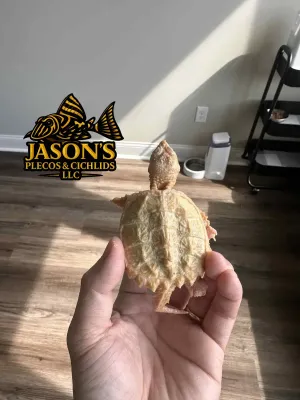
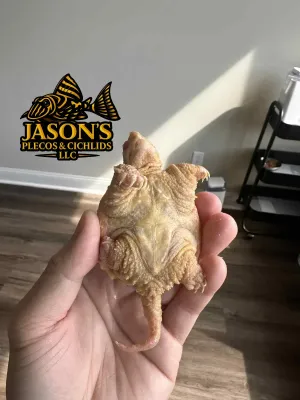
Albino Common Snapping Turtle - (Chelydra serpentina)
Albino Common Snapping Turtle - (Chelydra serpentina)
Price of shipping is not included.
$1 315.00
Wild Caught
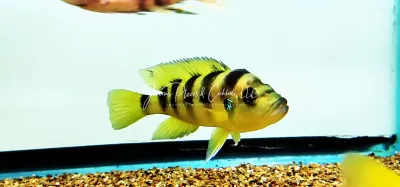
Six-barred Lamprologus - (Neolamprologus sexfasciatus)
Six-barred Lamprologus - (Neolamprologus sexfasciatus)
Price of shipping is not included.
$45.00
Out of stock
Wild Caught
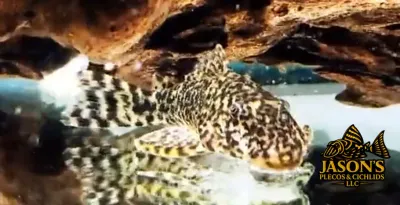
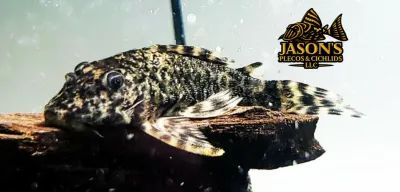
Otali Pleco - (Peckoltia otali)
Otali Pleco - (Peckoltia otali)
Price of shipping is not included.
$200.00
Out of stock
Captive Bred
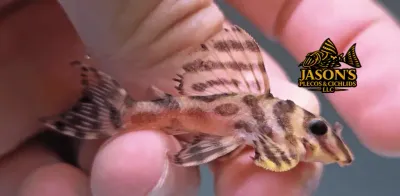
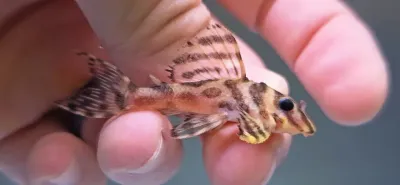
L236 Cracked Zebra Pleco - (Hypancistrus seideli)
L236 Cracked Zebra Pleco - (Hypancistrus seideli)
Price of shipping is not included.
was $100.00
Save 10%
$90.00
Out of stock
Wild Caught
L020 Acari Bola Branca - (Spectracanthicus zuanoni)
L020 Acari Bola Branca - (Spectracanthicus zuanoni)
Price of shipping is not included.
was $55.00
Save 9%
$50.00
Out of stock
Captive Bred
Discus - (Symphysodon aequifasciatus)
Discus - (Symphysodon aequifasciatus)
Price of shipping is not included.
was $100.00
Save 20%
$80.00
Out of stock
Captive Bred
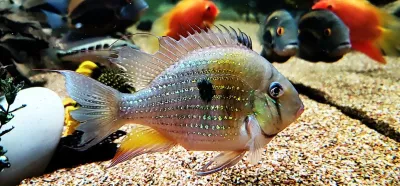
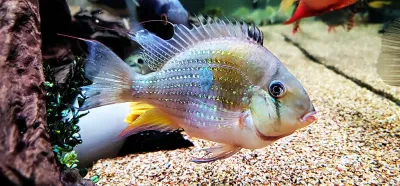
Threadfin Acara - (Acarichthys Heckelii)
Threadfin Acara - (Acarichthys Heckelii)
Price of shipping is not included.
$75.00
Out of stock
Captive Bred
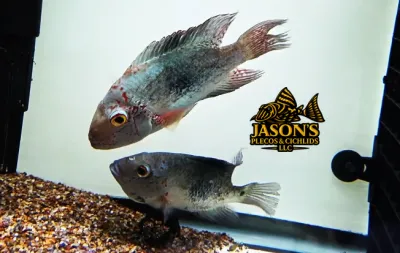
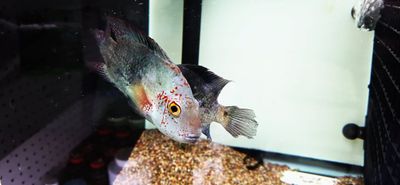
Nautla cichlid - (Hericthys Deppi) - Breeding Pair
Nautla cichlid - (Hericthys Deppi) - Breeding Pair
Price of shipping is not included.
5.0
(4)
was $400.00
Save 10%
$360.00
Out of stock
Wild Caught
L136C Light Angel Pleco - (Hypancistrus sp.)
L136C Light Angel Pleco - (Hypancistrus sp.)
Price of shipping is not included.
$125.00
Out of stock
Wild Caught
Indo-Pacific Tarpon - (Megalops cyprinoides)
Indo-Pacific Tarpon - (Megalops cyprinoides)
Price of shipping is not included.
$100.00
Out of stock
Captive Bred
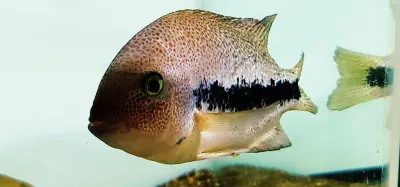
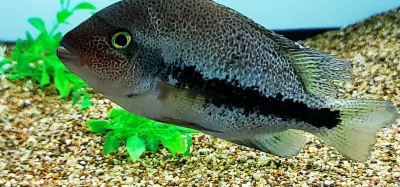
Coatique Cichlid - (Paratheraps sp. "Coatzacoalcos")
Coatique Cichlid - (Paratheraps sp. "Coatzacoalcos")
Price of shipping is not included.
$50.00
Out of stock
Wild Caught
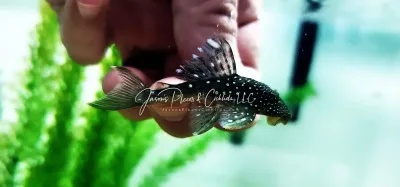
L128 Blue Phantom Pleco - (Hemiancistrus sp.)
L128 Blue Phantom Pleco - (Hemiancistrus sp.)
Price of shipping is not included.
was $55.00
Save 18%
$45.00
Out of stock
Powered by Lightspeed
Display prices in:USD