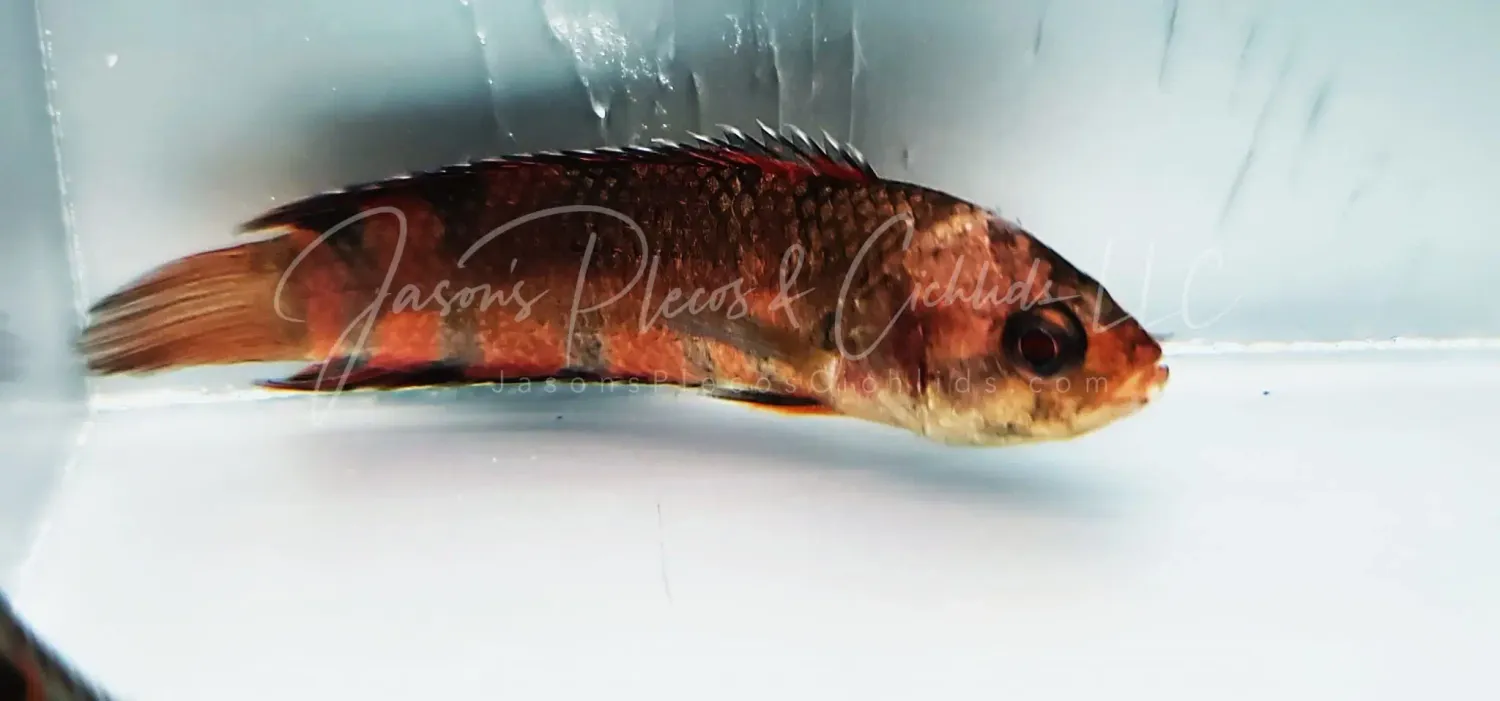
Ornate ctenopoma - (Microctenopoma ansorgii)
$18.00
Sold out
Size
Price of shipping is not included.
Sold out
Save this fish to my favorites.
Customer reviews
Reviews only from verified customers
No reviews yet. You can buy this product and be the first to leave a review.
Ornate ctenopoma - (Microctenopoma ansorgii)
Fish Details, Description and Information Below:
🐟 Ornate Ctenopoma – (Microctenopoma ansorgii) – Colorful African Labyrinth Fish
The Ornate Ctenopoma (Microctenopoma ansorgii), also known as the Orange Ctenopoma, Ornate Climbing Perch, Rainbow Ctenopoma, or Orange Bushfish, is a small and beautifully patterned African labyrinth fish known for its dramatic dark vertical bars, orange-to-red coloration, elongated fins, and remarkable ability to change color according to mood and breeding condition.
Mature males can become especially impressive, displaying intense orange or reddish coloration between contrasting dark vertical bands while extending their dorsal and anal fins during territorial or breeding displays.
Despite belonging to the same broad climbing-perch family as several considerably larger predatory species, the Ornate Ctenopoma remains a very manageable fish, reaching only approximately:
3 INCHES AS AN ADULT
It is native to the Chiloango River and central Congo Basin of Africa, where it inhabits quieter, heavily vegetated freshwater environments.
🔎 Quick Facts – Ornate Ctenopoma
- 📛 Common Name: Ornate Ctenopoma
- 📛 Other Names: Orange Ctenopoma, Orange Bushfish, Ornate Climbing Perch, Rainbow Ctenopoma, Pretty Ctenopoma
- 🔬 Scientific Name: Microctenopoma ansorgii
- 📚 Older Scientific Name: Ctenopoma ansorgii
- 🐟 Family: Anabantidae
- 🌎 Origin: Africa
- 🌊 Native Range: Chiloango River and Central Congo Basin
- 🇦🇴 Verified Native Range: Angola
- 🇨🇩 Verified Native Range: Democratic Republic of the Congo
- 🌍 Introduced Population: Madagascar
- 📏 Current Listing Size: Approximately 2–2.5 inches
- 📏 Scientific Maximum: 5.4 cm / approximately 2.1 inches standard length
- 📏 Maximum Reported Total Length: Approximately 8 cm / 3.1 inches
- 📏 Adult Planning Size: Approximately 3 inches
- 🏠 Recommended Aquarium: 20 gallons or larger
- 👥 Pair / Small Group: 30+ gallons with substantial cover preferred
- 🌡️ Temperature: Approximately 77–82°F
- 💧 pH: Approximately 6.0–7.5 preferred
- 💦 Hardness: Soft to moderately mineralized
- 🌊 Water Movement: Gentle
- 🌿 Aquarium Style: Heavily planted / heavily structured
- 💡 Lighting: Subdued or partially shaded
- 🍽️ Diet: Carnivorous / Insectivorous Micropredator
- 🪱 Preferred Foods: Small worms, insects, crustaceans, frozen and live foods
- 🥣 Prepared Foods: May accept quality granules or small pellets
- 😌 Temperament: Shy; generally peaceful toward suitable tankmates
- ⚠️ Conspecific Behavior: Males can become territorial
- 🐟 Small Prey: May consume tiny fish fry and shrimp
- 💨 Special Adaptation: Facultative Air Breather / Labyrinth Fish
- 🔒 Lid: Secure lid strongly recommended
- 🥚 Breeding: Bubble-Nest Spawner
- 👨👧 Parental Care: Male guards the nest
- ⭐ Care Level: Intermediate
- 🌎 IUCN Status: Least Concern
🧬 Correct Scientific Name
The currently accepted scientific name is:
Microctenopoma ansorgii
The species was originally described by George Albert Boulenger in:
1912
as:
Anabas ansorgii
Older aquarium and scientific literature may also use:
Ctenopoma ansorgii
Modern taxonomy places the species in:
Microctenopoma
Therefore, the correct modern product name is:
Ornate Ctenopoma – (Microctenopoma ansorgii)
🐟 What Does Microctenopoma Mean?
The genus name reflects the smaller members of the broader African climbing-perch group.
The Ornate Ctenopoma is considerably smaller than species such as the commonly kept:
Leopard Ctenopoma
and normally reaches only around:
3 INCHES TOTAL LENGTH
This makes it suitable for much smaller aquariums than its larger relatives.
🎨 Appearance
The Ornate Ctenopoma is one of the most colorful members of its family.
Typical coloration can include:
- Orange
- Rust red
- Reddish brown
- Bronze
- Olive
- Greenish reflections
combined with:
- Dark brown
- Chocolate
- Nearly black
vertical bars.
🦓 Vertical Body Bars
The species typically develops approximately:
7–8 DARK VERTICAL BARS
across the sides of the body.
These bars are often:
- Narrower than the pale spaces between them
- More visible in males
- More intense during breeding or territorial displays
In mature males, the dark bars may continue prominently through portions of the:
- Dorsal fin
- Anal fin
🟠 Orange Breeding Color
The orange coloration for which this species is famous becomes especially intense in:
MATURE BREEDING MALES
During courtship or territorial displays, the spaces between the dark bars may become:
- Orange
- Red-orange
- Copper
- Bright rust-colored
The transformation can be dramatic.
🔄 Incredible Ability to Change Color
Ornate Ctenopoma can change appearance significantly depending on:
- Mood
- Social status
- Stress
- Courtship
- Lighting
- Aquarium background
A relaxed fish may appear:
- Reddish brown
- Olive
- Greenish brown
with relatively subdued bars.
An excited displaying male can become:
MUCH BRIGHTER
with intense orange areas and strongly contrasting black vertical bands.
⚠️ Do Not Guarantee Exact Color
Exact adult coloration cannot be guaranteed.
Individual fish may vary in:
- Orange intensity
- Red coloration
- Number of visible bars
- Fin development
- Body darkness
- Greenish sheen
Shipping stress can temporarily cause the fish to look considerably duller than it will after acclimation.
🌎 Native Distribution
The Ornate Ctenopoma is native to Africa.
Its verified range includes the:
CHILOANGO RIVER
and large portions of the:
CENTRAL CONGO BASIN
🇦🇴 Angola
The species is scientifically documented from the:
CHILOANGO RIVER SYSTEM
in Angola.
Its original type locality was associated with lagoons near the Luali River at Lundo.
🇨🇩 Democratic Republic of the Congo
The species is also widely documented from the central Congo Basin.
Records include areas associated with:
- Middle Congo River
- Pool Malebo
- Lukenie Basin
- Lake Mai-Ndombe
- Ubangi system
- Aruwimi system
- Luilaka / Ruki drainage
Therefore, simply describing its distribution as:
“River Congo”
does not fully represent its known range.
⚠️ Cameroon Records Are Uncertain
The species has sometimes been reported from the:
NYONG RIVER IN CAMEROON
However, FishBase currently treats those records as:
POSSIBLE / UNCONFIRMED
I would therefore not list Cameroon as a confirmed native country on the product page.
🌍 Introduced to Madagascar
The Ornate Ctenopoma has also been recorded from:
MADAGASCAR
including the Mangoro River system.
However:
MADAGASCAR IS NOT PART OF ITS NATIVE RANGE
Those fish represent an introduced population.
🌿 Natural Habitat
The Ornate Ctenopoma is associated primarily with quieter freshwater habitats.
These can include:
- Slow-moving forest streams
- Protected river margins
- Lagoons
- Floodplain pools
- Swampy habitats
- Dense marginal vegetation
🌊 Gentle Water Movement
Unlike many rheophilic plecos:
ORNATE CTENOPOMA DO NOT REQUIRE STRONG CURRENT
Their natural habitat tends to contain:
- Slow water
- Dense vegetation
- Root tangles
- Protected margins
- Quiet areas
For captivity:
GENTLE WATER MOVEMENT
is preferred.
🌿 Dense Cover Is Important
A good aquarium should contain substantial shelter.
Excellent options include:
- Live plants
- Floating plants
- Driftwood
- Roots
- Leaf litter
- Caves
- Dense background planting
The goal is to create:
SHADED, PROTECTED AREAS
where the fish feels comfortable enough to emerge naturally.
💡 Subdued Lighting
Ornate Ctenopoma can be shy under bright lighting.
Use:
- Moderate lighting
- Floating plants
- Tall plants
- Driftwood shadows
to create dimmer areas.
A fish that feels secure is often:
MORE VISIBLE
than one kept in a bright, empty aquarium.
📏 Adult Size
FishBase documents a maximum scientific length of:
5.4 CM STANDARD LENGTH
Standard length excludes the complete tail fin.
A maximum total length of:
8 CM
or approximately:
3.1 INCHES
has also been reported.
Therefore:
APPROXIMATELY 3 INCHES
remains an appropriate adult planning size.
✅ Your Old 3-Inch Size Was Basically Correct
Unlike many of the older product pages we have corrected, the current:
3-INCH MAXIMUM
for the Ornate Ctenopoma is reasonable.
There is no reason to inflate this fish to:
- 4 inches
- 5 inches
- 6 inches
without evidence.
🏠 Aquarium Size
Although this is a small fish, aquarium structure is extremely important.
For one specimen or a compatible pair:
20 GALLONS OR LARGER
is a good starting point.
For:
- A small group
- Multiple males
- Community housing
I prefer:
30+ GALLONS
with abundant visual barriers.
⚠️ Small Fish Does Not Mean Bare Nano Tank
Even though the fish only reaches around three inches, it benefits from enough space for:
- Territories
- Plants
- Hiding areas
- Feeding zones
A bare aquarium can increase:
- Stress
- Hiding
- Aggression
- Feeding problems
🌡️ Temperature
A practical long-term aquarium range is:
77–82°F
FishBase gives an aquarium-associated tropical range around:
26–28°C / 79–82°F
Some experienced keepers maintain the species somewhat cooler.
For a general retail recommendation:
77–82°F
provides a sensible range.
💧 Water Parameters
A practical long-term range is:
- 🌡️ Temperature: Approximately 77–82°F
- 💧 pH: Approximately 6.0–7.5 preferred
- 💦 Hardness: Soft to Moderately Mineralized
- 🌊 Water Movement: Gentle
- ☠️ Ammonia: 0 ppm
- ☠️ Nitrite: 0 ppm
- 🔄 Nitrate: Keep as low as reasonably practical
FishBase documents a broader pH tolerance of:
6.0–8.0
but soft to moderately mineralized, slightly acidic to neutral water is an excellent target.
💨 Labyrinth Fish
One of the most interesting characteristics of Microctenopoma ansorgii is its ability to:
BREATHE ATMOSPHERIC AIR
It belongs to the labyrinth-fish group.
🫁 Facultative Air Breathing
The fish possesses specialized respiratory adaptations that allow it to supplement normal gill respiration by taking air from the surface.
You may occasionally see the fish:
- Rise toward the surface
- Take a quick gulp of air
- Return immediately to cover
This is normal behavior.
⚠️ Surface Access Is Essential
Do not completely block the surface with:
- Decorations
- Extremely dense floating plants
- Equipment
The fish must retain easy access to atmospheric air.
🔒 Use a Secure Lid
A tight-fitting aquarium lid is strongly recommended.
The lid should:
- Prevent jumping
- Maintain warm, humid air above the water
- Still allow appropriate aquarium gas exchange
Do not leave large openings through which the fish can escape.
⚠️ Air Breathing Does Not Mean Dirty Water Is Acceptable
The ability to breathe atmospheric air does not mean Ornate Ctenopoma should be maintained in:
- High ammonia
- High nitrite
- Excessive nitrate
- Dirty water
Always maintain:
GOOD WATER QUALITY
💧 Filtration
Filtration should provide excellent biological filtration without creating excessive current.
Excellent choices include:
- Sponge filters
- Gentle canister-filter returns
- Small internal filters
- Spray bars
Avoid blasting a small Ornate Ctenopoma continuously with high-speed current.
🍽️ Diet – Insectivorous Micropredator
The Ornate Ctenopoma is best described as a:
CARNIVOROUS / INSECTIVOROUS MICROPREDATOR
rather than a general-purpose omnivore.
Its natural diet includes small aquatic prey such as:
- Worms
- Insect larvae
- Small crustaceans
- Other aquatic invertebrates
🪱 Excellent Foods
Good captive foods include:
- Bloodworms
- Blackworms
- Mosquito larvae
- Daphnia
- Brine shrimp
- Mysis shrimp
- Cyclops
- Small insect larvae
- Appropriately sized frozen foods
🥣 Prepared Foods
Some Ornate Ctenopoma can be trained to accept:
- Small granules
- Slow-sinking pellets
- Insect-based foods
- Quality carnivore micro-pellets
Your current product page notes that the fish were accepting:
FLUVAL BUG BITES TROPICAL GRANULES
which is useful information for acclimating a newly purchased specimen.
⚠️ Remove Pleco Formula as the Main Recommendation
The Ornate Ctenopoma is:
NOT A PLECO
and there is no reason to center its feeding recommendation around:
PLECO FORMULA
A tropical insect-based granule may be useful if the fish accepts it, but frozen/live invertebrate foods better reflect its natural feeding biology.
🍽️ Some Individuals Are Picky
Wild or newly imported Ornate Ctenopoma may initially refuse:
- Flakes
- Pellets
- Unfamiliar dry foods
If this happens, begin with:
- Frozen bloodworms
- Live or frozen brine shrimp
- Daphnia
- Small worms
and gradually introduce prepared foods.
⚠️ Slow Feeding Behavior
One of the biggest compatibility problems with this species is not aggression.
It is:
BEING OUTCOMPETED FOR FOOD
Ornate Ctenopoma can be deliberate feeders that wait for food to come close.
Fast, aggressive feeders may consume everything first.
🍽️ Target Feeding Can Help
If necessary, place food:
- Near plant cover
- Near the fish's shelter
- Directly in front of the fish
using a:
- Pipette
- Turkey baster
- Feeding tube
This is especially helpful with newly imported specimens.
🐟 Tiny Fish & Shrimp Can Become Food
Despite its small adult size, this is still a:
MICROPREDATOR
Very small animals may be eaten, including:
- Tiny fish fry
- Newborn livebearers
- Very small shrimp
- Small aquatic invertebrates
Do not assume that every animal smaller than the Ornate Ctenopoma is automatically safe.
😌 Temperament
Toward appropriate tankmates, the Ornate Ctenopoma can be:
RELATIVELY PEACEFUL
but it is not necessarily a carefree community fish.
Its biggest issues are:
- Shyness
- Territorial behavior with its own species
- Feeding competition
🐠 Good Tankmates
Potential companions include calm fish that:
- Do not harass it
- Do not constantly outcompete it for food
- Share similar water requirements
Avoid extremely:
- Boisterous
- Aggressive
- Hyperactive
tankmates.
⚠️ Male Territoriality
Mature males can become territorial toward:
OTHER MALES
especially when:
- Breeding
- Displaying
- Competing for surface territory
In smaller aquariums, male-on-male aggression can become significant.
👥 Keeping a Group
A group can work when the aquarium contains:
- Dense plants
- Numerous hiding areas
- Visual barriers
- Adequate space
If one fish is repeatedly:
- Chased
- Cornered
- Prevented from feeding
the fish should be separated or the aquarium rearranged.
♂️ Male vs. Female
Sexual differences become clearer as the fish matures.
Mature Males
Typically show:
- More intense orange coloration
- Stronger dark vertical bars
- Larger dorsal fin
- Larger anal fin
- More extended fin tips
- Pale or white fin edging during display
Mature Females
Generally have:
- Shorter pelvic fins
- Less dramatic dorsal and anal fin development
- More subdued coloration
- Fuller abdominal profile when carrying eggs
⚠️ Subordinate Males Can Look Like Females
An interesting behavior has been documented in this species.
Lower-ranking males can reduce the visual development of their:
- Dorsal fin
- Anal fin
making them resemble females and potentially reducing attacks from dominant males.
Therefore:
SEXING BY COLOR OR DORSAL FIN ALONE CAN BE MISLEADING
🥚 Captive Breeding – Confirmed
The Ornate Ctenopoma has been:
SUCCESSFULLY BRED IN CAPTIVITY
It is a:
BUBBLE-NEST SPAWNER
similar in general reproductive strategy to several other labyrinth fishes.
🫧 Bubble Nest
The male constructs a nest of bubbles at or near the water surface.
Floating plants can provide excellent support for the nest.
Useful plants may include:
- Water sprite
- Frogbit
- Salvinia
- Other suitable floating vegetation
💕 Spawning
A typical breeding sequence includes:
- The male establishes a breeding territory.
- The male constructs a bubble nest.
- A receptive female approaches.
- Courtship occurs beneath the nest.
- Eggs are released.
- The eggs rise toward or are incorporated into the bubble nest.
- The male remains near the nest.
👨👧 Male Parental Care
After spawning:
THE MALE GUARDS THE BUBBLE NEST
He may become aggressive toward the female and other fish.
For controlled breeding:
THE FEMALE MAY NEED TO BE REMOVED AFTER SPAWNING
if the male begins attacking her.
🐣 Hatching
Captive breeding reports show that the eggs can hatch quickly in warm water.
The fry are:
EXTREMELY SMALL
and this is one of the greatest challenges involved with breeding the species.
👶 Feeding the Fry
Very young fry may require extremely small first foods such as:
- Infusoria
- Paramecium
- Other microscopic live foods
before they are large enough to accept:
- Newly hatched baby brine shrimp
- Microworms
- Other small fry foods
⚠️ Breeding Is More Difficult Than Adult Care
Maintaining healthy adult Ornate Ctenopoma is generally easier than successfully raising the fry.
The major breeding challenges are:
- Pair compatibility
- Male aggression
- Tiny fry
- Providing sufficiently small first foods
Therefore, breeding is best considered:
AN INTERMEDIATE PROJECT
🌎 Conservation Status
Microctenopoma ansorgii is currently classified as:
LEAST CONCERN
on the IUCN Red List.
FishBase's current Red List information cites the assessment from:
2009
🌍 Introduced Populations
The species has been introduced outside its native African range, including:
MADAGASCAR
This reinforces an important rule for all aquarium fish:
NEVER RELEASE ORNATE CTENOPOMA INTO NATURAL WATERWAYS
⭐ Why Keep an Ornate Ctenopoma?
The Ornate Ctenopoma combines:
- 🟠 Brilliant orange breeding coloration
- ⚫ Dramatic dark vertical bands
- 🌿 Small adult size
- 🌍 Central African origin
- 💨 Atmospheric air-breathing ability
- 🫁 Fascinating labyrinth-fish biology
- 🍽️ Micropredatory feeding behavior
- 🫧 Bubble-nest breeding
- 👨👧 Male parental care
- 🔄 Remarkable color-changing ability
into an unusual and highly interesting small African aquarium fish.
⚠️ Important Considerations
Before purchasing an Ornate Ctenopoma:
- The correct scientific name is Microctenopoma ansorgii.
- Older references may use Ctenopoma ansorgii.
- The species was originally described in 1912.
- Its verified native distribution includes the Chiloango River and central Congo Basin.
- Angola and the Democratic Republic of the Congo are well-supported native areas.
- Cameroon records remain uncertain.
- Madagascar represents an introduced population.
- Maximum reported total length is approximately 8 cm / 3.1 inches.
- Approximately 3 inches is a good adult planning size.
- A 20-gallon or larger aquarium is appropriate for a single fish or compatible pair.
- Use approximately 30+ gallons for a group.
- Dense vegetation and hiding places are important.
- Subdued lighting is preferred.
- Gentle water movement is more appropriate than strong current.
- Maintain approximately 77–82°F.
- Maintain slightly acidic to neutral water when possible.
- Keep ammonia and nitrite at zero.
- Provide unrestricted access to the water surface.
- Use a secure aquarium lid.
- Ornate Ctenopoma can breathe atmospheric air.
- Feed a small invertebrate- and insect-oriented diet.
- Frozen and live foods are especially useful.
- Quality small granules may be accepted.
- Do not center the diet around pleco food.
- Do not allow fast tankmates to consume all available food.
- Very small fry or shrimp may be eaten.
- Mature males can become territorial.
- Provide visual barriers when keeping several specimens.
- Breeding males become much more colorful.
- L260-style cave spawning does not apply—this species is a bubble-nest builder.
- Males guard the nest.
- Fry are extremely small and require tiny first foods.
- The species is currently classified as Least Concern.
- Never release aquarium fish into natural waterways.
🧬 Taxonomy
The currently accepted scientific name is:
Microctenopoma ansorgii (Boulenger, 1912)
Classification:
- Order: Anabantiformes
- Family: Anabantidae
- Genus: Microctenopoma
- Species: ansorgii
Historical combinations and synonyms include:
- Anabas ansorgii
- Anabas davidae
- Ctenopoma ansorgii
- Ctenopoma davidae
For this product, use:
Ornate Ctenopoma – (Microctenopoma ansorgii)
🚚 Live Fish Shipping
Live fish are professionally packed for safe transport.
Shipping availability depends on:
- Fish size
- Destination
- Weather conditions
- Carrier availability
- Applicable state and local regulations
Please review our Shipping & Payment Information and Live Arrival Guarantee / DOA Policy before ordering.
⚠️ Buyer Responsibility
Customers are responsible for confirming that Microctenopoma ansorgii may legally be purchased, possessed, transported, and received in their state or local jurisdiction before ordering.
Never release aquarium fish into natural waterways.
Below are fish you may also like.
Wild Caught
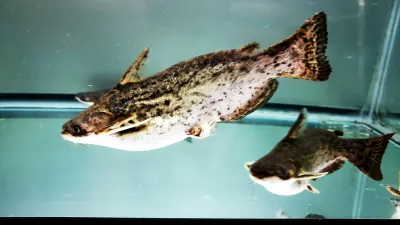
Fisher's Woodcat - (Trachelyopterus fisheri)
Fisher's Woodcat - (Trachelyopterus fisheri)
Price of shipping is not included.
$40.00
Out of stock
Wild Caught
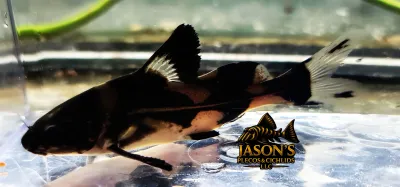
Harlequin Lancer Catfish - (Bagroides melapterus)
Harlequin Lancer Catfish - (Bagroides melapterus)
Price of shipping is not included.
was $75.00
Save 13%
$65.00
Out of stock
Wild Caught
L140 Treestriped Clown Pleco - (Peckoltia sp.)
L140 Treestriped Clown Pleco - (Peckoltia sp.)
Price of shipping is not included.
$25.00
Out of stock
Wild Caught
L133 Golden Cloud Pleco - (Scobinancistrus pariolispos)
L133 Golden Cloud Pleco - (Scobinancistrus pariolispos)
Price of shipping is not included.
$30.00
Out of stock
Wild Caught
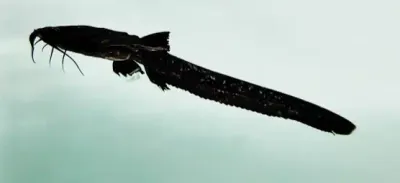
Eel-tail Banjo Catfish - (Platystacus cotylephorus)
Eel-tail Banjo Catfish - (Platystacus cotylephorus)
Price of shipping is not included.
$60.00
Out of stock
Wild Caught
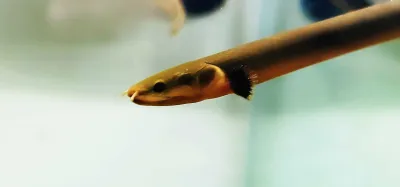
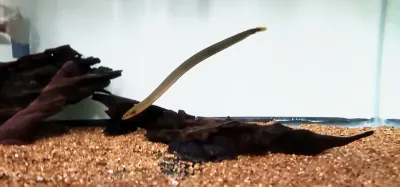
Rope Fish/Reed Fish - (Erpetoichthys calabaricus)
Rope Fish/Reed Fish - (Erpetoichthys calabaricus)
Price of shipping is not included.
$25.00
Out of stock
Captive Bred
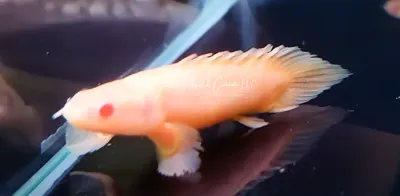
Albino Shortbody Senegal Bichir - (Polypterus senegalus)
Albino Shortbody Senegal Bichir - (Polypterus senegalus)
Price of shipping is not included.
was $60.00
Save 17%
$50.00
Out of stock
Wild Caught
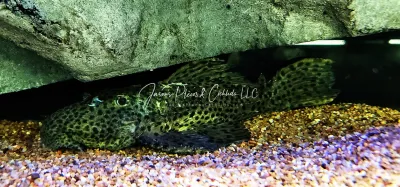
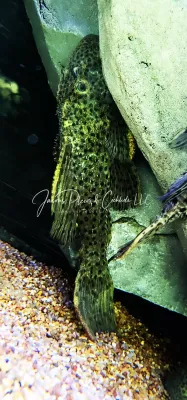
L096 Spiny Monster Pleco/Coffee and Cream Cactus Pleco - (Pseudacanthicus spinosus)
L096 Spiny Monster Pleco/Coffee and Cream Cactus Pleco - (Pseudacanthicus spinosus)
Price of shipping is not included.
5.0
(1)
was $170.00
Save 6%
$160.00
Out of stock
Captive Bred
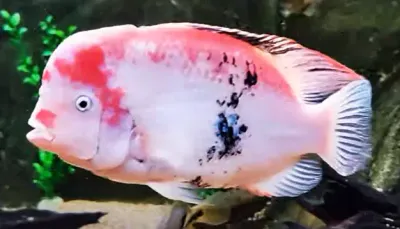
Vieja fenestrata - (Fenestratus Cichlid)
Vieja fenestrata - (Fenestratus Cichlid)
Price of shipping is not included.
$125.00
Out of stock
Wild Caught
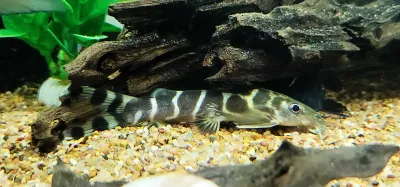
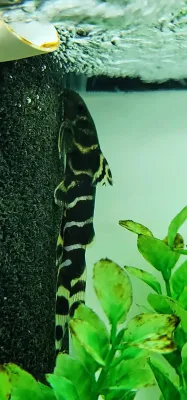
Brichard's Syno - (Synodontis brichardi)
Brichard's Syno - (Synodontis brichardi)
Price of shipping is not included.
$40.00
Out of stock
Wild Caught
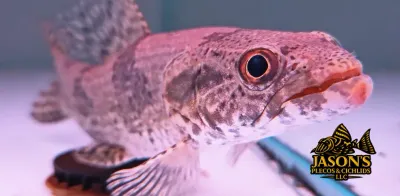
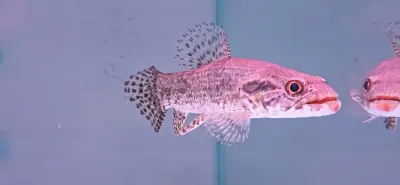
Wolf Fish - (Hoplias aimara)
Wolf Fish - (Hoplias aimara)
was $400.00
Save 13%
$350.00
Out of stock
Wild Caught
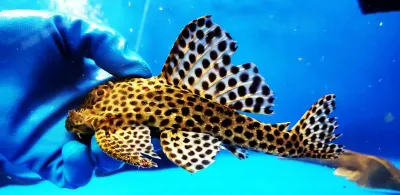
Medians Pleco - (Hemiancistrus medians)
Medians Pleco - (Hemiancistrus medians)
Price of shipping is not included.
$225.00
Out of stock
Powered by Lightspeed
Display prices in:USD