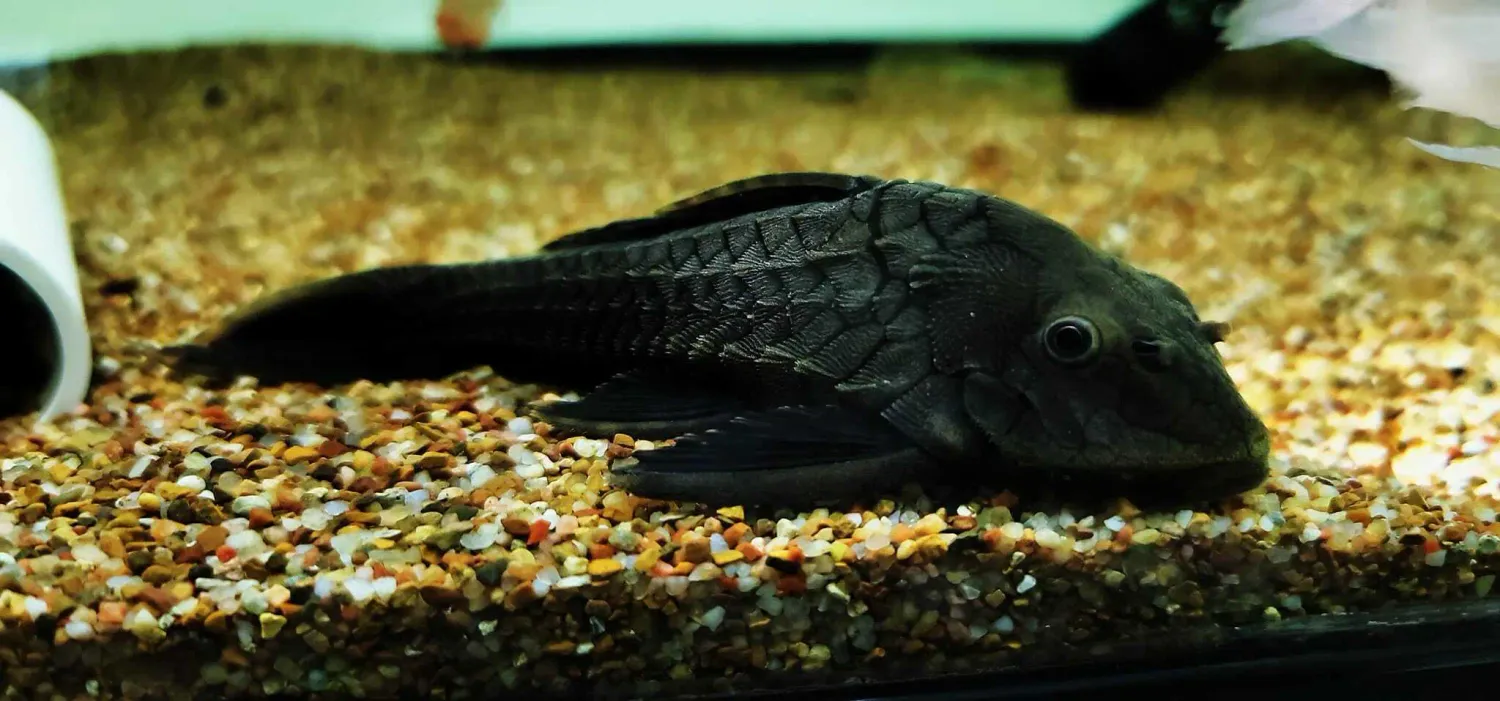
L152 Orinoco Pinecone Pleco - (Pseudorinelepis sp.)
$60.00
Sold out
Size
Questions, Comments, Concerns? Let us know!
Enter your text
Price of shipping is not included.
Sold out
Save this fish to my favorites.
Customer reviews
Reviews only from verified customers
No reviews yet. You can buy this product and be the first to leave a review.
L152 Orinoco Pinecone Pleco - (Pseudorinelepis sp.)
Fish Details, Description and Information Below:
🌲 L152 Orinoco Pinecone Pleco – (Pseudorinelepis sp. L152) – Rio Apure Pinecone Pleco
The L152 Orinoco Pinecone Pleco (Pseudorinelepis sp. L152), also known as the Pinecone Pleco or Pineapple Pleco, is a large and unusual South American armored catfish known for its extremely heavy body armor and oversized bony plates that create a distinctive pinecone-like appearance.
Juveniles can be very dark, sometimes appearing nearly:
- Black
- Charcoal
- Dark gray
- Deep brown
while mature specimens typically become lighter:
- Brown
- Gray-brown
- Olive-brown
- Tan-brown
with relatively little bold patterning.
Unlike many collectible plecos, the attraction of L152 is not bright spots or stripes. Its appeal comes from its:
- Massive armored plates
- Broad body
- Large adult size
- Ancient-looking appearance
- Unusual swimming ability
- Peaceful personality
The L152 aquarium form is specifically associated with the:
RIO APURE IN VENEZUELA
within the larger:
RIO ORINOCO BASIN
Although it resembles the formally described Pseudorinelepis genibarbis, L152 continues to be maintained in specialist references as:
Pseudorinelepis sp. L152
and should not automatically be assigned the P. genibarbis species name.
🔎 Quick Facts – L152 Orinoco Pinecone Pleco
- 📛 Common Name: Orinoco Pinecone Pleco
- 📛 Other Names: Pinecone Pleco, Pineapple Pleco
- 🔢 L-Number: L152
- 🔬 Scientific Identification: Pseudorinelepis sp. L152
- 🧬 Taxonomic Status: Undescribed / unresolved aquarium form
- 🐟 Family: Loricariidae
- 🧬 Subfamily: Rhinelepinae
- 📏 Current Size: Approximately 4–5 inches
- 🇻🇪 Country: Venezuela
- 📍 State / Region: Apure
- 🌊 Native River: Rio Apure
- 🌎 Major Drainage: Rio Orinoco Basin
- 📍 Aquarium Locality: San Fernando de Apure region
- 💧 Water Type: Freshwater
- 📏 Adult Planning Size: Approximately 18–20 inches
- 📏 Specialist Records: Around 50 cm / approximately 20 inches, potentially larger
- 🏠 Permanent Adult Aquarium: Approximately 180 gallons or larger
- 🏠 Preferred Adult Aquarium: 240+ gallons
- 📐 Recommended Aquarium Length: Approximately 6.5 feet / 200 cm or longer
- 🌡️ Temperature: Approximately 77–84°F
- 💧 pH: Approximately 5.5–7.5
- 💦 Water: Soft to moderately mineralized
- 💨 Oxygenation: Good
- 🌊 Water Movement: Slow to Moderate
- 🍽️ Diet: Omnivore with Strong Plant / Detritus Component
- 🌿 Plant Foods: Important
- 🦐 Animal / Insect Protein: Supplemental
- 🪵 Driftwood: Strongly Recommended
- 🚫 Algae Cleaner: Should not be purchased solely for algae control
- 💩 Bioload: Very High
- 💨 Special Adaptation: Facultative Air Breathing
- 😌 Temperament: Generally peaceful
- ⚠️ Pleco Temperament: May defend preferred resting areas from other large plecos
- 🌙 Activity: Juveniles often secretive; established adults may become active during daylight
- 🏊 Special Behavior: Unusually capable of swimming freely through the water column
- 🥚 Captive Breeding: Not reliably documented
- ⭐ Care Level: Intermediate to Advanced because of adult size and filtration requirements
- 🌎 IUCN Status: Not Separately Evaluated as L152
🧬 L152 Is Still Best Identified as Pseudorinelepis sp.
The safest identification remains:
Pseudorinelepis sp. L152
This means the fish is clearly associated with the genus:
Pseudorinelepis
but the Rio Apure aquarium form has not been conclusively assigned a formal species name.
⚠️ Do Not Automatically Call L152 Pseudorinelepis genibarbis
You may see L152 advertised as:
Pseudorinelepis genibarbis
or:
Pseudorinelepis cf. genibarbis
There is a good reason for the confusion.
L152 is extremely similar in:
- Body shape
- Armor
- General coloration
- Feeding behavior
- Adult proportions
to the valid species:
Pseudorinelepis genibarbis
However, specialist L-number references continue to recognize:
RIO APURE L152
separately from typical P. genibarbis populations.
For this product, the safest identification remains:
L152 – Pseudorinelepis sp.
🆚 L152 vs. Pseudorinelepis genibarbis
The valid species:
Pseudorinelepis genibarbis
is scientifically recognized and occurs primarily through portions of the Amazon system.
Confirmed records include river systems associated with:
- Brazil
- Peru
- Ecuador
- Colombia
L152, by comparison, is the aquarium form specifically associated with:
RIO APURE – VENEZUELA
within the Orinoco drainage.
Until this population is taxonomically resolved:
PRESERVE THE L152 IDENTIFICATION
🆚 L152 vs. L095 Orange Cheek Pinecone Pleco
Another closely related aquarium fish is:
L095 Orange Cheek Pinecone Pleco
The two should not be treated as interchangeable.
L095 is associated with:
RIO BRANCO / RIO DEMINI REGION OF BRAZIL
and develops considerably more colorful:
- Orange cheek coloration
- Orange fin coloration
than the generally much more subdued L152.
🌲 Why Is It Called a Pinecone Pleco?
The common name comes from the enormous:
BONY BODY PLATES
covering the fish.
These overlapping plates create an appearance similar to the scales of a:
PINECONE
or:
PINEAPPLE
which explains both of its common aquarium names.
🛡️ Heavy Armor
L152 belongs to one of the most heavily armored groups of loricariid catfish.
The body is covered with prominent:
- Bony plates
- Raised armor
- Strong fin rays
- Protective structures
that give the fish an almost prehistoric appearance.
🎨 Appearance
Juveniles can be surprisingly dark.
Young fish may appear:
- Nearly black
- Charcoal
- Dark chocolate
- Deep gray-brown
🔄 Color Changes With Growth
As L152 matures, it commonly becomes:
- Lighter brown
- Gray-brown
- Olive-brown
- Tan
with little obvious pattern.
Unlike many ornamental plecos, an adult L152 may have:
VERY LITTLE SPOTTING OR STRIPING
🟠 Possible Tail Color
Some established adults may develop subtle:
ORANGE OR RUST COLORATION
toward the upper and lower rays of the caudal fin.
This coloration is generally much less dramatic than the orange coloration seen in L095.
⚠️ Color Disclaimer
Exact adult coloration cannot be guaranteed.
Appearance can vary because of:
- Age
- Genetics
- Stress
- Aquarium background
- Lighting
- Diet
- Water quality
- Acclimation
Do not purchase L152 expecting a brightly colored ornamental pleco.
Its primary appeal is its:
BODY SHAPE + ARMOR + SIZE + BEHAVIOR
🌎 Native Distribution
L152 is specifically associated with:
VENEZUELA
and the:
RIO APURE
📍 San Fernando de Apure
Specialist L-number records trace the original aquarium L152 locality to:
SAN FERNANDO DE APURE
in Venezuela.
This locality information is particularly important because similar Pseudorinelepis occur in other South American drainage systems.
🌊 Rio Apure
The Rio Apure is a major tributary of the:
RIO ORINOCO
and flows through extensive:
- Floodplains
- Seasonal wetlands
- Whitewater habitats
- Slow-moving channels
- Large river environments
🌊 Not a High-Current Rapids Pleco
One important husbandry difference from many collectible plecos is that L152 is:
NOT A SPECIALIZED RAPIDS FISH
It does not require the extreme current associated with species such as:
- Zebra Plecos
- Vampire Plecos
- Many Xingu species
🏞️ Slower Water Habitat
Pseudorinelepis-type fish are associated with environments including:
- Large rivers
- Backwaters
- Floodplain lakes
- Sluggish channels
- Sediment-rich water
- Submerged wood accumulations
Therefore, the aquarium should prioritize:
WATER QUALITY + SPACE + FILTRATION
rather than extreme current.
🌊 Water Movement
A practical setup should provide:
SLOW TO MODERATE WATER MOVEMENT
with sufficient circulation to:
- Prevent stagnant waste
- Support filtration
- Maintain oxygen
- Move debris toward filter intakes
There is no need to turn the aquarium into a high-speed river torrent.
💨 Oxygenation
Provide:
GOOD DISSOLVED OXYGEN
through:
- Surface agitation
- Proper filter returns
- Air stones when needed
- Adequate circulation
However, L152 has an unusual physiological adaptation that separates it from many plecos.
💨 Facultative Air Breathing
Members of Pseudorinelepis are capable of:
FACULTATIVE AIR BREATHING
This means they can use atmospheric oxygen under certain environmental conditions.
⚠️ Air Breathing Does Not Mean Poor Water Is Acceptable
The ability to breathe atmospheric air should never be used as an excuse for:
- Dirty water
- High ammonia
- High nitrite
- Excessive nitrate
- Poor filtration
Always maintain excellent aquarium conditions.
🏊 Unusual Swimming Ability
One of the most fascinating behaviors documented in Pseudorinelepis is its ability to:
SWIM FREELY THROUGH THE WATER COLUMN
more easily than many heavily bottom-oriented plecos.
🎈 Near-Neutral Buoyancy
Pseudorinelepis have unusual air-retaining behavior that can allow them to maintain greater:
BUOYANCY
than many loricariids.
Large established specimens can sometimes appear to:
- Hover
- Cruise through open water
- Swim above the substrate
rather than remaining glued to the bottom.
😮 Impressive Adult Behavior
Watching a nearly 20-inch armored pleco swim freely through the aquarium can be extremely impressive.
For this reason, adults need:
OPEN SWIMMING SPACE
in addition to bottom territory and shelters.
📏 Adult Size – Major Correction
The current product page lists:
6–8 INCHES
as the maximum size.
That is far too small.
Specialist L-number references place L152 at approximately:
50 CM
or around:
20 INCHES
with some sources listing adult potential as:
MORE THAN 50 CM
🚨 Plan for a 20-Inch Pleco
For responsible customer planning:
EXPECT APPROXIMATELY 18–20 INCHES
with the possibility of exceptionally large individuals approaching or exceeding that range.
This is:
A LARGE PLECO
⚠️ Current Juvenile Size Is Misleading
A 4–5 inch juvenile may look appropriate for a modest aquarium.
However, it has the potential to become approximately:
FOUR TIMES THAT LENGTH
and dramatically greater in:
- Body mass
- Width
- Waste production
- Food consumption
🏠 Permanent Aquarium Size – Major Correction
The old:
30-GALLON
recommendation should be removed completely.
A 30-gallon aquarium is:
NOT APPROPRIATE PERMANENT HOUSING
for an adult L152.
🏠 Adult Aquarium
For one mature specimen:
180 GALLONS OR LARGER
should be considered a practical permanent starting point.
I prefer:
240+ GALLONS
for a large adult whenever space allows.
📐 Aquarium Length
Specialist L-number husbandry references recommend approximately:
200 CM / 6.5 FEET
of aquarium length for large adults.
A:
6–8 FOOT AQUARIUM
is far more appropriate than a short tall tank.
📐 Aquarium Width Matters
A large Pinecone Pleco develops:
- Broad armor
- Large pectoral fins
- Significant body mass
so aquarium:
FRONT-TO-BACK WIDTH
is extremely important.
The fish must be able to:
- Turn comfortably
- Rest fully stretched
- Swim
- Move around décor
🏠 Aquarium Setup
A suitable L152 aquarium should contain:
- Large open bottom areas
- Large pieces of driftwood
- Thick roots
- Large shelters
- Smooth rocks
- Sand or fine smooth gravel
- Strong filtration
- Good oxygenation
- Slow to moderate circulation
🪵 Driftwood
Driftwood is strongly recommended.
It provides:
- Shelter
- Shade
- Grazing surfaces
- Biofilm
- Territory
- Environmental enrichment
Specialist keepers also report L152 rasping softer wood.
⚠️ Wood Is Not the Complete Diet
Although wood should be available:
DO NOT FEED L152 ON WOOD ALONE
and do not claim that wood is required specifically for digestion.
Wood provides useful habitat and natural grazing opportunities, but the fish requires a varied diet.
🪨 Large Shelters
Provide shelters large enough for the adult fish to fit:
COMPLETELY INSIDE
Possible options include:
- Large driftwood cavities
- Large rock overhangs
- Oversized pleco shelters
- Heavy-duty pipes
- Purpose-built caves
⚠️ Secure All Décor
A 20-inch armored catfish is powerful.
Loose décor may be:
- Shifted
- Pushed
- Knocked over
Make sure heavy rocks and wood cannot collapse onto the fish.
🌡️ Temperature
A practical range is:
77–84°F / 25–29°C
This is warmer than the older product-page recommendation of:
74–79°F
💧 Water Parameters
A practical long-term range is:
- 🌡️ Temperature: Approximately 77–84°F
- 💧 pH: Approximately 5.5–7.5
- 💦 Hardness: Soft to moderately mineralized
- 💨 Oxygenation: Good
- 🌊 Water Movement: Slow to Moderate
- ☠️ Ammonia: 0 ppm
- ☠️ Nitrite: 0 ppm
- 🔄 Nitrate: Keep as low as reasonably practical
💩 Very High Bioload
One of the most important realities of adult L152 ownership is:
WASTE PRODUCTION
A mature fish can consume substantial quantities of food and generate:
- Large feces
- Organic debris
- Wood fragments
- Dissolved waste
💩 Strong Filtration
Large L152 should be maintained with substantial:
MECHANICAL + BIOLOGICAL FILTRATION
Suitable systems include:
- Large canister filters
- Sump filtration
- Prefilters
- Filter socks
- High-capacity biological media
🔄 Regular Water Changes
Regular partial water changes are essential.
The exact schedule depends on:
- Aquarium size
- Fish size
- Feeding
- Stocking
- Filtration
- Nitrate accumulation
Do not allow waste to build up beneath:
- Driftwood
- Rocks
- Shelters
🍽️ Diet – Omnivore With a Strong Plant Component
L152 should be described as an:
OMNIVORE
with a diet containing a substantial amount of:
PLANT / VEGETABLE MATERIAL
🌿 Plant Foods Should Be Important
Suitable foods include:
- Quality algae wafers
- Spirulina wafers
- Vegetable-based sinking pellets
- Fiber-rich pleco foods
- Quality gel diets
🥒 Fresh Vegetables
Suitable vegetable foods include:
- Zucchini
- Squash
- Pumpkin
- Green beans
- Sweet potato
- Appropriate leafy greens
Rotate foods for dietary variety.
🦐 Supplemental Protein
Protein can be included in moderation.
Suitable foods may include:
- Mysis shrimp
- Bloodworms
- Insect-based sinking foods
- Shrimp-containing omnivore pellets
- Quality bottom-feeder foods
⚖️ Balanced Diet
A good L152 diet should emphasize:
PLANT FOODS + BIOFILM + DETRITUS + VARIED PREPARED FOODS
with:
SUPPLEMENTAL ANIMAL / INSECT PROTEIN
🚫 Do Not Feed a Heavy Carnivore Diet
L152 should not be maintained primarily on:
- Shrimp
- Mussel
- High-protein carnivore pellets
- Large amounts of bloodworms
That does not reflect the feeding recommendations established by long-term specialist keepers.
🚫 Not Just an Algae Cleaner
L152 may consume:
- Algae
- Biofilm
- Organic material
but:
DO NOT PURCHASE THIS FISH SIMPLY FOR ALGAE CONTROL
A 20-inch pleco creates far more waste than it removes.
🌙 Juvenile Behavior
Young L152 are often:
VERY SECRETIVE
They may spend much of the day:
- Under wood
- Inside shelters
- Behind rocks
Activity generally increases after dark.
☀️ Adults Can Become Day-Active
One particularly interesting characteristic is that established large specimens frequently:
LOSE MUCH OF THEIR SHYNESS
and may forage openly during the day.
😌 Temperament
L152 is generally considered:
PEACEFUL
especially toward:
- Midwater fish
- Large community fish
- Appropriately sized cichlids
⚠️ Other Plecos
Even peaceful large plecos can become territorial toward:
- Other L152
- Other Pseudorinelepis
- Other large plecos
when competing for:
- Shelter
- Food
- Bottom territory
👥 Keeping Multiple Large Plecos
If maintaining several large bottom dwellers, provide:
- Enormous floor space
- Multiple shelters
- Multiple feeding areas
- Visual barriers
- Extremely strong filtration
🐠 Tankmates
Possible tankmates may include appropriately sized:
- Large tetras
- Silver dollars
- Peaceful to moderately assertive cichlids
- Larger South American community fish
provided they share compatible water requirements.
⚠️ Do Not Let Fast Tankmates Steal All the Food
Juvenile L152 can remain hidden while other fish eat.
Offer food:
- Near shelters
- At dusk
- After lights dim
- In multiple locations
♂️ Male vs. Female
Reliable sexing information for L152 remains limited.
Some specialist sources suggest mature males may develop:
- Longer head proportions
- Stronger cheek odontodes
- More prominent genital papilla
while females may develop:
- Fuller body profile
- Rounder abdomen
However:
SEXING L152 IS NOT WELL ESTABLISHED
and juveniles should be:
SOLD AS UNSEXED
unless sex is confidently known.
🥚 Captive Breeding – Not Reliably Documented
There are currently no well-established specialist reports documenting routine:
CAPTIVE BREEDING OF L152
Therefore:
DO NOT INVENT CAVE-SPAWNING DETAILS
⚠️ Do Not Assume Every Pleco Is a Cave Spawner
Many smaller aquarium plecos such as:
- Hypancistrus
- Peckoltia
- Ancistrus
are well-known cave spawners.
That does not mean the exact reproductive behavior of every large loricariid is equally well documented.
For L152:
CAPTIVE REPRODUCTION REMAINS POORLY KNOWN
🌎 Conservation Status
Because L152 remains an unresolved:
Pseudorinelepis sp.
the Rio Apure L152 form does not have its own formal species-level IUCN Red List assessment.
Therefore:
L152 IUCN STATUS: NOT SEPARATELY EVALUATED
⚠️ Do Not Borrow the Status of Pseudorinelepis genibarbis
The formally described:
Pseudorinelepis genibarbis
is currently assessed as:
LEAST CONCERN
However, that assessment applies to the recognized species and its documented distribution.
Until L152 is conclusively identified as that species:
DO NOT AUTOMATICALLY APPLY THAT STATUS TO L152
⭐ Why Keep an L152 Orinoco Pinecone Pleco?
The L152 combines:
- 🌲 Unique pinecone-like armor
- 🛡️ Massive bony body plates
- 🇻🇪 Rio Apure origin
- 🌊 Orinoco Basin heritage
- 📏 Approximately 18–20 inch adult potential
- 🏊 Unusual free-swimming ability
- 💨 Facultative air-breathing adaptation
- 😌 Generally peaceful temperament
- ☀️ Potential daytime activity as an adult
- 🪵 Interesting driftwood-grazing behavior
- 🧬 Unresolved L-number identity
into one of the most unusual large plecos available to serious aquarium keepers.
⚠️ Important Considerations
Before purchasing an L152 Orinoco Pinecone Pleco:
- Keep the identification as Pseudorinelepis sp. L152.
- Do not automatically identify L152 as Pseudorinelepis genibarbis.
- Preserve the L152 designation.
- L152 originates from Venezuela.
- Its primary locality is the Rio Apure near San Fernando de Apure.
- The Rio Apure belongs to the Orinoco River Basin.
- L152 is not a specialized high-current rapids pleco.
- Slow to moderate water movement is appropriate.
- Good oxygenation remains important.
- Juveniles can be nearly black.
- Adults often become lighter brown and relatively plain.
- The pinecone appearance comes from enormous bony body plates.
- The current specimens are approximately 4–5 inches.
- The existing 6–8 inch maximum is incorrect.
- Specialist references place adults around 50 cm.
- Plan for approximately 18–20 inches.
- A 30-gallon aquarium is not suitable permanent housing.
- Provide approximately 180 gallons or larger.
- 240+ gallons is preferred for very large adults.
- A 6.5-foot / 200 cm or longer aquarium is strongly preferred.
- Prioritize aquarium width as well as length.
- Provide large shelters.
- Provide substantial driftwood.
- Do not rely on wood as the complete diet.
- Do not claim wood is required specifically for digestion.
- Feed an omnivorous diet with a strong plant-food component.
- Offer vegetables and quality plant-based foods regularly.
- Provide supplemental animal or insect protein.
- Avoid an excessively meat-heavy diet.
- Do not purchase L152 simply as an algae cleaner.
- Expect very high waste production.
- Use powerful filtration.
- Maintain approximately 77–84°F.
- Maintain approximately pH 5.5–7.5.
- Keep ammonia and nitrite at zero.
- Established adults may become active during daylight.
- Pseudorinelepis are facultative air breathers.
- L152 can swim more freely through the water column than many plecos.
- Captive breeding is not reliably documented.
- Do not invent breeding details.
- L152 does not have its own formal species-level IUCN assessment.
- Never release aquarium fish into natural waterways.
🧬 Taxonomy
The safest current aquarium identification is:
Pseudorinelepis sp. L152
Classification:
- Order: Siluriformes
- Family: Loricariidae
- Subfamily: Rhinelepinae
- Genus: Pseudorinelepis
- Species: Undescribed / unresolved
- L-Number: L152
Aquarium locality:
RIO APURE – VENEZUELA
within the:
RIO ORINOCO BASIN
For this product, use:
L152 Orinoco Pinecone Pleco – (Pseudorinelepis sp. L152)
🔢 L-Number & Locality Disclaimer
Because the Rio Apure L152 has not been conclusively assigned to a formally described species:
THE L152 NUMBER AND LOCALITY ARE IMPORTANT
Preserve:
- L152 identification
- Rio Apure locality
- Supplier records
- Collection information when available
Do not identify another Pseudorinelepis as L152 solely because it has similar pinecone-like armor.
🚚 Live Fish Shipping
Live fish are professionally packed for safe transport.
Shipping availability depends on:
- Fish size
- Destination
- Weather conditions
- Carrier availability
- Applicable state and local regulations
Larger L152 Orinoco Pinecone Plecos may require:
- Larger insulated shipping boxes
- Additional water
- Heavy-duty shipping bags
- Multiple protective bag layers
- Specialized packing
- Airline cargo shipping depending on size and destination
Large specimens require extra care because of their:
- Heavy armor
- Strong pectoral spines
- Large body mass
Very large specimens may be safer to transfer using:
- Rigid containers
- Large fish tubs
- Heavy-duty shipping bags
rather than fine aquarium nets that can snag armored fins and spines.
Please review our Shipping & Payment Information and Live Arrival Guarantee / DOA Policy before ordering.
⚠️ Buyer Responsibility
Customers are responsible for confirming that Pseudorinelepis sp. L152 may legally be purchased, possessed, transported, and received in their state or local jurisdiction before ordering.
Never release aquarium fish into natural waterways.
Below are fish you may also like.
Captive Bred
Tiger Oscar - (Astronotus ocellatus) Albino
Tiger Oscar - (Astronotus ocellatus) Albino
Price of shipping is not included.
$21.00
Out of stock
Wild Caught
L235 Flyer Cat Pleco - (Pseudolithoxus anthrax)
L235 Flyer Cat Pleco - (Pseudolithoxus anthrax)
Price of shipping is not included.
5.0
(1)
was $75.00
Save 7%
$70.00
Captive Bred
L333 King Tiger Pleco - (Hypancistrus Seideli) Bellenz
L333 King Tiger Pleco - (Hypancistrus Seideli) Bellenz
Price of shipping is not included.
$90.00
Out of stock
Wild Caught
Dolphin Barb - (Bangana Behri)
Dolphin Barb - (Bangana Behri)
Price of shipping is not included.
$75.00
Out of stock
Captive Bred
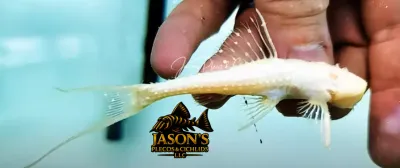
Albino Polka Dot Lyre Tail Pleco - (Acanthicus adonis)
Albino Polka Dot Lyre Tail Pleco - (Acanthicus adonis)
Price of shipping is not included.
was $100.00
Save 15%
$85.00
Out of stock
Captive Bred
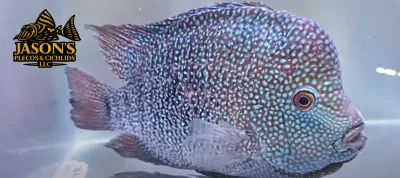
Texas Cichlid - (Herichthys cyanoguttatus)
Texas Cichlid - (Herichthys cyanoguttatus)
Price of shipping is not included.
5.0
(2)
was $160.00
Save 6%
$150.00
Out of stock
Captive Bred
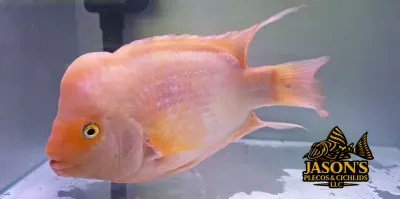
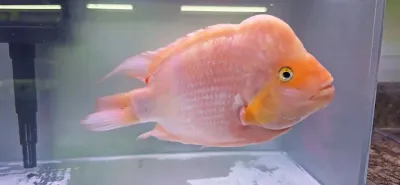
Red Devil x Super Red Texas
Red Devil x Super Red Texas
Price of shipping is not included.
5.0
(1)
was $130.00
Save 8%
$120.00
Out of stock
Captive Bred
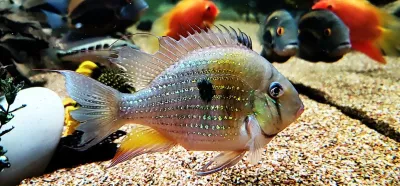
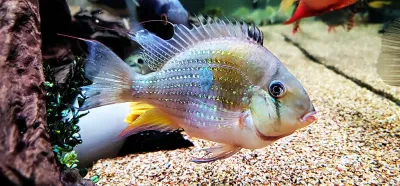
Threadfin Acara - (Acarichthys Heckelii)
Threadfin Acara - (Acarichthys Heckelii)
Price of shipping is not included.
$75.00
Out of stock
Captive Bred
Zebra Lace Angelfish - (Pterophyllum scalare)
Zebra Lace Angelfish - (Pterophyllum scalare)
Price of shipping is not included.
was $50.00
Save 10%
$45.00
Out of stock
Wild Caught
Blue Eyed Pleco - (Panaque cochliodon) Honda
Blue Eyed Pleco - (Panaque cochliodon) Honda
Price of shipping is not included.
$475.00
Out of stock
Pre-Order Item
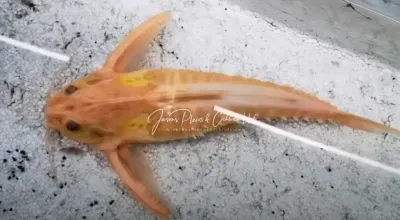
Albino Giant Talking Catfish - (Megalodoras uranoscopus)
Albino Giant Talking Catfish - (Megalodoras uranoscopus)
Price of shipping is not included.
$20 000.00
Out of stock
Wild Caught
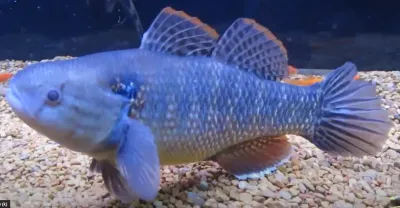
Clay Goby - (Dormitator lebretonis)
Clay Goby - (Dormitator lebretonis)
Price of shipping is not included.
$50.00
Out of stock
Powered by Lightspeed
Display prices in:USD