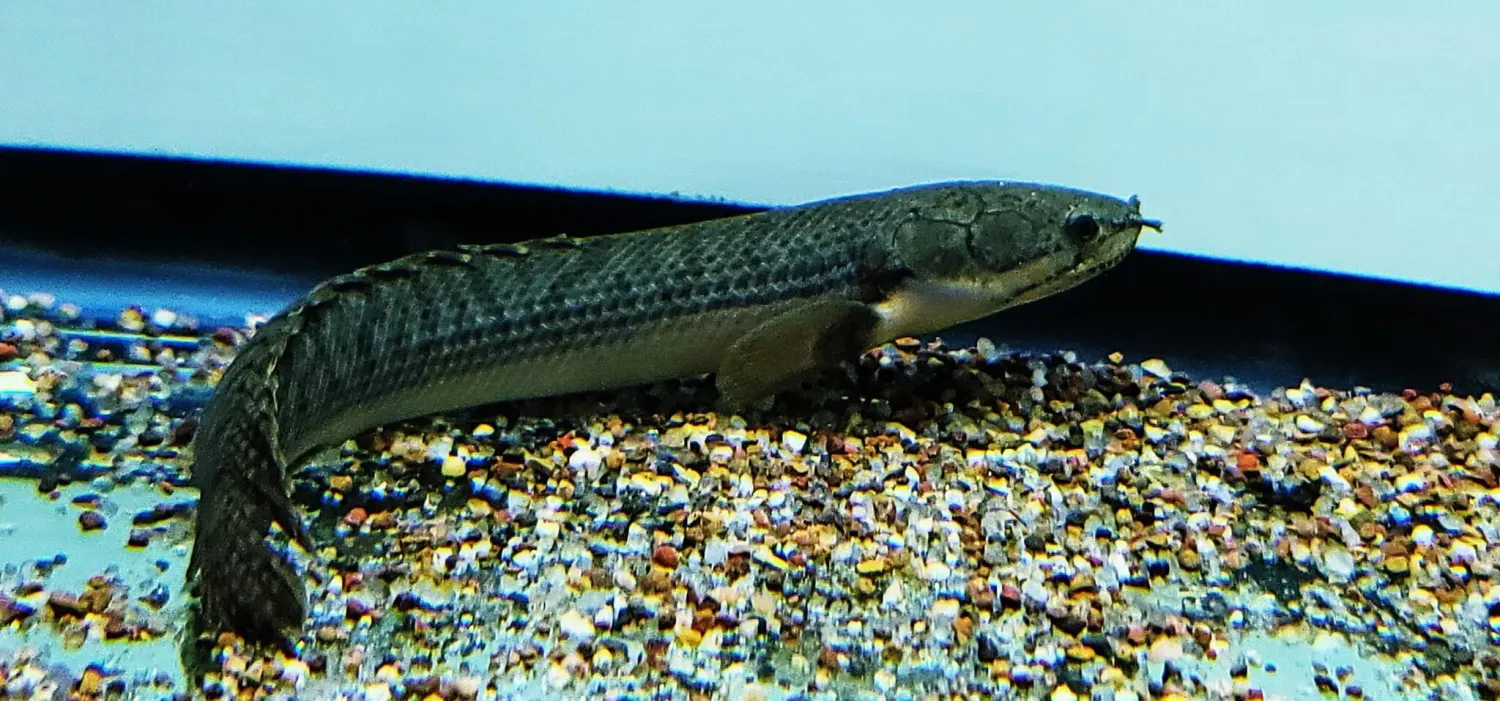
Mokele-Mbembe Bichir - (Polypterus mokelembembe)
$140.00
Sold out
Size
Price of shipping is not included.
Sold out
Save this fish to my favorites.
Customer reviews
Reviews only from verified customers
No reviews yet. You can buy this product and be the first to leave a review.
Mokele-Mbembe Bichir - (Polypterus mokelembembe)
Fish Details, Description and Information Below:
🐉 Mokele-Mbembe Bichir – (Polypterus mokelembembe) – Central Congo Blackwater Bichir
The Mokele-Mbembe Bichir (Polypterus mokelembembe) is a distinctive African bichir from the central Congo River Basin, prized for its prehistoric appearance, compact adult size compared with many other bichirs, broad rounded pectoral fins, armored ganoid scales, and dark saddle-like pattern.
This species was formally described only in 2006. Before that, specimens were frequently confused with the closely related Polypterus retropinnis and sometimes appeared in the aquarium trade under the incorrect name Polypterus lowei.
The Mokele-Mbembe Bichir is among the smaller members of the genus Polypterus, but it is still a substantial predatory fish capable of reaching approximately 10–12 inches and requires an appropriately sized, tightly covered aquarium with plenty of bottom area.
🔎 Quick Facts – Mokele-Mbembe Bichir
- 📛 Common Name: Mokele-Mbembe Bichir
- 📛 Other Names: Mokele Bichir, Mbembe Bichir, Moke Bichir
- 🔬 Scientific Name: Polypterus mokelembembe
- 📅 Formally Described: 2006
- 🐟 Family: Polypteridae
- 🧬 Order: Polypteriformes
- 📏 Current Listing Size: Approximately 8–10 inches
- 🍽️ Currently Eating: Frozen Tilapia
- 🌍 Continent: Africa
- 🌊 Native Basin: Middle Congo River Basin
- 🇨🇩 Range: Democratic Republic of the Congo
- 🇨🇬 Range: Republic of the Congo
- 🌊 Documented Drainages: Maringa, Tshuapa and Alima
- 📍 Type Locality: Wamba, Maringa River, Democratic Republic of the Congo
- 🌑 Natural Habitat: Smaller blackwater streams and Congo Basin freshwater habitats
- 💧 Water Type: Freshwater
- 📏 Scientific Maximum: Approximately 26.7 cm / 10.5 inches standard length
- 📏 Documented Total Length: Approximately 28 cm / 11 inches
- 📏 Adult Planning Size: Approximately 10–12 inches
- 🏠 Recommended Aquarium: 75 gallons or larger
- 📐 Recommended Length: Approximately 4 feet or longer
- 🌡️ Temperature: Approximately 76–82°F
- 💧 pH: Approximately 6.0–7.5
- 🌊 Water Movement: Low to Moderate
- 💨 Surface Access: Absolutely Required
- 🫁 Special Adaptation: Air-breathing paired lungs
- 🍽️ Diet: Carnivorous / Predatory
- 🐟 Small Fish: May Be Eaten
- 🦐 Shrimp: Not Safe Tankmates
- 🌙 Activity: Primarily crepuscular / nocturnal
- 😌 Temperament: Generally peaceful toward animals too large to eat
- 🏃 Escape Risk: Very High – tight lid required
- 🥚 Reproduction: Egg Scatterer
- 👨👩👧 Parental Care: None
- ♂️ Male Identification: Enlarged, thickened anal fin
- ⭐ Care Level: Intermediate
- 🌎 Conservation Status: Least Concern
🧬 Valid Scientific Species
The currently accepted scientific name is:
Polypterus mokelembembe
The species was formally described by:
Ulrich K. Schliewen & Frank Schäfer
in:
2006
The current scientific classification continues to recognize Polypterus mokelembembe as a valid species.
⚠️ Historically Confused With Polypterus retropinnis
Before 2006, Mokele-Mbembe Bichirs were often confused with:
Polypterus retropinnis
Some aquarium fish were also historically sold under:
Polypterus lowei
These names should not be used for correctly identified P. mokelembembe.
🆚 Mokele-Mbembe vs. Polypterus retropinnis
The two species can appear superficially similar because both are:
- Relatively small bichirs
- Darkly patterned
- Native to central African freshwater systems
- Equipped with similar elongated body shapes
However, scientific examination confirmed differences involving:
- Scale counts
- Pectoral-fin rays
- Dorsal-spine proportions
- Head measurements
- Color pattern
For aquarium purposes:
DO NOT RELABEL MOKELE-MBEMBE AS P. RETROPINNIS
Preserve supplier and locality information whenever available.
🎨 Appearance
The Mokele-Mbembe Bichir has an elongated, heavily armored body.
Typical colors include:
- Olive brown
- Gray-brown
- Dark brown
- Greenish brown
- Charcoal
with darker:
- Bands
- Blotches
- Saddles
- Mottled markings
across the upper body.
🖤 Dark Saddle Pattern
One of the characteristic features is the presence of:
BROAD, IRREGULAR DARK BANDS AND BLOTCHES
These markings may merge across the back to form:
DARK SADDLES
especially toward the front half of the body.
The exact pattern differs between individuals.
⚫ Black Pectoral-Fin Marking
The species also develops a distinctive:
DARK OR BLACK BLOTCH AT THE BASE OF THE PECTORAL FIN
This is one of the characters scientists use when comparing P. mokelembembe with other bichirs.
🪶 Broad Rounded Pectoral Fins
The pectoral fins are:
- Broad
- Rounded
- Almost circular
and are used almost like limbs when the bichir moves slowly across the bottom.
Watching a bichir maneuver along the substrate is one of the most interesting aspects of keeping the genus.
🐉 Multiple Individual Dorsal Finlets
Rather than having one continuous dorsal fin like most fishes, bichirs possess a row of separate:
DORSAL FINLETS
The Mokele-Mbembe Bichir normally has approximately:
6–8 DORSAL FINLETS
Each finlet has its own spine.
This gives the fish its unmistakably prehistoric appearance.
🛡️ Ganoid Scales
The body is covered with:
HARD GANOID SCALES
These thick, armor-like scales differ greatly from the softer overlapping scales found on many modern aquarium fishes.
They provide the bichir with a remarkably tough outer covering.
🧬 An Ancient Fish Lineage
Bichirs belong to an exceptionally ancient branch of ray-finned fishes.
They are often popularly called:
“LIVING FOSSILS”
because their lineage has an extremely long evolutionary history and they retain several unusual anatomical characteristics.
However:
THEY HAVE NOT REMAINED LITERALLY UNCHANGED THROUGH TIME
Like every living species, modern bichirs are the result of continuing evolution.
🫁 Bichirs Have Lungs
One of the most fascinating features of Polypterus is its ability to breathe atmospheric air.
Bichirs possess:
PAIRED LUNGS
that allow them to gulp air from the surface.
This is an important biological adaptation and a critical aquarium-care requirement.
🚨 Surface Access Is Mandatory
A Mokele-Mbembe Bichir must always be able to:
REACH THE WATER SURFACE
to breathe atmospheric air.
Never completely block surface access with:
- Floating decorations
- Solid covers touching the water
- Dense equipment
- Overgrown floating plants
The fish must have an unobstructed route to the surface.
⚠️ Air Breathing Does Not Mean Dirty Water Is Acceptable
Because bichirs can breathe atmospheric air, some people incorrectly assume they can simply be maintained in:
- Low oxygen
- Dirty water
- Poor filtration
- High ammonia
- High nitrite
That is incorrect.
Provide:
CLEAN, WELL-FILTERED WATER
at all times.
🏃 EXTREME ESCAPE RISK
One of the most important husbandry requirements for every bichir is:
A TIGHT-FITTING LID
Bichirs are:
EXCELLENT ESCAPE ARTISTS
and can squeeze through surprisingly small openings.
🚨 Cover Every Opening
Carefully inspect openings around:
- Filter hoses
- Heater wires
- Air lines
- Overflow boxes
- Aquarium lids
- Plumbing
A gap that looks too small may still be large enough for a determined bichir.
⚠️ Never Assume the Fish Cannot Escape
Bichirs can:
- Climb
- Push against lids
- Squeeze through gaps
- Leave the aquarium during nighttime activity
An escaped bichir may survive outside water longer than many ordinary fishes because of its air-breathing ability, but:
IT CAN STILL DIE FROM DESICCATION, INJURY OR TRAUMA
Prevent escape rather than relying on its ability to survive briefly outside water.
🌍 Native Distribution
Polypterus mokelembembe is native to the:
MIDDLE CONGO RIVER BASIN
in Central Africa.
Its known range includes both:
🇨🇩 DEMOCRATIC REPUBLIC OF THE CONGO
and:
🇨🇬 REPUBLIC OF THE CONGO
🌊 Democratic Republic of the Congo
Scientifically documented locations include the:
MARINGA RIVER
within the Lulonga drainage.
The species is also known from the:
TSHUAPA RIVER
within the Ruki drainage.
🌊 Republic of the Congo
The species is also scientifically documented from the:
ALIMA DRAINAGE
of the Republic of the Congo.
📍 Type Locality
The scientific type locality is:
WAMBA, MARINGA RIVER
in the:
DEMOCRATIC REPUBLIC OF THE CONGO
The holotype was collected there in:
1952
although the species itself was not formally described until 2006.
🌑 Blackwater Habitat
Aquarium and scientific sources particularly associate Mokele-Mbembe Bichirs with:
SMALLER BLACKWATER STREAMS
within the Congo region.
Blackwater environments commonly contain:
- Tannins
- Fallen leaves
- Wood
- Submerged branches
- Dark substrate
- Shaded areas
- Relatively subdued lighting
🌿 Aquarium Habitat
A naturalistic Mokele-Mbembe aquarium can contain:
- Sand
- Smooth gravel
- Driftwood
- Large roots
- Smooth rocks
- Leaf-litter-style décor
- Hardy plants
- Floating plants
- Caves
- Shaded areas
The aquarium does not need to reproduce extreme acidic blackwater conditions to keep the species successfully.
💡 Subdued Lighting Is Preferred
Mokele-Mbembe Bichirs generally do not appreciate:
VERY BRIGHT LIGHTING
They are naturally:
- Secretive
- Crepuscular
- Nocturnal
- Cover-oriented
Use:
- Floating plants
- Driftwood
- Shaded corners
- Caves
- Dimmer lighting
to give the fish secure areas.
🏠 Provide Multiple Hiding Areas
Good shelters can include:
- Large driftwood arches
- Smooth caves
- Large PVC-style shelters concealed with décor
- Rock overhangs
- Dense planting
Make sure every shelter is large enough that the fish cannot become:
WEDGED OR TRAPPED
as it grows.
🏖️ Substrate
A:
SOFT SAND SUBSTRATE
is an excellent choice.
Smooth fine gravel can also work.
Avoid excessively:
- Sharp gravel
- Jagged rock
- Rough abrasive substrate
because bichirs spend considerable time in contact with the bottom.
🌊 Water Movement
Unlike many high-flow plecos, the Mokele-Mbembe Bichir does:
NOT REQUIRE STRONG CURRENT
Its natural blackwater habitat includes slower freshwater environments.
Provide:
LOW TO MODERATE WATER MOVEMENT
with good filtration.
💨 Oxygenation
Normal good aquarium oxygenation is recommended.
However, this species does not need the extreme river-style oxygenation demanded by many rheophilic plecos.
Remember:
SURFACE ACCESS FOR AIR BREATHING IS MORE IMPORTANT THAN CREATING EXTREME CURRENT
📏 Adult Size – Important Correction
The older page lists approximately:
13–16 INCHES
as the adult size.
That is too large for currently documented Polypterus mokelembembe.
🔬 Scientific Maximum
FishBase currently documents:
26.7 CM STANDARD LENGTH
which equals approximately:
10.5 INCHES BEFORE THE COMPLETE TAIL
African freshwater-fish records give a total length around:
28 CM / APPROXIMATELY 11 INCHES
📏 Responsible Adult Planning
For aquarium planning:
EXPECT APPROXIMATELY 10–12 INCHES
This gives the customer a reasonable safety margin without exaggerating the species into a 16-inch bichir.
🐟 One of the Smaller Bichirs
Mokele-Mbembe is among the more compact members of Polypterus.
That makes it substantially easier to accommodate than giant bichirs capable of reaching:
- 20 inches
- 24 inches
- 30+ inches
However:
SMALLER DOES NOT MEAN SMALL AQUARIUM FISH
A 10–12 inch predatory bottom fish still requires substantial space.
🏠 Aquarium Size
For one mature Mokele-Mbembe Bichir:
75 GALLONS OR LARGER
is my preferred permanent recommendation.
A wide-bottom aquarium is especially useful.
📐 Aquarium Length
Aim for an aquarium approximately:
4 FEET LONG OR LONGER
with sufficient front-to-back width for the fish to:
- Turn comfortably
- Explore
- Rest fully extended
- Reach the surface easily
📐 Footprint Matters More Than Height
Bichirs spend much of their time around the:
BOTTOM
Therefore:
LENGTH + WIDTH
are generally more valuable than a very tall aquarium.
A broad footprint provides more usable territory.
⚠️ Current 8–10 Inch Fish Are Already Near Adult Size
The current product listing size is approximately:
8–10 INCHES
That means these are not tiny juveniles needing temporary grow-out housing.
Customers should already have the:
PERMANENT ADULT AQUARIUM
ready before purchasing.
💧 Water Parameters
A practical long-term range is:
- 🌡️ Temperature: Approximately 76–82°F
- 💧 pH: Approximately 6.0–7.5
- 💦 Hardness: Soft to moderately mineralized
- 🌊 Water Movement: Low to Moderate
- 💨 Oxygenation: Normal Good Aquarium Oxygenation
- 🫁 Atmospheric Air Access: Required
- ☠️ Ammonia: 0 ppm
- ☠️ Nitrite: 0 ppm
- 🔄 Nitrate: Keep as low as reasonably practical
🌡️ Temperature
A practical aquarium range is:
76–82°F
Slight variation is generally tolerated once specimens are established.
Stable temperature is more important than constantly adjusting the aquarium.
⚠️ Stable Water Is Important
Avoid large abrupt changes in:
- Temperature
- pH
- Hardness
especially with newly imported specimens.
Regular partial water changes and stable maintenance are much safer than constantly chasing one exact numerical value.
💩 Filtration
Bichirs are carnivorous fish that produce significant organic waste.
Use strong biological and mechanical filtration appropriate for the aquarium volume.
Suitable systems can include:
- Canister filters
- Sump filtration
- Large hang-on-back filters
- Sponge filtration as supplemental filtration
🔄 Water Changes
Regular partial water changes are important.
The exact schedule depends on:
- Aquarium size
- Stocking
- Feeding
- Filtration
- Nitrate production
Maintain:
AMMONIA = 0
and:
NITRITE = 0
at all times.
🍽️ Diet – Carnivorous Predator
The Mokele-Mbembe Bichir is:
CARNIVOROUS
and should receive animal-based foods.
It is not:
- Herbivorous
- Algae eating
- Wood eating
🐟 Currently Eating Frozen Tilapia
The current Jason’s Plecos & Cichlids listing identifies these fish as eating:
FROZEN TILAPIA
This is an excellent food to continue incorporating into a varied diet after arrival.
🍽️ Recommended Foods
Suitable foods include:
- Tilapia
- Mysis shrimp
- Krill
- Shrimp
- Prawn
- Earthworms
- Bloodworms
- Mussel
- Appropriate pieces of fish
- Insect larvae
- High-quality carnivore pellets
- Quality sinking predatory-fish foods
⚖️ Provide Dietary Variety
Do not rely exclusively on:
ONE FOOD
for the entire life of the fish.
A varied diet helps provide a broader nutritional profile.
For example:
TILAPIA + SHRIMP + WORMS + QUALITY PELLETS
can provide good dietary variety.
🚫 Avoid Routine Feeder Fish
There is no need to feed live feeder fish.
Common feeder fish can introduce:
- Parasites
- Bacteria
- Disease
- Nutritional deficiencies
A diet based on quality:
- Frozen foods
- Fresh aquatic foods
- Prepared carnivore foods
is generally safer.
🦐 Shrimp Are Food
Do not house Mokele-Mbembe Bichirs with ornamental shrimp and expect them to remain safe.
Small crustaceans may be treated as:
FOOD
🐟 Small Fish Are Food
One of the most important compatibility rules is:
IF IT FITS IN THE BICHIR'S MOUTH, IT MAY BE EATEN
This can include:
- Tetras
- Rasboras
- Small barbs
- Livebearers
- Small catfish
- Fry
even if the bichir initially appears peaceful toward them.
🌙 Hunting Usually Increases at Night
A small tankmate may appear safe during daylight.
That does not mean it will remain safe after:
THE LIGHTS GO OUT
Bichirs rely heavily on:
- Smell
- Chemical sensing
- Close-range hunting
and are effective nocturnal predators.
😌 Temperament
Toward animals that are:
TOO LARGE TO SWALLOW
the Mokele-Mbembe Bichir is generally considered relatively:
PEACEFUL
for a predatory fish.
🐟 Suitable Tankmate Characteristics
Better tankmates are generally:
- Too large to swallow
- Not extremely aggressive
- Not fin nippers
- Not hypercompetitive feeders
- Comfortable at similar temperatures
⚠️ Avoid Bullying Tankmates
Mokele-Mbembe can be comparatively shy.
Very aggressive tankmates may:
- Outcompete it for food
- Cause chronic stress
- Injure it
- Prevent normal feeding
Choose companions carefully.
🐉 Keeping With Other Bichirs
Mokele-Mbembe can potentially coexist with other appropriately sized bichirs when:
- Aquarium space is adequate
- All individuals are too large to swallow each other
- Food is distributed properly
- Aggression is monitored
However, larger or more assertive bichir species may dominate feeding.
🍽️ Watch Feeding Competition
Because Mokele-Mbembe can be shy:
MAKE SURE IT ACTUALLY GETS FOOD
rather than assuming food added to the aquarium is being shared equally.
Feed near its preferred resting location if necessary.
🌙 Primarily Nocturnal
The species is primarily:
CREPUSCULAR / NOCTURNAL
It is commonly more active:
- Around dusk
- After lights dim
- At night
- During feeding
☀️ Established Fish Can Become Daytime Feeders
Once comfortable, many bichirs learn:
- Feeding schedules
- Keeper routines
- Where food enters the aquarium
An established fish may become surprisingly active during daylight when it expects food.
👃 Excellent Chemical Senses
Bichirs do not depend only on vision to locate food.
Their sensory system is well suited to searching for prey under:
- Low light
- Murky conditions
- Nighttime conditions
This helps explain their success as nocturnal predators.
🧪 Acclimation
Mokele-Mbembe Bichirs entering a new aquarium should be given time to settle.
After arrival:
- Keep lighting subdued
- Provide immediate hiding places
- Maintain stable temperature
- Maintain clean water
- Confirm surface access
- Keep the lid completely secure
- Confirm feeding
🍽️ Confirm Feeding
A newly arrived specimen may initially remain hidden.
Offer familiar animal-based foods such as:
FROZEN TILAPIA
near its shelter, especially:
- At dusk
- After lights dim
⚠️ Do Not Overfeed
Bichirs often eat enthusiastically once established.
Avoid feeding enormous meals that leave the abdomen excessively distended.
It is better to provide:
APPROPRIATELY PORTIONED MEALS
and remove uneaten food before it decomposes.
♂️ Male vs. Female
Sexing mature bichirs is much easier than sexing many aquarium fishes.
The primary feature is the:
ANAL FIN
♂️ Mature Male
A mature male develops an anal fin that is:
- Much larger
- Broader
- Thicker
- More muscular
than that of a female.
The male's anal fin can become more than twice as substantial as the female's.
♀️ Mature Female
Females generally have a:
SMALLER, NARROWER ANAL FIN
Mature females may also become:
- Fuller-bodied
- Broader through the abdomen
when carrying eggs.
⚠️ Juveniles Can Be Harder to Sex
The anal-fin difference becomes clearest after sexual maturation.
Smaller or immature fish should not automatically be sexed with certainty.
🥚 Captive Reproduction – Documented but Uncommon
Mokele-Mbembe Bichirs have:
REPRODUCED IN CAPTIVITY
but captive breeding remains uncommon.
The original scientific description itself noted a captive reproductive event.
💕 Bichir Courtship
During courtship, the mature male swims closely beside the female.
The male spreads his greatly enlarged:
ANAL FIN
into a bowl-like shape around the female's genital region.
This helps receive and fertilize eggs as they are released.
🥚 Egg Scatterer
Unlike plecos that deposit a clutch inside a cave, bichirs produce eggs that are:
SCATTERED
into the surrounding environment.
Eggs may become attached among:
- Plants
- Fine-leaved vegetation
- Spawning media
- Protected surfaces
🚫 No Parental Care
After spawning:
BICHIRS DO NOT PROVIDE PARENTAL CARE
Adults may consume:
- Eggs
- Larvae
if the young remain accessible.
Breeding setups generally require separation or protection of eggs and fry.
👶 Larvae Have External Gills
Newly hatched bichir larvae look remarkably different from adults.
They possess:
EXTERNAL GILLS
similar in appearance to those of:
- Newt larvae
- Salamander larvae
These external gills are eventually lost as the young fish develops.
🥚 Females Can Produce Many Eggs
Scientific examination of a large female P. mokelembembe found:
SEVERAL HUNDRED DEVELOPING EGGS
in the ovaries.
That does not mean every aquarium spawning will produce hundreds of surviving fry.
Actual spawning success depends on:
- Female maturity
- Conditioning
- Fertilization
- Egg survival
- Fry care
⚠️ Breeding Is an Advanced Project
Although reproduction is biologically well understood in bichirs:
ROUTINE CAPTIVE BREEDING OF P. MOKELEMBEMBE IS UNCOMMON
It is best approached by experienced keepers prepared to manage:
- Mature adults
- Seasonal spawning behavior
- Egg protection
- Tiny larvae
- Live or appropriately sized fry foods
- Excellent water quality
🌎 Conservation Status
Polypterus mokelembembe is currently classified as:
LEAST CONCERN
on the IUCN Red List.
The assessment currently referenced was completed in:
2009
⚠️ Least Concern Does Not Mean Careless Collection
The species is known from a relatively limited number of documented Congo Basin localities.
Aquarium exports appear to occur in comparatively small numbers.
Responsible:
- Sourcing
- Importation
- Husbandry
- Permanent housing
remain important.
🐉 Why the Name Mokele-Mbembe?
The species was named after:
MOKÈLÉ-MBÈMBÉ
a legendary creature from Central African folklore and modern cryptozoological stories associated with the Congo Basin.
The scientists chose the name as an allusion to the:
ANCIENT EVOLUTIONARY LINEAGE OF BICHIRS
and their prehistoric appearance.
⭐ Why Keep a Mokele-Mbembe Bichir?
The species combines:
- 🐉 Prehistoric appearance
- 🛡️ Armored ganoid scales
- 🪶 Individual dorsal finlets
- 🫁 Atmospheric air breathing
- 🌑 Congo Basin blackwater origin
- 🎨 Attractive saddle-like pattern
- 📏 Manageable 10–12 inch size compared with many bichirs
- 😌 Relatively peaceful temperament toward large tankmates
- 🌙 Interesting nocturnal behavior
- 🍽️ Predatory feeding behavior
- 🥚 Fascinating reproductive biology
- 🧬 Formally recognized scientific identity
into one of the most interesting smaller bichirs available to experienced aquarium keepers.
⚠️ Important Considerations
Before purchasing a Mokele-Mbembe Bichir:
- The correct scientific name is Polypterus mokelembembe.
- The species was formally described in 2006.
- It was historically confused with Polypterus retropinnis.
- It was sometimes incorrectly traded as Polypterus lowei.
- The species is native to the middle Congo River Basin.
- It occurs in both the Democratic Republic of the Congo and Republic of the Congo.
- Confirmed drainages include the Maringa, Tshuapa and Alima.
- The type locality is the Maringa River at Wamba in the Democratic Republic of the Congo.
- The species is associated with smaller blackwater streams.
- Current scientific records document 26.7 cm / 10.5 inches standard length.
- African freshwater records document approximately 28 cm / 11 inches total length.
- Remove the old 13–16 inch maximum.
- Plan for approximately 10–12 inches as an adult.
- The current listing size is already approximately 8–10 inches.
- Provide approximately 75 gallons or larger.
- Prioritize aquarium length and width.
- A 4-foot or longer aquarium is recommended.
- Keep a tightly fitted lid on the aquarium at all times.
- Seal every opening around equipment.
- Bichirs are extremely capable escape artists.
- The fish must always have access to atmospheric air at the water surface.
- Air-breathing ability does not make poor water quality acceptable.
- Maintain approximately 76–82°F.
- Maintain approximately pH 6.0–7.5.
- Low to moderate water movement is appropriate.
- Strong river-style current is unnecessary.
- Provide subdued lighting and substantial cover.
- Sand or smooth substrate is preferred.
- Feed a carnivorous diet.
- Frozen tilapia is currently accepted.
- Provide dietary variety with shrimp, worms, krill, mussels and quality carnivore foods.
- Avoid routine feeder fish.
- Any fish small enough to swallow may become prey.
- Ornamental shrimp are not safe.
- Choose tankmates too large to eat and calm enough not to bully the bichir.
- Males develop a much larger anal fin than females.
- Captive reproduction has been documented but remains uncommon.
- Bichirs scatter eggs and provide no parental care.
- Larvae develop external gills.
- The species is currently assessed as Least Concern.
- Never release aquarium fish into natural waterways.
🧬 Taxonomy
The currently accepted scientific name is:
Polypterus mokelembembe Schliewen & Schäfer, 2006
Classification:
- Class: Cladistii
- Order: Polypteriformes
- Family: Polypteridae
- Genus: Polypterus
- Species: mokelembembe
Native distribution:
MIDDLE CONGO RIVER BASIN – CENTRAL AFRICA
including:
- Democratic Republic of the Congo
- Republic of the Congo
For this product, use:
Mokele-Mbembe Bichir – (Polypterus mokelembembe)
🧬 Identification Disclaimer
The Mokele-Mbembe Bichir was historically confused with:
Polypterus retropinnis
and older aquarium shipments may also have used:
Polypterus lowei
The current accepted species is:
Polypterus mokelembembe
Preserve:
- Supplier identification
- Collection locality when known
- Import records
especially when maintaining or breeding less commonly imported bichirs.
🏃 Escape-Proof Aquarium Disclaimer
Bichirs are exceptionally capable escape artists.
The aquarium must have:
A SECURE, TIGHT-FITTING LID
All gaps around:
- Filters
- Plumbing
- Electrical cables
- Air tubing
should be securely covered.
The fish must also retain unobstructed access to atmospheric air at the water surface.
🚚 Live Fish Shipping
Live fish are professionally packed for safe transport.
Shipping availability depends on:
- Fish size
- Destination
- Weather conditions
- Carrier availability
- Applicable state and local regulations
Larger bichirs may require:
- Larger insulated shipping boxes
- Additional water
- Heavy-duty shipping bags
- Multiple protective bag layers
- Specialized packing
- Airline cargo shipping depending on size and destination
Please review our Shipping & Payment Information and Live Arrival Guarantee / DOA Policy before ordering.
⚠️ Buyer Responsibility
Customers are responsible for confirming that Polypterus mokelembembe may legally be purchased, possessed, transported, and received in their state or local jurisdiction before ordering.
Never release aquarium fish into natural waterways.
Below are fish you may also like.
Captive Bred
Red Tiger Parrot Cichlid - (Cichlasoma Sp.)
Red Tiger Parrot Cichlid - (Cichlasoma Sp.)
Price of shipping is not included.
was $90.00
Save 11%
$80.00
Out of stock
Wild Caught
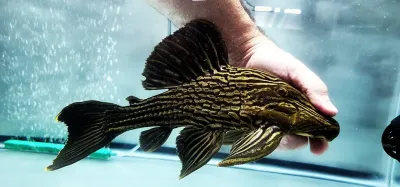
L050 Spotted Humpbacked Pleco - (Hypostomus cf. cochliodon)
L050 Spotted Humpbacked Pleco - (Hypostomus cf. cochliodon)
Price of shipping is not included.
$100.00
Out of stock
Wild Caught
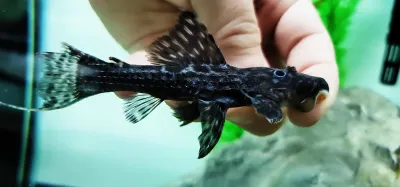
L275 Tailstriped Cactus Pleco - (Pseudacanthicus sp.)
L275 Tailstriped Cactus Pleco - (Pseudacanthicus sp.)
Price of shipping is not included.
$500.00
Out of stock
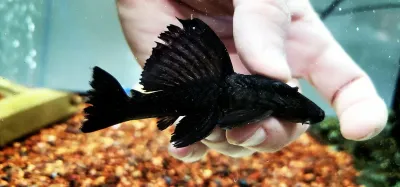
Wild Caught
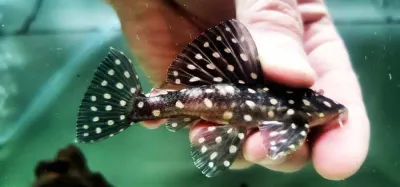
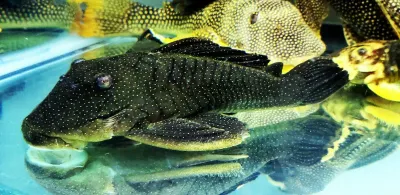
Spotted Paraguay Pleco - (Hypostomus albopunctatus)
Spotted Paraguay Pleco - (Hypostomus albopunctatus)
Price of shipping is not included.
$180.00
Out of stock
Wild Caught
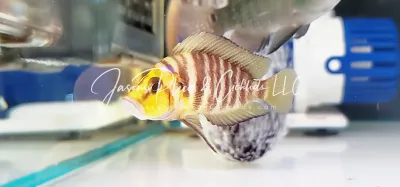
Gold Head Compressiceps - (Altolamprologus compressiceps)
Gold Head Compressiceps - (Altolamprologus compressiceps)
Price of shipping is not included.
$75.00
Out of stock
Wild Caught
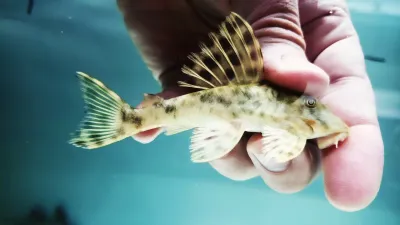
L006 Brown Dot Peckoltia - (Peckoltia oligospila)
L006 Brown Dot Peckoltia - (Peckoltia oligospila)
Price of shipping is not included.
$40.00
Out of stock
Captive Bred
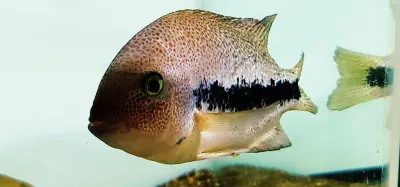
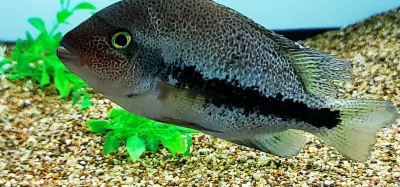
Coatique Cichlid - (Paratheraps sp. "Coatzacoalcos")
Coatique Cichlid - (Paratheraps sp. "Coatzacoalcos")
Price of shipping is not included.
$50.00
Out of stock
Captive Bred
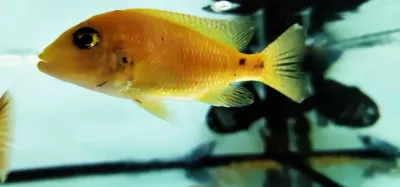
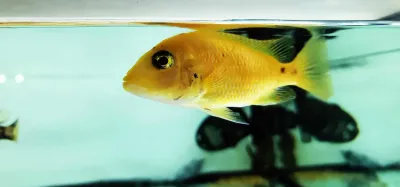
Strawberry Peacock Cichlid - (Aulonocara Species Hybrid)
Strawberry Peacock Cichlid - (Aulonocara Species Hybrid)
Price of shipping is not included.
$25.00
Out of stock
Wild Caught
L397 Tangerine Tiger Pleco - (Panaqolus sp.)
L397 Tangerine Tiger Pleco - (Panaqolus sp.)
Price of shipping is not included.
was $95.00
Save 21%
$75.00
Out of stock
Powered by Lightspeed
Display prices in:USD