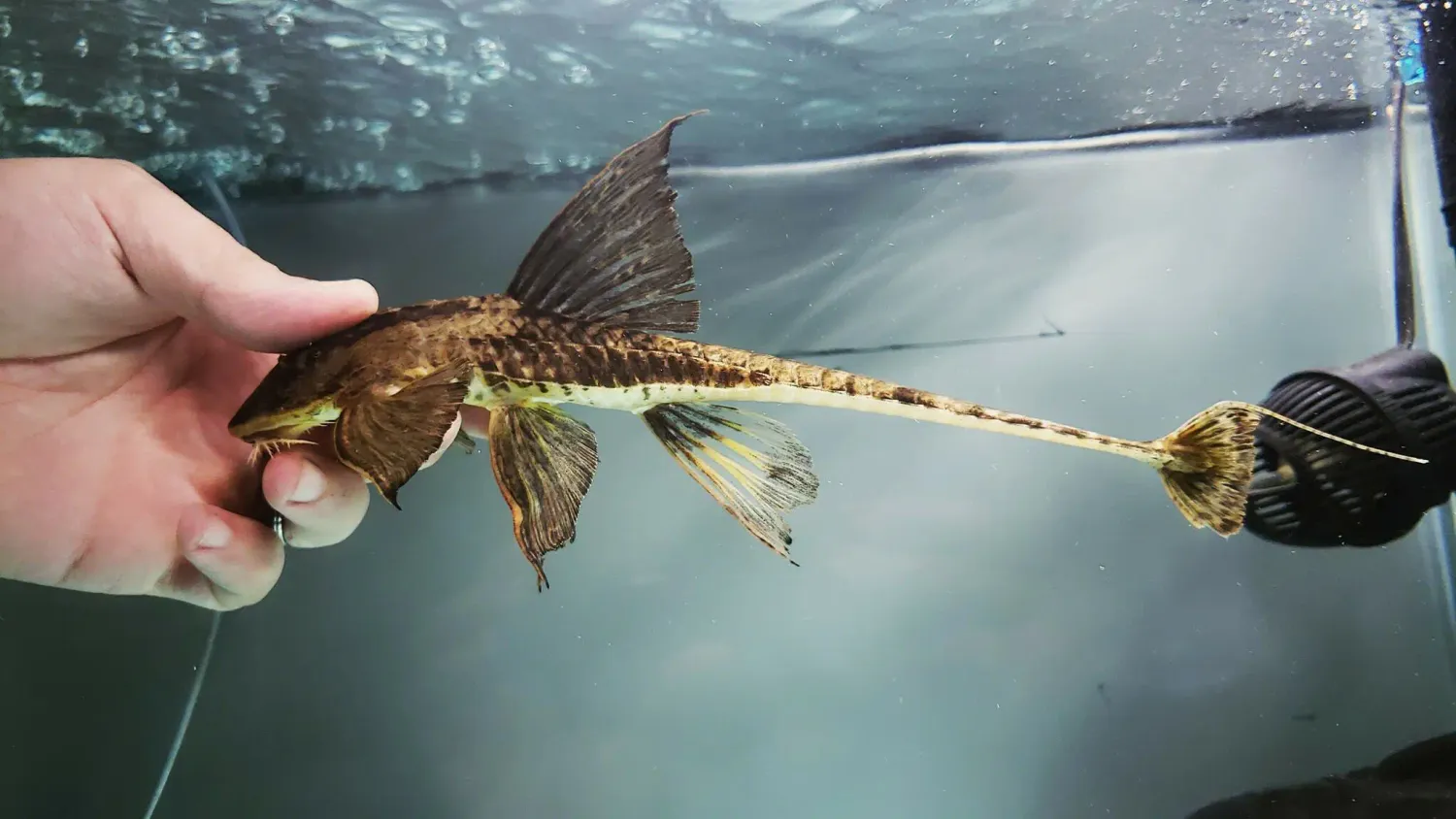
Crying Whiptail - (Loricaria nimairaco)
$110.00
Sold out
was $120.00 Save 8%
Size
Price of shipping is not included.
Sold out
Save this fish to my favorites.
Customer reviews
Reviews only from verified customers
No reviews yet. You can buy this product and be the first to leave a review.
Crying Whiptail - (Loricaria nimairaco)
Fish Details, Description and Information Below:
😢 Crying Whiptail – (Loricaria nimairaco) – Wild-Caught Colombian Amazon Whiptail Catfish
The Crying Whiptail (Loricaria nimairaco) is a distinctive South American whiptail catfish known for its extremely flattened body, broad triangular head, elaborate fringed lips, dark fins, long whip-like tail, and unusual male lip-brooding behavior.
For many years this aquarium fish circulated under informal names such as:
- Crying Whiptail
- Colombian Whiptail
- Loricaria sp. “Colombia”
- Loricaria sp. “Rio Atabapo”
In 2023, scientists formally described the aquarium fish as:
Loricaria nimairaco
The species is native to the upper Amazon drainage of Colombia, including the Orteguaza / Caquetá system, Putumayo River, and Amazon River around Leticia.
One especially important correction is that the old aquarium name:
“RIO ATABAPO LORICARIA”
should not be interpreted as its confirmed natural locality. Current scientific and specialist records do not confirm L. nimairaco from the Rio Atabapo.
This listing is for:
WILD-CAUGHT CRYING WHIPTAILS
🔎 Quick Facts – Crying Whiptail
- 📛 Common Name: Crying Whiptail
- 📛 Older Trade Names: Colombian Whiptail, Loricaria sp. “Colombia,” Loricaria sp. “Rio Atabapo”
- 🔬 Scientific Name: Loricaria nimairaco
- 📅 Formally Described: 2023
- 🐟 Family: Loricariidae
- 🧬 Subfamily: Loricariinae
- 🧬 Tribe: Loricariini
- 🌿 Stock: Wild Caught
- 📏 Current Listed Specimen Size: Approximately 12 inches
- 🇨🇴 Confirmed Country: Colombia
- 🌎 Region: Upper Amazon Basin
- 🌊 Confirmed Drainages: Orteguaza / Caquetá, Putumayo, and Amazon River around Leticia
- 📍 Type Locality: Amazon River at Leticia, Amazonas, Colombia
- ❌ Rio Atabapo: Historical trade name; not a confirmed locality for this species
- 💧 Water Type: Freshwater
- 📏 Largest Scientific Specimen: 190.9 mm / approximately 7.5 inches standard length
- 📏 Specialist Total-Length Estimate: Approximately 22 cm / 8.7 inches
- 🪶 Tail: Upper caudal ray develops a long trailing filament that can increase tip-to-tip measurement
- 🏠 Recommended Aquarium: Approximately 75 gallons or larger for a large adult
- 📐 Recommended Aquarium Length: Approximately 4–5 feet or longer
- 🏖️ Substrate: Soft sand strongly recommended
- 🌡️ Temperature: Approximately 77–82°F
- 💧 pH: Approximately 5.5–7.5
- 💦 Water: Soft to moderately mineralized
- 💨 Oxygenation: Good to High
- 🌊 Water Movement: Moderate, with both moving and sheltered areas
- 🍽️ Diet: Omnivorous Benthic Feeder
- 🦐 Animal / Invertebrate Foods: Important
- 🌿 Plant-Based Foods: Supplemental
- 🚫 Algae Cleaner: Should not be purchased solely for algae control
- 😌 Temperament: Peaceful
- 👥 Social Behavior: Can be maintained singly or in compatible groups
- 🌙 Activity: Primarily crepuscular / nocturnal
- 🥚 Breeding: Lip-Brooder
- 👨👧 Parental Care: Male carries and protects the eggs with his lips
- 🥚 Reported Clutch: Up to approximately 60 eggs
- 🐣 Reported Hatching: Approximately 16 days
- ♂️ Scientific Male Trait: Thickened pectoral-fin spine
- ⭐ Care Level: Intermediate
- 🌎 Conservation Status: Least Concern
🧬 Formally Described in 2023
The Crying Whiptail was known in the aquarium hobby for many years before scientists formally determined its identity.
The valid scientific name is now:
Loricaria nimairaco
The species was described in:
2023
by:
- Alejandro Londoño-Burbano
- Alexander Urbano-Bonilla
- Matthew R. Thomas
- Marcelo R. Britto
Modern taxonomic catalogs recognize:
Loricaria nimairaco
as a valid species.
⚠️ Important Origin Correction
Older aquarium literature frequently called this fish:
Loricaria sp. “Rio Atabapo”
That name should now be treated as:
AN OLD AQUARIUM TRADE NAME
rather than a scientifically confirmed locality.
Specialist records specifically note that:
THE SPECIES HAS NOT BEEN CONFIRMED FROM THE RIO ATABAPO
The formally described species comes from Colombia's:
UPPER AMAZON BASIN
not the Orinoco / Atabapo system.
🌎 Confirmed Native Distribution
Scientific specimens of Loricaria nimairaco are known from Colombia within three major upper Amazon-associated drainage areas:
🌊 Orteguaza River
The Orteguaza is a major tributary of the:
RIO CAQUETÁ
which eventually becomes the:
RIO JAPURÁ
in Brazil before entering the Amazon.
🌊 Putumayo River
The Putumayo flows eastward and becomes known as the:
RIO IÇÁ
in Brazil.
🌊 Amazon River at Leticia
The species is also documented from the:
MAIN AMAZON RIVER
around:
LETICIA, COLOMBIA
📍 Type Locality
The scientific type locality is:
AMAZON RIVER – LETICIA, AMAZONAS, COLOMBIA
This should replace vague older descriptions such as:
“South America, primarily Brazil.”
🇨🇴 Colombia Is the Confirmed Scientific Range
Some aquarium databases extrapolate the range into:
- Peru
- Brazil
because the connected rivers continue across international borders.
However, the original scientific description specifically states that the species is currently documented from:
COLOMBIA
and notes that its presence farther downstream remains uncertain because of insufficient sampling.
Therefore, for the product page:
COLOMBIAN UPPER AMAZON BASIN
is the most accurate origin.
🧠 What Does nimairaco Mean?
The scientific name:
nimairaco
comes from the:
UITOTO-MUINANE LANGUAGE
and means:
“HOUSE OF A WISE MAN”
The species was named in tribute to the late Colombian ichthyologist:
JOSÉ IVÁN MOJICA
for his contributions to:
- Fish biology
- Ecology
- Systematics
- Biogeography
- Conservation of Colombian freshwater fishes
😢 Does “Nimairaco” Mean Crying?
No.
The popular aquarium name:
CRYING WHIPTAIL
should not be confused with the meaning of the scientific species name.
Nimairaco does:
NOT
mean “crying.”
It means:
HOUSE OF A WISE MAN
The common name Crying Whiptail predates the formal 2023 scientific description.
🎨 Appearance
The Crying Whiptail has the unmistakable flattened body form of the genus Loricaria.
Typical coloration includes:
- Tan
- Medium brown
- Dark brown
- Charcoal
- Blackish areas
The fish may display:
- Dark longitudinal markings
- Dark posterior body bands
- Strongly dark fins
- Subtle spots toward the caudal peduncle
⚫ Dark Head & Front Body
One of the important scientific characteristics of L. nimairaco is the dark coloration from the:
- Snout
- Head
- Front portion of the body
The upper surface may be:
UNIFORMLY DARK BROWN / BLACK
or display:
TWO LONGITUDINAL DARK STRIPES
extending from the snout toward the dorsal-fin region.
⚫ Dark Dorsal & Pectoral Fins
The:
DORSAL FIN
and:
PECTORAL FINS
are typically:
SOLID DARK BROWN TO BLACK
without the obvious bands, blotches, or spotting seen in several related Loricaria species.
This is one of the characters used in the formal scientific diagnosis.
🦓 Posterior Body Bands
Behind the dorsal-fin region, the body may display approximately:
THREE TO FOUR DARK TRANSVERSE BANDS
along the rear portion of the body.
The pattern is generally more subdued than that of strongly zebra-patterned aquarium whiptails.
🪶 Long Whip-Like Tail
Like many true Loricaria, the Crying Whiptail develops a:
LONG, THIN CAUDAL FILAMENT
The upper ray of the caudal fin extends into:
A LONG TRAILING FILAMENT
which gives the fish its classic:
WHIPTAIL
appearance.
⚠️ Tail Filament Is Fragile
The long caudal extension can be damaged by:
- Aggressive tankmates
- Fin-nipping fish
- Rough handling
- Nets
- Sharp décor
- Shipping
Minor damage can regrow under good conditions, but avoid repeatedly exposing the fish to situations that damage the filament.
📏 Adult Size – Important Clarification
The original scientific description examined specimens reaching:
190.9 MM STANDARD LENGTH
or approximately:
7.5 INCHES STANDARD LENGTH
📐 What Is Standard Length?
Standard length measures the fish from:
THE SNOUT TO THE BASE OF THE TAIL
It does:
NOT INCLUDE THE FULL CAUDAL FIN
and does not include the full length of the trailing whip-like filament.
📏 Specialist Total-Length Estimate
Specialist Loricariidae references commonly give approximately:
22 CM / 8.7 INCHES TOTAL LENGTH
for Loricaria nimairaco.
⚠️ Your Current 12-Inch Specimen
The current store listing measures the available specimen at approximately:
12 INCHES
That is larger than the normal published total-length estimates.
There are several possible reasons:
- Measurement may include the long caudal filament
- Aquarium specimens may exceed currently published scientific samples
- Retail measurement methods may differ from scientific standard length
- Whiptail tail filaments can add substantial overall length
For the product page, keep the:
CURRENT APPROXIMATE 12-INCH STOCK MEASUREMENT
while avoiding a claim that all Crying Whiptails normally develop a 12-inch body.
🏠 Aquarium Size
The older recommendation of:
30 GALLONS
is too small for a large adult, especially one currently measuring around 12 inches tip-to-tip.
For a mature specimen:
75 GALLONS OR LARGER
is a safer permanent recommendation.
A tank approximately:
4–5 FEET LONG OR LONGER
provides much better usable bottom area.
📐 Bottom Area Matters More Than Height
The Crying Whiptail is an extremely:
BOTTOM-ORIENTED FISH
A long, wide aquarium provides more useful habitat than a tall aquarium of the same volume.
Prioritize:
- Length
- Width
- Open substrate
- Resting area
🏖️ Soft Sand Is Strongly Recommended
A soft:
SAND SUBSTRATE
is ideal.
The fish naturally rests directly on the bottom and uses its sensitive:
- Lips
- Barbels
- Underside
against the substrate.
Avoid:
- Sharp gravel
- Jagged crushed stone
- Abrasive substrate
that can damage these structures.
🪨 Aquarium Setup
A suitable aquarium should include:
- Large open sand areas
- Smooth rocks
- Driftwood
- Roots
- Shaded areas
- Low shelters
- Good filtration
- Good oxygenation
- Moderate circulation
Do not overcrowd the aquarium floor with décor.
The fish benefits from:
OPEN SAND FOR RESTING AND FEEDING
🌊 Natural Habitat Is More Variable Than Previously Thought
It would be inaccurate to describe L. nimairaco simply as a:
FAST-RIVER SPECIALIST
Scientific collection records show the species in different environments.
One specimen was collected in:
HIGH CURRENT
over predominantly:
- Mud
- Organic material
while another occurred in:
SLOWER CURRENT
over:
- Cobble
- Sand
- Organic matter
🌊 Aquarium Flow
Because the species occurs across different current conditions:
MODERATE WATER MOVEMENT
is an excellent aquarium target.
Provide:
🌊 Moving Areas
for:
- Oxygenation
- Waste transport
- Natural river conditions
and:
🏖️ Calmer Bottom Areas
for:
- Resting
- Feeding
- Shelter
There is no need to turn the entire aquarium into an extreme torrent.
💨 Oxygenation
Provide:
GOOD TO HIGH DISSOLVED OXYGEN
using:
- Strong surface agitation
- Air stones
- Sponge filters
- Canister-filter returns
- Sump returns
- Appropriate circulation pumps
🌡️ Temperature
Specialist husbandry records recommend approximately:
77–82°F / 25–28°C
This is warmer than the old:
74–79°F
recommendation.
A practical long-term target is:
77–82°F
💧 Water Parameters
A practical long-term range is:
- 🌡️ Temperature: Approximately 77–82°F
- 💧 pH: Approximately 5.5–7.5
- 💦 Hardness: Soft to moderately mineralized
- 💨 Oxygenation: Good to High
- 🌊 Flow: Moderate
- ☠️ Ammonia: 0 ppm
- ☠️ Nitrite: 0 ppm
- 🔄 Nitrate: Keep reasonably low
⚠️ Clean Water Matters
Whiptails should not be maintained in:
- Dirty substrate
- Excess organic waste
- High ammonia
- High nitrite
- Persistently high nitrate
- Poorly oxygenated water
Regular partial water changes are important.
💩 Filtration
Suitable filtration can include:
- Canister filters
- Sump filtration
- Sponge filtration
- Hang-on-back filtration
The filtration should provide:
GOOD WATER QUALITY WITHOUT TURNING THE ENTIRE BOTTOM INTO A HIGH-SPEED CURRENT ZONE
🍽️ Diet – Omnivorous Benthic Feeder
The safest current description of Loricaria nimairaco is:
OMNIVOROUS BENTHIC FEEDER
It should receive a varied diet rather than being treated as a dedicated algae-eating pleco.
🦐 Animal & Invertebrate Foods
Aquarium specimens generally accept animal-based foods readily.
Suitable foods include:
- Mysis shrimp
- Brine shrimp
- Bloodworms
- Mosquito larvae
- Small crustacean foods
- Insect-based sinking foods
- Quality catfish pellets
- Quality omnivore tablets
Protein and invertebrate foods should form an important part of the diet.
🌿 Plant & Algae Foods
Some plant-containing foods can also be offered, including:
- Spirulina wafers
- Algae-containing tablets
- Vegetable-based sinking foods
- Small portions of zucchini
These should provide:
DIETARY VARIETY
rather than become the only food offered.
🚫 Not Just an Algae Cleaner
The Crying Whiptail should:
NOT BE PURCHASED SOLELY FOR ALGAE CONTROL
It requires deliberate feeding.
Aquarium algae alone will not provide proper long-term nutrition.
🍽️ Bottom Feeding
Because of its strongly bottom-oriented feeding behavior, use foods that:
SINK DIRECTLY TO THE SUBSTRATE
rather than relying only on floating or midwater foods.
⚠️ Avoid Aggressive Feeding Competition
The Crying Whiptail is peaceful and can be outcompeted by:
- Large aggressive plecos
- Boisterous cichlids
- Fast bottom-feeding catfish
Make sure food reaches the bottom where the whiptail can feed calmly.
🌙 Behavior
The Crying Whiptail is generally:
PEACEFUL AND CALM
It spends much of its time:
- Resting on sand
- Resting beneath wood
- Sitting beside rocks
- Slowly moving across the substrate
Activity often increases:
- At dusk
- During feeding
- Under subdued lighting
😌 Peaceful Community Fish
The species is generally compatible with peaceful fish that share similar water requirements.
Potential tankmates may include:
- Tetras
- Pencilfish
- Peaceful characins
- Corydoras
- Peaceful cichlids
- Other non-aggressive catfish
🚫 Avoid Fin-Nippers
The long tail filament makes the Crying Whiptail vulnerable to:
- Barbs that nip fins
- Aggressive cichlids
- Territorial catfish
- Boisterous fish that repeatedly harass it
Choose tankmates carefully.
👥 Keeping More Than One
Specialist sources indicate that Loricaria nimairaco can be maintained:
SINGLY OR IN SMALL GROUPS
when adequate floor space is available.
Group housing can be especially interesting because of the species' unusual reproductive behavior.
⚠️ Provide Enough Bottom Space
Even peaceful fish can compete for:
- Feeding zones
- Resting spots
- Shelters
Provide:
- Multiple feeding areas
- Open sand
- Several sheltered locations
🧪 Wild-Caught Acclimation
This listing is for:
WILD-CAUGHT CRYING WHIPTAILS
Wild specimens deserve careful acclimation.
After arrival:
- Keep lighting subdued
- Provide soft sand
- Provide secure sheltered areas
- Maintain good oxygenation
- Avoid abrupt temperature changes
- Avoid abrupt pH changes
- Maintain clean water
- Confirm feeding
🍽️ Monitor Body Condition
Whiptails have naturally thin bodies, but the abdomen should not appear:
- Severely sunken
- Hollow
- Pinched
Watch newly imported fish carefully and confirm they are receiving food.
👄 Extraordinary Fringed Lips
One of the most fascinating features of Loricaria is the elaborate mouth.
The upper and lower lips possess:
LONG FRINGED BARBELS AND FILAMENTS
that create a highly unusual appearance when viewed from underneath.
👄 Not a Typical Pleco Mouth
The mouth of Loricaria nimairaco is quite different from the simple suction-disc appearance of many common plecos.
It includes:
- Long marginal lip filaments
- Papillae
- Barbels
- Relatively few specialized teeth
These structures are important in:
- Feeding
- Substrate interaction
- Reproduction
♂️ Male vs. Female
The 2023 scientific description found a reliable male characteristic:
THICKENED PECTORAL-FIN SPINES
Mature males showed:
SLIGHTLY HYPERTROPHIED PECTORAL SPINES
compared with females.
⚠️ Important Sexing Correction
Some older generalized Loricaria descriptions suggest that males can always be identified by:
- Enlarged lips
- Enlarged lip barbels
- Dramatically altered facial structures
However, the scientific type series of L. nimairaco did:
NOT
show consistent permanent sexual differences in lip or barbel morphology.
The clearest documented non-breeding difference was:
THICKER PECTORAL SPINES IN MALES
🥚 One of the Most Interesting Pleco Breeding Strategies
The Crying Whiptail does not reproduce like a typical:
- Ancistrus
- Hypancistrus
- Peckoltia
that deposits eggs inside a cave.
Instead, Loricaria uses one of the most unusual reproductive strategies among aquarium loricariids:
MALE LIP BROODING
👄 Male Lip-Brooder
After spawning:
THE MALE CARRIES THE EGG MASS WITH HIS LIPS
Rather than leaving the eggs attached inside a cave, the male holds and protects them beneath his head and mouth area.
🥚 Spawning
Aquarium breeding reports describe females laying approximately:
UP TO 60 LARGE EGGS
The male then takes responsibility for the clutch.
👨👧 Male Parental Care
The male protects the eggs by holding them with his:
ENLARGED BREEDING LIPS
This keeps the clutch:
- Protected
- Oxygenated
- Together
during development.
🐣 Hatching Time
Aquarium breeding records report the young hatching after approximately:
16 DAYS
depending on:
- Temperature
- Water chemistry
- Oxygenation
🌡️ Documented Breeding Conditions
One successful specialist breeding record used approximately:
- 🌡️ 25.5°C / 78°F
- 💧 pH 7.5
- 💦 KH around 6°
This demonstrates that extremely acidic or ultra-soft water is:
NOT REQUIRED
for successful breeding.
👶 Raising Fry
Once the young have completely absorbed their:
YOLK SACS
they can begin feeding on foods such as:
- Fine sinking catfish foods
- Crushed tablets
- Baby brine shrimp
- Fine frozen foods
- Small insect foods
⚠️ Fry Need Access to Food
Whiptail fry spend most of their time near the substrate.
Food should therefore be:
SMALL + SINKING + EASILY ACCESSIBLE
Frequent small feedings work better than large meals.
💧 Fry Water Quality
Young fish are sensitive to deteriorating water quality.
Maintain:
- Zero ammonia
- Zero nitrite
- Low nitrate
- Good oxygen
- Clean substrate
while feeding frequently.
🧬 Old Misidentifications
Before Loricaria nimairaco was described in 2023, similar Colombian fish were sometimes identified as:
- Loricaria simillima
- Loricaria cf. nickeriensis
- Loricaria sp. “Colombia”
- Loricaria sp. “Rio Atabapo”
The modern scientific description demonstrated that these Colombian upper-Amazon specimens represent:
A DISTINCT SPECIES
🆚 Loricaria nimairaco vs. Loricaria simillima
The two species can look similar.
Scientists distinguish L. nimairaco using a combination of characters involving:
- Number of body plates
- Abdominal plating
- Head proportions
- Dark head coloration
- Fin coloration
- Tail pattern
- Genetics
Therefore:
DO NOT IDENTIFY WHIPTAILS BY COLOR ALONE
⚠️ Collection Locality Matters
Because the genus Loricaria contains several extremely similar species:
LOCALITY INFORMATION IS IMPORTANT
Preserve:
- Supplier identification
- Country
- River system
- Collection locality when available
🌎 Conservation Status
The scientific authors evaluated Loricaria nimairaco as:
LEAST CONCERN
based on its estimated extent of occurrence.
⚠️ Environmental Threats Still Exist
Least Concern does not mean its habitat faces no pressure.
The original scientific description specifically noted threats within its range involving:
- Deforestation
- Gold mining
- Cattle ranching
- Oil-development projects
and recommended continued population monitoring.
⭐ Why Keep a Crying Whiptail?
The Crying Whiptail combines:
- 😢 Distinctive aquarium history
- 🧬 Newly described 2023 scientific identity
- 🇨🇴 Colombian upper-Amazon origin
- 🐟 Extremely flattened body
- 👄 Elaborate fringed lips
- 🪶 Long whip-like caudal filament
- ⚫ Dramatically dark fins
- 😌 Peaceful temperament
- 🏖️ Interesting sand-bottom behavior
- 👨👧 Extraordinary male parental care
- 🥚 Lip-brooding reproduction
- 🌎 Fascinating scientific history
into one of the most unusual whiptail catfish available to experienced freshwater aquarists.
⚠️ Important Considerations
Before purchasing a Crying Whiptail:
- The correct scientific name is Loricaria nimairaco.
- The species was formally described in 2023.
- It was previously sold under several informal names.
- “Rio Atabapo Loricaria” is an old aquarium trade name.
- L. nimairaco has not been scientifically confirmed from the Rio Atabapo.
- The confirmed native range is Colombia's upper Amazon drainage.
- Important systems include the Orteguaza / Caquetá, Putumayo, and Amazon River around Leticia.
- Do not describe the origin as primarily Brazil.
- The type locality is the Amazon River at Leticia, Colombia.
- The name nimairaco means “house of a wise man.”
- It does not mean “crying.”
- This listing is for wild-caught fish.
- The current specimen is listed at approximately 12 inches.
- The largest scientific specimen measured approximately 7.5 inches standard length.
- Specialist total-length estimates are around 8.7 inches.
- The upper tail ray forms a long trailing filament.
- Tip-to-tip measurements can therefore be longer than body-length measurements.
- Do not use 7 inches as a hard maximum.
- Provide approximately 75 gallons or larger for a large adult.
- A long aquarium with substantial bottom area is preferred.
- Use soft sand.
- Avoid sharp substrate.
- Provide rocks, driftwood, and sheltered areas.
- Maintain approximately 77–82°F.
- Maintain approximately pH 5.5–7.5.
- Maintain good to high dissolved oxygen.
- Moderate flow is appropriate.
- The species occurs in both higher-current and slower-current habitat.
- Do not describe it as an extreme high-flow specialist.
- Feed a varied omnivorous benthic diet.
- Animal and invertebrate foods are important.
- Provide some plant-containing foods for variety.
- Do not purchase it simply as an algae cleaner.
- Avoid aggressive and fin-nipping tankmates.
- Protect the long tail filament.
- Mature males develop thicker pectoral-fin spines.
- Permanent enlarged lip/barbel structures are not a reliable general sexing feature.
- The species is a male lip-brooder.
- Males carry and protect the egg mass with their lips.
- Up to approximately 60 eggs have been reported.
- Young may hatch after approximately 16 days.
- The species has been bred repeatedly in captivity.
- Conservation status is Least Concern.
- Habitat threats remain present within its native range.
- Never release aquarium fish into natural waterways.
🧬 Taxonomy
The currently accepted scientific name is:
Loricaria nimairaco Londoño-Burbano, Urbano-Bonilla, Thomas & Britto, 2023
Classification:
- Order: Siluriformes
- Family: Loricariidae
- Subfamily: Loricariinae
- Tribe: Loricariini
- Genus: Loricaria
- Species: nimairaco
Confirmed scientific range:
UPPER AMAZON BASIN – COLOMBIA
including:
- Rio Orteguaza / Caquetá drainage
- Rio Putumayo
- Amazon River around Leticia
For this product, use:
Crying Whiptail – (Loricaria nimairaco)
🌎 Locality & Identification Disclaimer
The old aquarium name:
Loricaria sp. “Rio Atabapo”
was used before the fish received its formal scientific description.
Current evidence identifies the aquarium Crying Whiptail as:
Loricaria nimairaco
from Colombia's upper Amazon basin.
Because similar Loricaria species can be difficult to distinguish:
- Preserve supplier information
- Preserve collection locality when known
- Do not assign locality from an outdated trade name
- Do not identify similar whiptails from appearance alone
🚚 Live Fish Shipping
Live fish are professionally packed for safe transport.
Shipping availability depends on:
- Fish size
- Destination
- Weather conditions
- Carrier availability
- Applicable state and local regulations
Extra care is required when packing large Crying Whiptails because of their:
- Long body
- Long caudal filament
- Large fins
- Armored body
The trailing tail filament is particularly vulnerable to:
- Folding
- Abrasion
- Fin damage
during handling and transport.
Large specimens may require:
- Larger fish bags
- Additional water
- Heavy-duty shipping bags
- Larger insulated boxes
- Specialized packing
- Airline cargo depending on specimen size and destination
Please review our Shipping & Payment Information and Live Arrival Guarantee / DOA Policy before ordering.
⚠️ Buyer Responsibility
Customers are responsible for confirming that Loricaria nimairaco may legally be purchased, possessed, transported, and received in their state or local jurisdiction before ordering.
Never release aquarium fish into natural waterways.
Below are fish you may also like.
Wild Caught
Bumblebee Catfish - (Microglanis Iheringi)
Bumblebee Catfish - (Microglanis Iheringi)
Price of shipping is not included.
$20.00
Out of stock
Wild Caught
Gold Head Compressiceps - (Altolamprologus compressiceps)
Gold Head Compressiceps - (Altolamprologus compressiceps)
Price of shipping is not included.
$75.00
Out of stock
Captive Bred
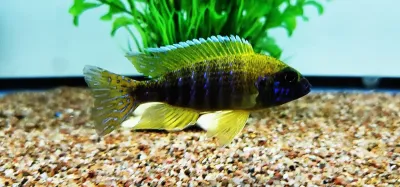
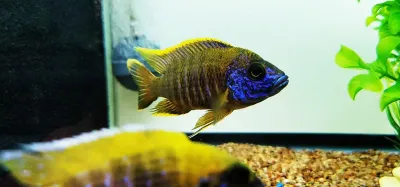
Yellow Benga Peacock/Sunshine Peacock - (Auloncara baenschi)
Yellow Benga Peacock/Sunshine Peacock - (Auloncara baenschi)
Price of shipping is not included.
$40.00
Out of stock
Captive Bred
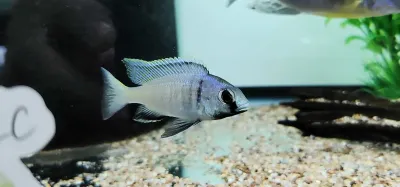
Deep Water Hap - (Placidochromis electra)
Deep Water Hap - (Placidochromis electra)
Price of shipping is not included.
$25.00
Out of stock
Wild Caught
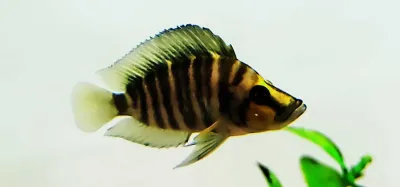
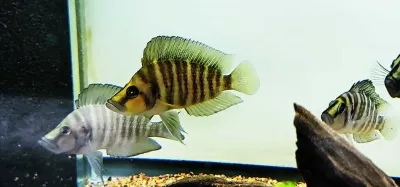
Yellow Chaitika Compressiceps - (Altolamprologus compressiceps)
Yellow Chaitika Compressiceps - (Altolamprologus compressiceps)
Price of shipping is not included.
$75.00
Out of stock
Wild Caught
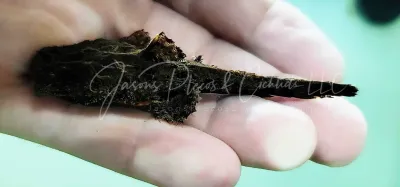
Frogmouth Catfish - (Chaca chaca)
Frogmouth Catfish - (Chaca chaca)
Price of shipping is not included.
was $50.00
Save 40%
$30.00
Out of stock
Captive Bred
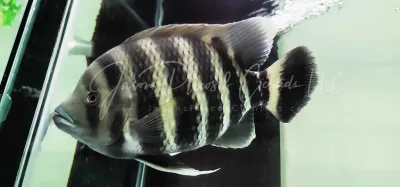
Zebra Tilapia - (Tilapia buttikoferi)
Zebra Tilapia - (Tilapia buttikoferi)
Price of shipping is not included.
was $100.00
Save 20%
$80.00
Out of stock
Captive Bred
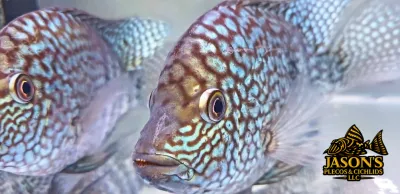
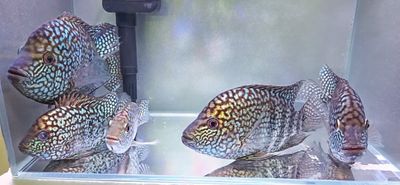
Blue Escondido Cichlid/Pearlscale Cichlid - (Herichthys carpintis)
Blue Escondido Cichlid/Pearlscale Cichlid - (Herichthys carpintis)
Price of shipping is not included.
was $200.00
Save 3%
$195.00
Out of stock
Captive Bred
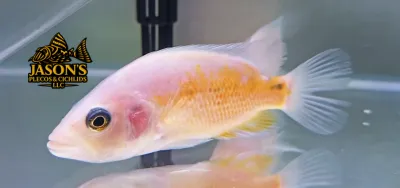
Red Dovii Cichlid - (Parachromis Dovii “Red”)
Red Dovii Cichlid - (Parachromis Dovii “Red”)
Price of shipping is not included.
was $110.00
Save 9%
$100.00
Out of stock
Wild Caught
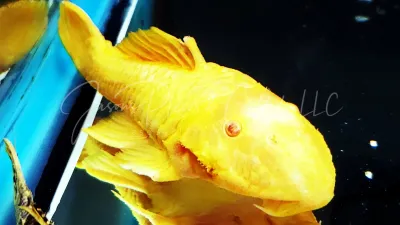
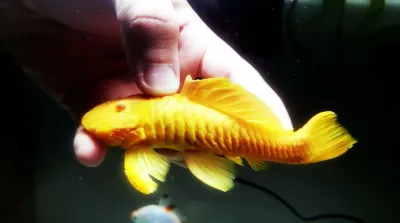
Albino Chubby Pleco - (Parancistrus aurantiacus)
Albino Chubby Pleco - (Parancistrus aurantiacus)
Price of shipping is not included.
$2 500.00
Out of stock
Wild Caught
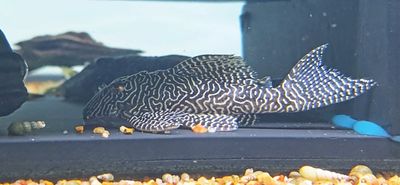
L260 Queen Arabesque Pleco - (Hypancistrus sp.)
L260 Queen Arabesque Pleco - (Hypancistrus sp.)
Price of shipping is not included.
was $80.00
Save 6%
$75.00
Wild Caught
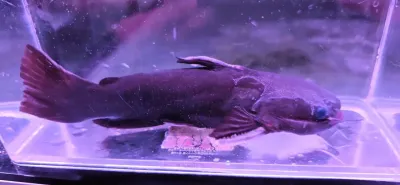
Iron Head Driftwood Catfish - (Trachycorystes trachycorystes)
Iron Head Driftwood Catfish - (Trachycorystes trachycorystes)
Price of shipping is not included.
5.0
(1)
was $90.00
Save 6%
$85.00
Out of stock
Powered by Lightspeed
Display prices in:USD