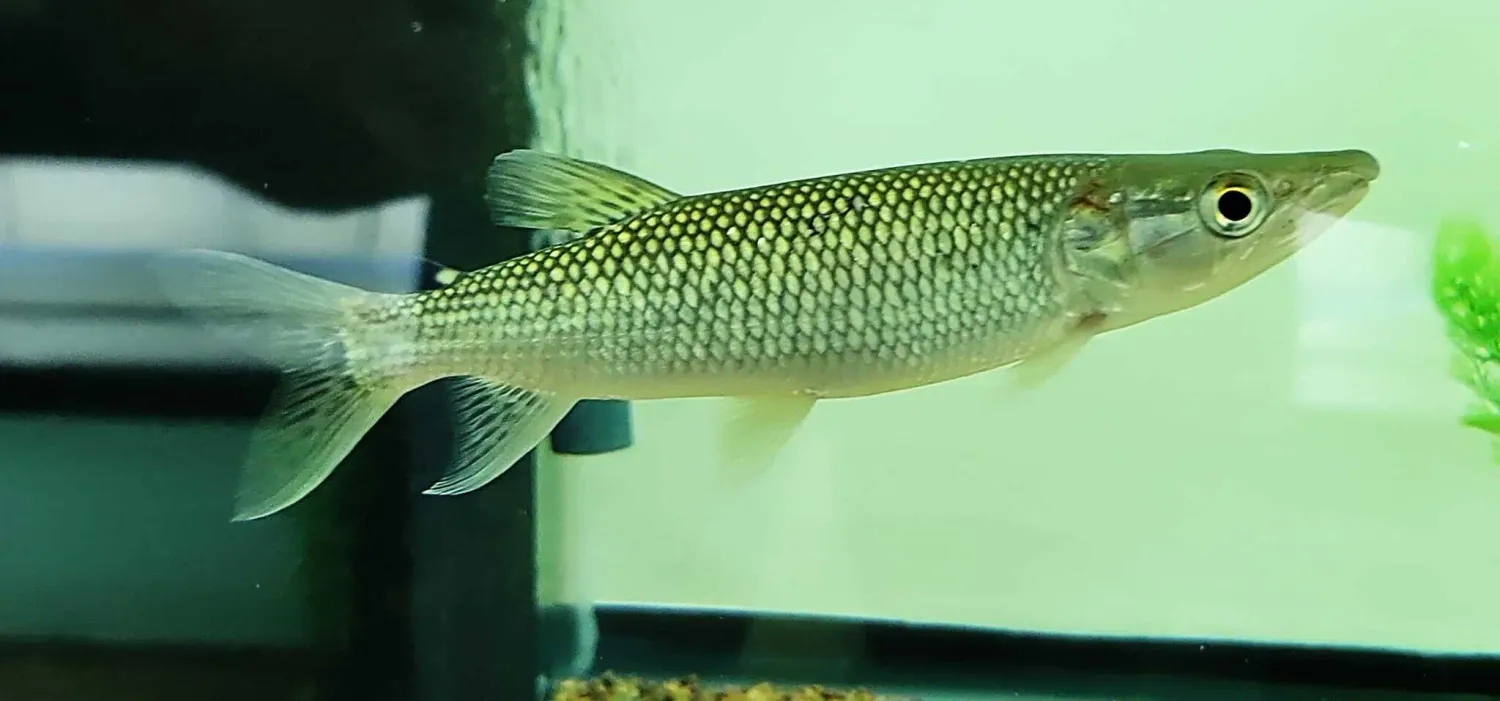
African Pike Characin - (Hepsetus odoe)
$75.00
Sold out
Size
Price of shipping is not included.
Sold out
Save this fish to my favorites.
Customer reviews
Reviews only from verified customers
No reviews yet. You can buy this product and be the first to leave a review.
African Pike Characin - (Hepsetus odoe)
Fish Details, Description and Information Below:
🐟 African Pike Characin – (Hepsetus odoe) – Large West African Ambush Predator
The African Pike Characin (Hepsetus odoe) is a powerful freshwater predator from West and western-central Africa, recognized by its long torpedo-shaped body, pointed jaws, large eyes, silvery-bronze coloration, and prominent sharp teeth.
Although its streamlined appearance resembles a true pike, Hepsetus odoe is not related to northern pikes of the genus Esox. It belongs to the African pike family:
HEPSETIDAE
within the order Characiformes.
This species is a specialized ambush predator that naturally waits near aquatic vegetation and structural cover before exploding forward to capture smaller fish.
The African Pike Characin is best suited to experienced aquarists who can provide a large, long, tightly covered aquarium, excellent filtration, appropriate predatory foods, and carefully selected tankmates.
🔎 Quick Facts – African Pike Characin
- 📛 Common Name: African Pike Characin
- 📛 Other Name: African Pike
- 🔬 Scientific Name: Hepsetus odoe
- 📅 Originally Described: 1794
- 🐟 Family: Hepsetidae
- 🧬 Order: Characiformes
- 📏 Listing Size: Approximately 6–8 inches
- 🌍 Origin: West & Western-Central Africa
- 🇨🇮 Western Range: Sassandra River drainage, Côte d’Ivoire
- 🌍 Eastern / Northeastern Range: Through West-Central Africa toward Cameroon and the Chari/Shari system
- 💧 Water Type: Freshwater
- 📏 Scientific Maximum: 44.2 cm / approximately 17.4 inches standard length
- 📏 Adult Planning Size: Approximately 18–20 inches total length
- 🏠 Recommended Adult Aquarium: 180+ gallons
- 🏠 Preferred Aquarium: 240+ gallons for large adults or multiple large tankmates
- 📐 Recommended Aquarium Length: Approximately 6 feet or longer
- 🌡️ Temperature: Approximately 79–82°F
- 💧 pH: Approximately 6.0–7.5
- 💦 Hardness: Up to approximately 18 dH
- 🌊 Water Movement: Moderate
- 💨 Oxygenation: Good to High
- 🍽️ Diet: Carnivore / Piscivore
- 🐟 Natural Diet: Primarily smaller fish
- 🦐 Captive Foods: Shrimp, prawns, krill, mussel, earthworms, insects and fish-based foods
- 🚫 Feeder Fish Required: No
- 🏹 Feeding Style: Ambush Predator
- ☀️ Natural Activity: Primarily Diurnal
- ⚠️ Tankmates: Must be too large to swallow and not excessively aggressive
- ⚠️ Conspecific Behavior: Can become increasingly aggressive toward one another with maturity
- 🚀 Jumping Risk: Very High
- 🦷 Bite Risk: Sharp teeth – use caution during aquarium maintenance
- 🥚 Reproduction: Free-Floating Bubble / Foam Nest
- 👨👩👧 Parental Care: Both parents may guard the nest and developing young
- ⭐ Care Level: Advanced
- 🌎 IUCN Status: Least Concern
🧬 Valid Scientific Species
The currently accepted scientific name is:
Hepsetus odoe (Bloch, 1794)
It was originally described as:
Salmo odoe
and is now placed in the genus:
Hepsetus
The current Catalog of Fishes recognizes Hepsetus odoe as a valid species within:
HEPSETIDAE
⚠️ Important Taxonomy Correction
For many years, almost every African Pike across a huge portion of sub-Saharan Africa was called:
Hepsetus odoe
That is no longer scientifically accurate.
Modern taxonomic studies demonstrated that the old “widespread H. odoe” actually consisted of:
MULTIPLE DIFFERENT SPECIES
of Hepsetus.
🌍 True Hepsetus odoe Has a More Restricted Range
True Hepsetus odoe is found primarily in:
WESTERN & WESTERN-CENTRAL AFRICA
Its range begins around the:
SASSANDRA RIVER DRAINAGE IN CÔTE D’IVOIRE
and extends eastward through portions of West and Central Africa toward:
- Ghana
- Togo
- Benin
- Nigeria
- Cameroon
- Chad / Central African Republic drainage areas
depending on the river system.
🚫 Do Not Call This the Kafue Pike
Older aquarium literature often used:
KAFUE PIKE
as another name for Hepsetus odoe.
That should no longer be used for true H. odoe.
The Hepsetus found in the:
KAFUE / ZAMBEZI REGION OF SOUTHERN AFRICA
is now recognized as a different species:
Hepsetus cuvieri
Therefore:
KAFUE PIKE ≠ TRUE HEPSETUS ODOE
🐟 Appearance
The African Pike Characin has a body perfectly designed for sudden acceleration.
Typical features include:
- Long streamlined body
- Large scales
- Pointed snout
- Large mouth
- Prominent eyes
- Strong caudal fin
- Sharp pointed teeth
Body coloration generally consists of combinations of:
- Silver
- Olive
- Bronze
- Gray
- Greenish brown
with a lighter underside.
🦷 Serious Predatory Dentition
One of the most impressive characteristics of Hepsetus odoe is its mouth.
Both jaws contain:
SHARP POINTED TEETH
and the species also develops enlarged:
CANINE-LIKE TEETH
used for gripping prey.
This fish is designed to capture other fish quickly rather than scrape or crush food.
⚠️ Bite Precaution
The African Pike Characin is not venomous.
However:
IT HAS VERY SHARP TEETH
and an accidental defensive or feeding response can cause injury.
Use caution when:
- Cleaning the aquarium
- Moving decorations
- Hand-feeding
- Netting the fish
- Working near an excited feeding response
Avoid intentionally hand-feeding large adults.
🏹 Ambush Predator
Unlike fish that constantly chase prey through open water, Hepsetus odoe is primarily an:
AMBUSH PREDATOR
It commonly positions itself near:
- Vegetation
- Branches
- Roots
- Marginal cover
and waits.
When prey moves into range, the African Pike launches forward with:
EXTREME SPEED
☀️ Primarily Diurnal Predator
Unlike many large aquarium predators that become most active after dark, African Pike are primarily:
DAYTIME HUNTERS
They rely heavily on:
- Vision
- Camouflage
- Vegetation
- Sudden acceleration
to capture prey.
🌿 Natural Habitat
True H. odoe occurs in freshwater environments that may include:
- Upper river courses
- Smaller rivers
- Tributaries
- Lakes
- Lagoons
- Vegetated margins
- Backwater areas
The species frequently associates with:
DENSE MARGINAL VEGETATION
where it can remain concealed while hunting.
🌿 Provide Visual Cover
A captive aquarium should include areas of:
- Tall plants
- Artificial plants
- Driftwood
- Branches
- Floating plants
- Shaded cover
while still leaving:
A LARGE OPEN SWIMMING AREA
⚠️ Do Not Overcrowd the Aquarium With Décor
This fish can accelerate very rapidly.
Décor should primarily be concentrated:
- Along the back
- Along the sides
- Around corners
while leaving the central swimming area open.
Sharp decorations should be avoided.
🚀 Extremely Fast Fish
An African Pike can go from nearly motionless to:
FULL SPEED ALMOST INSTANTLY
This creates a husbandry problem that should not be underestimated.
A frightened fish may crash into:
- Aquarium glass
- Décor
- Lids
- Equipment
🖼️ Reduce Glass-Collision Risk
Consider using:
- A dark aquarium background
- Side backgrounds
- Tall plants
- Branches
- Visual barriers
around the rear and side panels.
These can make the aquarium boundaries easier for a fast-moving fish to recognize.
🚀 Extreme Jumping Risk
The African Pike Characin is an:
EXCELLENT JUMPER
A startled or feeding fish can launch completely out of an aquarium.
The tank must have:
A TIGHT-FITTING, SECURE LID
⚠️ Cover Every Opening
Check carefully around:
- Filter hoses
- Electrical cords
- Overflow boxes
- Heater cables
- Feeding openings
A surprisingly small opening may be enough for a frightened fish to escape.
📏 Adult Size – Important Update
FishBase documents true Hepsetus odoe reaching:
44.2 CM STANDARD LENGTH
or approximately:
17.4 INCHES BEFORE THE FULL TAIL FIN
Standard length does not include the complete caudal fin.
Therefore, responsible aquarium planning should allow for approximately:
18–20 INCHES TOTAL LENGTH
for a large adult.
⚠️ Old Reports of Much Larger “Odoe”
Some older literature reports African Pike substantially larger than this.
Those records must now be interpreted carefully because:
OLDER STUDIES OF “HEPSETUS ODOE” INCLUDED OTHER SPECIES
before the genus was taxonomically revised.
Do not automatically apply every historical African Pike size record to true H. odoe.
🏠 Aquarium Size – Important Correction
The older product listing recommends:
75 GALLONS
That is too small for permanent adult housing.
A fish potentially approaching 18–20 inches that:
- Swims rapidly
- Lunges at prey
- Startles easily
- Jumps powerfully
needs substantial horizontal space.
For long-term adult housing:
180+ GALLONS
is a much more responsible starting point.
🏠 Larger Is Better
For:
- Very large adults
- Multiple large tankmates
- More open swimming space
I prefer:
240+ GALLONS
when practical.
Aquarium footprint is more important than simply achieving a particular gallon number.
📐 Aquarium Length
Use an aquarium approximately:
6 FEET LONG OR LONGER
for an adult.
Longer tanks are especially beneficial because this species needs room for:
- Acceleration
- Turning
- Cruising
- Ambush positioning
↔️ Aquarium Width
Front-to-back width is also important.
A mature African Pike needs enough width to:
TURN WITHOUT STRUGGLING
A long, wide aquarium is much more appropriate than a tall, narrow tank.
💧 Water Parameters
FishBase gives natural conditions around:
- 🌡️ Temperature: 79–82°F / 26–28°C
- 💧 pH: 6.0–7.5
- 💦 Hardness: Up to approximately 18 dH
For aquarium maintenance:
- ☠️ Ammonia: 0 ppm
- ☠️ Nitrite: 0 ppm
- 🔄 Nitrate: Keep low
- 💨 Oxygenation: Good to High
- 🌊 Flow: Moderate
🌊 Water Movement
The African Pike does not require an extreme high-flow torrent aquarium.
Provide:
MODERATE CIRCULATION
with strong filtration and good oxygen exchange.
The fish should have areas where it can remain nearly stationary without constantly fighting the current.
💨 Oxygenation
Provide good surface movement and reliable oxygenation.
Suitable methods include:
- Strong filter returns
- Sump filtration
- Air stones
- Supplemental circulation
Good oxygenation becomes especially important in warm water.
💩 Strong Filtration
A large carnivorous fish produces significant:
ORGANIC WASTE
Use high-capacity:
- Mechanical filtration
- Biological filtration
and perform regular partial water changes.
⚠️ Keep Nitrate Controlled
African Pike are river-associated predators and should not be maintained in neglected, high-nitrate water.
Frequent partial water changes help control:
- Nitrate
- Dissolved organic waste
- Uneaten protein foods
🍽️ Diet – Carnivore / Piscivore
The African Pike Characin is a:
PREDATORY CARNIVORE
and adults are strongly:
PISCIVOROUS
meaning fish naturally make up a major portion of the diet.
Studies of wild African Pike have found prey including:
- Cichlids
- Mormyrids
- Small catfish
- Other appropriately sized fishes
Smaller individuals also consume aquatic invertebrates.
🦐 Captive Foods
Suitable captive foods may include:
- Shrimp
- Prawns
- Krill
- Mysis shrimp
- Earthworms
- Mussel
- Cockle
- Insect larvae
- Fish-based frozen foods
- Pieces of appropriate fish flesh
Juveniles may also accept:
- Bloodworms
- Brine shrimp
- Mosquito larvae
🚫 Live Feeder Fish Are Not Required
A predatory fish does:
NOT
need live feeder fish to remain healthy.
Whenever possible, condition the fish to accept:
- Frozen foods
- Fresh prepared foods
- Appropriate non-live aquatic foods
⚠️ Risks of Feeder Fish
Unquarantined feeder fish can introduce:
- Parasites
- Bacterial infections
- Viral disease
- Nutritional deficiencies
Avoid using feeder goldfish or feeder minnows as a routine staple.
⚖️ Feed a Varied Diet
Do not rely exclusively on one food such as:
- Shrimp
- Tilapia
- Krill
- Earthworms
Rotate appropriate foods to provide better nutritional variety.
🚫 Avoid Mammalian Meat
Do not use foods such as:
- Beef
- Chicken
- Pork
as routine staples.
An aquatic predator is better maintained on appropriate:
AQUATIC AND INVERTEBRATE-BASED FOODS
🐠 Tankmates
The most important rule is:
IF IT FITS IN THE AFRICAN PIKE'S MOUTH, IT MAY BECOME FOOD
Tankmates must be:
- Too large to swallow
- Robust enough for a large predator aquarium
- Not excessively aggressive
- Comfortable in similar water conditions
✅ Potential Tankmates
Depending on aquarium size and individual temperament, possible companions may include appropriately sized:
- Large characins
- Large peaceful cyprinids
- Large armored catfish
- Other robust African fish
Every combination should be monitored carefully.
🚫 Avoid Small Fish
Do not house African Pike with:
- Small tetras
- Guppies
- Small barbs
- Small cichlids
- Small catfish
- Other bite-sized fish
They may be eaten.
⚠️ Avoid Highly Aggressive Tankmates
The African Pike is predatory, but that does not mean it should be combined with extremely aggressive fish.
Avoid tankmates likely to:
- Attack it
- Damage its fins
- Prevent feeding
- Constantly chase it
Aggressive large cichlids can be especially problematic.
👥 Keeping Multiple African Pike
Juveniles can sometimes be maintained together in:
VERY LARGE AQUARIUMS
However, as they mature:
CONSPECFIC AGGRESSION MAY INCREASE
Larger individuals may bully smaller fish.
⚠️ Solo Housing Is Often Safest
For the average home aquarium:
ONE AFRICAN PIKE PER AQUARIUM
is often the safest long-term plan.
Keeping a group requires considerably more:
- Swimming space
- Visual barriers
- Experience
- Observation
🧬 Sexing
Reliable external sexing is difficult.
Females may become:
- Fuller-bodied
- Heavier through the abdomen
when mature and carrying eggs.
Males may show subtle differences in:
- Body shape
- Fin shape
- Breeding coloration
but:
SEX SHOULD NOT BE GUARANTEED FROM APPEARANCE ALONE
🥚 Unusual Bubble-Nest Breeding
One of the most fascinating features of Hepsetus odoe is its breeding behavior.
Unlike most large predatory characiform fishes, the African Pike builds a:
FREE-FLOATING BUBBLE / FOAM NEST
near the water surface.
🫧 Bubble Nest
The nest is a:
DENSE DOME OF BUBBLES
usually associated with:
- Floating plants
- Emergent vegetation
- Protected vegetated margins
Eggs are incorporated into the nest structure.
👨👩👧 Parental Care
Both parents have been documented:
GUARDING THE NEST
and protecting the developing eggs and larvae.
This is unusually complex parental behavior for a large characiform predator.
🐣 Larval Development
After hatching, the larvae remain closely associated with the:
UNDERSIDE OF THE FOAM NEST
They possess a temporary adhesive structure that allows them to attach while developing.
After several days, the young become increasingly mobile and eventually disperse into:
VEGETATED SHALLOW MARGINS
🥚 Captive Breeding – Rare but Confirmed
African Pike have been:
SUCCESSFULLY SPAWNED IN CAPTIVITY
including documented home-aquarium breeding.
However, this remains:
VERY UNCOMMON
and should be considered an advanced breeding project.
🌿 Breeding Requires Surface Structure
A breeding setup would need:
- Large aquarium volume
- Floating vegetation
- Calm surface areas
- Excellent water quality
- Compatible mature adults
- Appropriate conditioning
The unusual floating nest must remain protected at the surface.
⚠️ Breeding Adults Require Observation
Because adults are large predatory fish, pair compatibility cannot be assumed.
Careful observation and enough space for fish to separate are essential.
🌎 Conservation Status
Hepsetus odoe is currently classified as:
LEAST CONCERN
The current global assessment dates to:
2019
The species remains widespread within its correctly recognized West and western-central African range.
⚠️ Correct Identification Still Matters
Because the genus Hepsetus was historically treated as a single widespread species:
OLD LOCATION RECORDS MAY BE WRONG FOR TRUE H. ODOE
Fish originating from other parts of Africa may actually represent:
- Hepsetus cuvieri
- Hepsetus kingsleyae
- Hepsetus lineatus
- Hepsetus occidentalis
- Other recognized Hepsetus
Whenever collection locality is known:
PRESERVE IT
⭐ Why Keep an African Pike Characin?
The African Pike Characin combines:
- 🏹 Explosive ambush-predator behavior
- 🐟 Sleek pike-like appearance
- 🦷 Impressive sharp teeth
- ☀️ Daytime predatory behavior
- 🚀 Incredible acceleration
- 🌿 Vegetation-associated hunting behavior
- 🌍 West African origin
- 📏 Approximately 18–20 inch adult potential
- 🫧 Extraordinary bubble-nest reproduction
- 👨👩👧 Parental care
- 🧬 Fascinating modern taxonomy
into one of the most unusual large African freshwater predators available to experienced aquarium keepers.
⚠️ Important Considerations
Before purchasing an African Pike Characin:
- The correct scientific name is Hepsetus odoe.
- True H. odoe is a West and western-central African species.
- Older literature greatly exaggerated its geographic range by including other Hepsetus species.
- Do not call true H. odoe the Kafue Pike.
- Kafue and southern African populations belong to other species such as Hepsetus cuvieri.
- FishBase documents 44.2 cm / 17.4 inches standard length.
- Standard length excludes the complete tail fin.
- Plan for approximately 18–20 inches total length.
- The current website listing size is approximately 6–8 inches.
- Replace the old 75-gallon recommendation.
- Provide approximately 180+ gallons for permanent adult housing.
- 240+ gallons is preferred when keeping a large adult with other large fish.
- A 6-foot or longer aquarium is strongly recommended.
- Aquarium width is also important.
- Use a very secure lid.
- Cover every opening because this species can jump.
- Reduce collision hazards around the aquarium.
- Provide vegetation and structural cover around the edges.
- Leave substantial open swimming space.
- Maintain approximately 79–82°F.
- Maintain pH around 6.0–7.5.
- Provide moderate circulation and good oxygenation.
- Maintain ammonia and nitrite at zero.
- Keep nitrate controlled.
- Use strong mechanical and biological filtration.
- Feed a carnivorous / piscivorous diet.
- Provide shrimp, prawns, krill, earthworms, mussels, insects and appropriate fish-based foods.
- Live feeder fish are not required.
- Avoid unquarantined feeder fish.
- Avoid mammalian meat as a routine food.
- Any fish small enough to swallow may become prey.
- Avoid excessively aggressive tankmates.
- Mature African Pike may become aggressive toward one another.
- Solo housing is often safest.
- Use caution around the mouth because of sharp teeth.
- African Pike build unusual floating bubble nests.
- Both parents may guard the nest.
- Captive breeding has occurred but remains uncommon.
- The species is currently classified as Least Concern.
- Never release aquarium fish into natural waterways.
🧬 Taxonomy
The currently accepted scientific name is:
Hepsetus odoe (Bloch, 1794)
Classification:
- Order: Characiformes
- Family: Hepsetidae
- Genus: Hepsetus
- Species: odoe
Original combination:
Salmo odoe
Current recognized range:
WEST & WESTERN-CENTRAL AFRICA
For this product, use:
African Pike Characin – (Hepsetus odoe)
🌍 Identification & Locality Disclaimer
Older aquarium and scientific literature often identified African Pike throughout much of sub-Saharan Africa as:
Hepsetus odoe
Modern taxonomic revisions demonstrated that several distinct Hepsetus species were hidden under that name.
True H. odoe is restricted primarily to West and western-central Africa.
Whenever possible, preserve:
- Export country
- Collection locality
- River drainage
- Supplier identification
to help maintain accurate species identification.
🚚 Live Fish Shipping
Live fish are professionally packed for safe transport.
Shipping availability depends on:
- Fish size
- Destination
- Weather conditions
- Carrier availability
- Applicable state and local regulations
Larger African Pike Characins may require:
- Larger insulated shipping boxes
- Additional water
- Heavy-duty fish bags
- Multiple protective bag layers
- Specialized packing
- Airline cargo shipping depending on size and destination
Because this fish has:
- Sharp teeth
- A long powerful body
- Sudden explosive movement
larger specimens may require additional packing precautions.
Please review our Shipping & Payment Information and Live Arrival Guarantee / DOA Policy before ordering.
⚠️ Buyer Responsibility
Customers are responsible for confirming that Hepsetus odoe may legally be purchased, possessed, transported, and received in their state or local jurisdiction before ordering.
Never release aquarium fish into natural waterways.
Below are fish you may also like.
Captive Bred
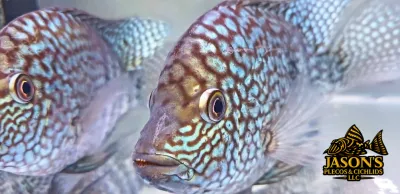
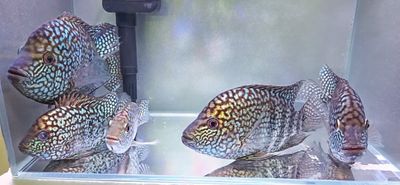
Blue Escondido Cichlid/Pearlscale Cichlid - (Herichthys carpintis)
Blue Escondido Cichlid/Pearlscale Cichlid - (Herichthys carpintis)
Price of shipping is not included.
was $200.00
Save 3%
$195.00
Out of stock
Wild Caught
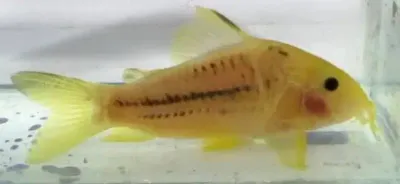
Corydoras sp. - Color Variant
Corydoras sp. - Color Variant
Price of shipping is not included.
$400.00
Out of stock
Wild Caught
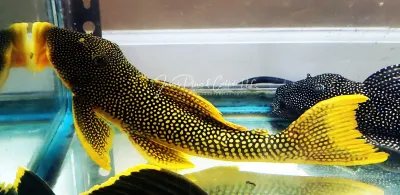
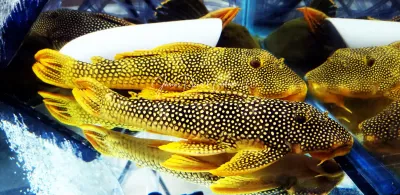
L014 Sunshine Pleco/Goldie Pleco - (Scobinancistrus aureatus)
L014 Sunshine Pleco/Goldie Pleco - (Scobinancistrus aureatus)
Price of shipping is not included.
was $400.00
Save 13%
$350.00
Out of stock
Captive Bred
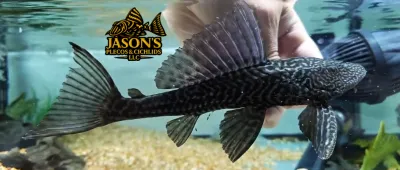
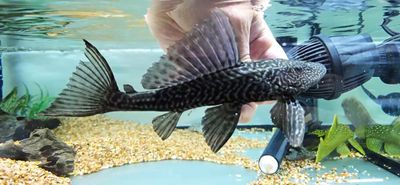
L021 Common Pleco - (Pterygoplichthys pardalis)
L021 Common Pleco - (Pterygoplichthys pardalis)
Price of shipping is not included.
5.0
(1)
was $50.00
Save 10%
$45.00
Out of stock
Wild Caught
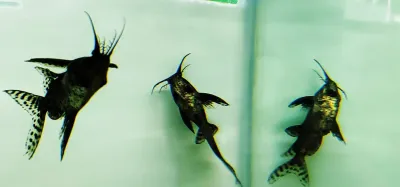
Giant Upside Down Catfish - (Synodontis batensoda)
Giant Upside Down Catfish - (Synodontis batensoda)
Price of shipping is not included.
$25.00
Out of stock
Captive Bred
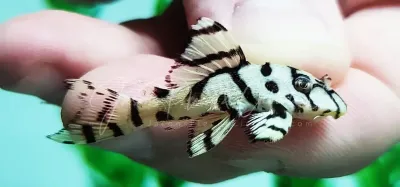
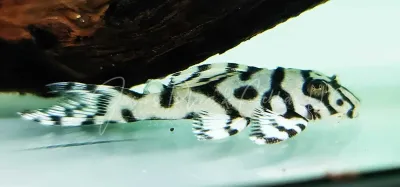
L236 Super White - (Hypancistrus seideli)
L236 Super White - (Hypancistrus seideli)
Price of shipping is not included.
was $280.00
Save 11%
$250.00
Out of stock
Wild Caught
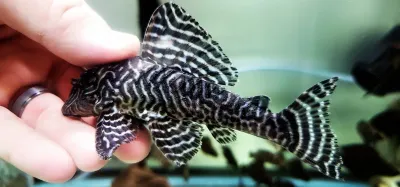
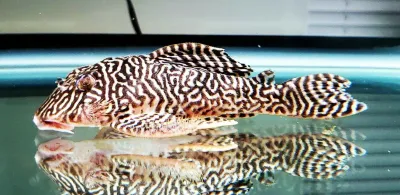
L401 Rio Curua Pleco - (Hypancistrus sp.)
L401 Rio Curua Pleco - (Hypancistrus sp.)
Price of shipping is not included.
$75.00
Out of stock
Captive Bred
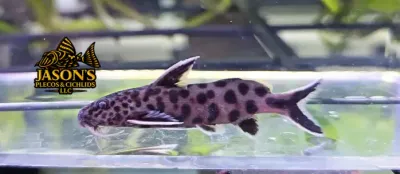
Pygmy Leopard Catfish - (Synodontis Petricola)
Pygmy Leopard Catfish - (Synodontis Petricola)
Price of shipping is not included.
5.0
(1)
was $30.00
Save 17%
$25.00
Out of stock
Captive Bred
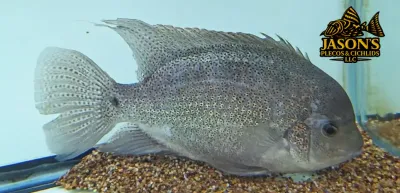
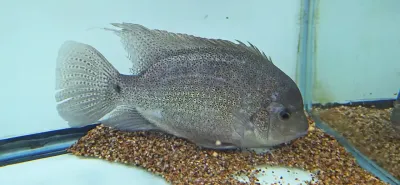
Silver Cichlid - (Vieja argentea)
Silver Cichlid - (Vieja argentea)
Price of shipping is not included.
5.0
(2)
was $150.00
Save 67%
$50.00
Out of stock
Wild Caught
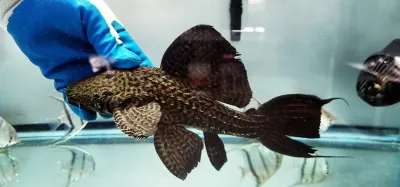
L380 Army Cactus Pleco - (Pseudacanthicus sp.)
L380 Army Cactus Pleco - (Pseudacanthicus sp.)
Price of shipping is not included.
$300.00
Out of stock
Wild Caught
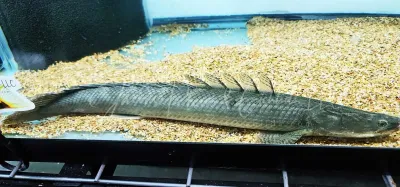
Lapradei Bichir - (Polypterus lapradei)
Lapradei Bichir - (Polypterus lapradei)
Price of shipping is not included.
was $350.00
Save 14%
$300.00
Out of stock
Powered by Lightspeed
Display prices in:USD