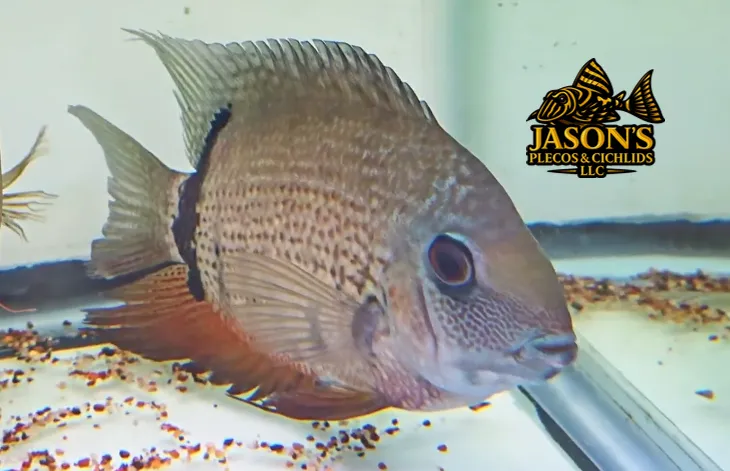
Green Severum - (Heros efasciatus)
5.0
1 review
Reviews from verified customers who have purchased products at this store.
$65.00
Captive Bred
was $75.00 Save 13%
Size
Questions, Comments, Concerns? Let us know!
Enter your text
Price of shipping is not included.
In stock: 1 available
1
Save this fish to my favorites.
Customer reviews
Reviews only from verified customers
Reviews are only accepted from verified customers who have signed in and purchased the products. This ensures that each review is based on genuine customer experiences. All reviews are checked before publication to prevent spam.
Christopher H.
Fayetteville,
United States
Mar 31, 2026
Awesomeness 🐟 Beautiful marking, strong 💪 and healthy. Great customer service, from the owner himself Jason… live person no bot.
Green Severum - (Heros efasciatus)
Fish Details, Description and Information Below:
🟢 Green Severum – (Heros efasciatus) – Amazon Basin South American Cichlid
The Green Severum (Heros efasciatus) is a large, deep-bodied South American cichlid known for its olive-green coloration, dark vertical bars, intelligent behavior, and generally calmer temperament compared with many similarly sized cichlids.
Healthy adults can develop attractive combinations of:
- Olive green
- Blue-green
- Gold
- Bronze
- Yellow
- Turquoise
- Orange
- Red facial markings
depending on the individual, age, sex, mood, and aquarium conditions.
Green Severums are native to the:
AMAZON RIVER BASIN
of South America.
They occur in river channels, flooded areas, lagoons, vegetated margins, and slower sections of the Amazon system.
Although often called a relatively peaceful cichlid, the Green Severum is still a:
LARGE CICHLID
that can become territorial during breeding and may eat fish small enough to fit into its mouth.
🔎 Quick Facts – Green Severum
- 📛 Common Name: Green Severum
- 📛 Other Names: Severum, Banded Severum
- 🔬 Scientific Name: Heros efasciatus
- 📅 Originally Described: 1840
- 🐟 Family: Cichlidae
- 🧬 Subfamily: Cichlinae
- 🌎 Origin: South America
- 🌊 Native Drainage: Amazon River Basin
- 🇧🇷 Countries: Brazil
- 🇵🇪 Countries: Peru
- 🇪🇨 Countries: Ecuador
- 🇨🇴 Countries: Colombia
- 🇧🇴 Countries: Bolivia
- 💧 Water Type: Freshwater
- 📏 Scientific Maximum: Approximately 17 cm / 6.7 inches standard length
- 📏 Adult Planning Size: Approximately 8–10 inches total length
- 🏠 Recommended Aquarium: Approximately 75 gallons or larger for one adult
- 🏠 Pair / Community Aquarium: Approximately 90–125+ gallons preferred
- 🌡️ Temperature: Approximately 76–84°F
- 💧 pH: Approximately 5.5–7.5
- 💦 Water: Soft to moderately mineralized
- 🌊 Water Movement: Low to Moderate
- 💨 Oxygenation: Good
- 🍽️ Diet: Omnivore with Strong Plant / Fruit Component
- 🌿 Plant Foods: Very Important
- 🦐 Animal / Insect Protein: Supplemental
- 😌 Temperament: Relatively peaceful for a large cichlid
- ⚠️ Breeding Temperament: Territorial
- 🐠 Small Fish: May be eaten
- 🌿 Live Plants: May be eaten or uprooted
- 🥚 Breeding: Open Substrate Spawner
- 👨👩👧 Parental Care: Biparental
- 🚫 Mouthbrooder: No
- ⭐ Care Level: Intermediate
- 🌎 IUCN Status: Least Concern
- 📦 Current Listing Size: Approximately 7–8 inches
- 📦 Current Shipping Requirement: Special Bag Required
🧬 Valid Scientific Species
The currently accepted scientific name is:
Heros efasciatus Heckel, 1840
The current Catalog of Fishes continues to recognize:
Heros efasciatus
as a valid species.
It belongs to the South American cichlid genus:
Heros
which contains several similar-looking species that have historically been confused in both scientific literature and the aquarium trade.
⚠️ Severum Identification Has a Complicated History
The common name:
SEVERUM
has been used loosely for multiple members of the genus Heros.
Older aquarium literature frequently labeled many Severums as:
Heros severus
even when they were not actually that species.
This has created decades of confusion involving:
- Heros efasciatus
- Heros severus
- Heros liberifer
- Other regional Heros forms
- Aquarium color strains
- Locality populations
For this product:
GREEN SEVERUM = Heros efasciatus
⚠️ Green Severum Is Not the Mouthbrooding Severum
This is an important correction.
You may find older aquarium sources claiming that:
SEVERUMS ARE MOUTHBROODERS
That statement should not be applied to Heros efasciatus.
The Green Severum:
HEROS EFASCIATUS
is an:
OPEN-SUBSTRATE SPAWNER
that deposits adhesive eggs on surfaces such as:
- Flat rocks
- Roots
- Wood
- Other cleaned surfaces
Both parents guard:
- Eggs
- Larvae
- Fry
🆚 Heros liberifer
The unusual mouthbrooding behavior historically associated with some “Severums” belongs especially to:
Heros liberifer
a species formally described from the:
RIO ORINOCO DRAINAGE
in 2015.
Therefore:
DO NOT DESCRIBE H. EFASCIATUS AS A MOUTHBROODER
🌎 Native Distribution – Important Correction
The older Green Severum page lists:
Amazon, Orinoco and Essequibo Basins
I would remove that.
Current taxonomic references place Heros efasciatus within the:
AMAZON RIVER BASIN
🌊 Amazon Basin Distribution
Current records recognize Heros efasciatus from the Amazon basin across portions of:
- Brazil
- Peru
- Ecuador
- Colombia
- Bolivia
More specific historical records include portions of the:
- Rio Negro
- Ucayali River
- Marañón River
- Nanay River
- Solimões
- Amazon River
⚠️ Do Not List the Orinoco as the Main Range
The:
RIO ORINOCO
contains other members of the genus Heros.
For example:
- Heros liberifer
- Heros severus
are associated with the Orinoco system.
For the Green Severum product page:
AMAZON RIVER BASIN
is the appropriate origin.
🌿 Natural Habitat
Green Severums are associated with freshwater environments including:
- River margins
- Flooded areas
- Floodplain habitats
- Lagoons
- Slow-moving sections
- Areas with heavy riverbank vegetation
- Submerged roots
- Woody structure
They are not specialized high-current river fish.
🌊 Water Movement
Unlike many rheophilic plecos:
GREEN SEVERUMS DO NOT REQUIRE STRONG CURRENT
A better aquarium environment provides:
LOW TO MODERATE WATER MOVEMENT
with good filtration and adequate oxygenation.
🌿 Flooded Forest Influence
The Amazon experiences large seasonal changes in water level.
Flooded areas provide access to:
- Plant matter
- Fruits
- Seeds
- Insects
- Small aquatic animals
- Organic material
This helps explain the species' unusual natural diet.
🍽️ Diet – Omnivorous but Mainly Frugivorous in Nature
One of the most interesting scientific facts about Heros efasciatus is that it is described as:
OMNIVOROUS BUT MAINLY FRUGIVOROUS
in nature.
That means fruit and other plant material form an important part of its natural feeding ecology.
🌿 Plant Foods Are Important
A healthy captive diet should include regular plant-based foods.
Good options include:
- Spirulina-containing pellets
- Vegetable-based cichlid pellets
- Quality omnivore pellets
- Blanched spinach
- Romaine lettuce
- Green peas
- Zucchini
- Squash
- Green beans
🍎 Fruit in the Natural Diet
Wild Green Severums can consume fruit available during seasonal flooding.
Fruit can be used occasionally in captivity, but it should be:
A SMALL PART OF A BALANCED AQUARIUM DIET
rather than fed heavily because uneaten fruit can quickly deteriorate water quality.
🦐 Animal & Insect Foods
Green Severums will also readily consume:
- Mysis shrimp
- Brine shrimp
- Krill
- Bloodworms
- Insect larvae
- Quality cichlid pellets
- Appropriate frozen foods
These provide useful:
SUPPLEMENTAL PROTEIN
⚖️ Balanced Feeding
A good captive feeding program combines:
QUALITY CICHLID FOOD + PLANT FOODS + MODERATE ANIMAL PROTEIN
rather than using an extremely meat-heavy diet.
🚫 Avoid an All-Protein Diet
Green Severums should not be maintained primarily on:
- Shrimp
- Krill
- Bloodworms
- Fish meat
- High-protein carnivore pellets
The natural diet contains an important plant and fruit component.
🚫 Beef Heart Is Unnecessary
There is no biological need to feed Green Severums:
BEEF HEART
A varied diet based on quality aquatic foods and plant material is a better long-term choice.
🎨 Natural Appearance
The wild-type Green Severum generally has a:
- Olive-green
- Gray-green
- Blue-green
- Golden-green
body.
Dark vertical bands may appear across the sides.
⚫ Vertical Bars
Depending on:
- Mood
- Stress
- Dominance
- Breeding condition
- Lighting
- Background
the vertical bars can become:
- Very dark
- Moderately visible
- Nearly invisible
This color change is normal.
🔴 Facial Markings
Mature specimens, particularly males, may develop attractive:
- Red
- Orange
- Brown-red
- Turquoise
markings across the:
- Face
- Cheeks
- Gill covers
These worm-like markings are often called:
VERMICULATIONS
♂️ Mature Male Appearance
Mature males often develop:
- More facial vermiculation
- Longer dorsal-fin extensions
- Longer anal-fin extensions
- More pointed fins
- Larger overall body size
- Occasionally a modest nuchal hump
However:
NONE OF THESE FEATURES IS 100% RELIABLE BY ITSELF
♀️ Mature Female Appearance
Mature females may:
- Have fewer facial markings
- Retain more visible dark body bars
- Have rounder fin tips
- Develop a fuller abdominal profile when carrying eggs
Again:
SEXING BY APPEARANCE ALONE IS NOT FOOLPROOF
🧬 Green Severum vs. Gold & Red Strains
The natural Green Severum should not automatically be confused with aquarium strains such as:
- Gold Severum
- Red Spot Gold Severum
- Super Red Severum
- Red Shoulder Severum / Rotkeil
Some are:
- Color mutations
- Selectively bred lines
- Distinct locality forms
- Different Heros populations
They should retain their own accurate product identification.
📏 Adult Size
FishBase documents a maximum of approximately:
17 CM / 6.7 INCHES STANDARD LENGTH
for Heros efasciatus.
⚠️ Standard Length Does Not Include the Full Tail
Standard length is measured from:
THE SNOUT TO THE BASE OF THE CAUDAL FIN
The tail fin itself is excluded.
Therefore, aquarium fish can have a larger:
TOTAL LENGTH
than the scientific standard-length measurement suggests.
📏 Responsible Adult Planning Size
Aquarium references commonly report mature Severums around:
8–10 INCHES TOTAL LENGTH
For long-term housing:
PLAN FOR APPROXIMATELY 8–10 INCHES
rather than assuming every fish will stop at exactly 8 inches.
🏠 Aquarium Size
The older product page recommends:
55 GALLONS
I would consider that too tight as the normal permanent recommendation for a full-grown Green Severum.
For one mature adult:
75 GALLONS OR LARGER
is more appropriate.
🏠 Pair or Community Aquarium
For a bonded pair or a Green Severum kept with other substantial fish:
90–125+ GALLONS
is preferable.
Larger aquariums provide:
- More swimming room
- Better water stability
- Greater territory separation
- More tankmate options
- Better breeding management
📐 Aquarium Footprint
Severums have:
- Deep bodies
- Large adult dimensions
- Significant territorial requirements
so aquarium:
LENGTH + WIDTH
are important.
A long aquarium is preferable to a tall, narrow display tank.
🪵 Aquarium Setup
A good Green Severum aquarium can include:
- Large driftwood
- Roots
- Smooth rocks
- Large open swimming areas
- Sand or smooth gravel
- Sheltered areas
- Strong filtration
The aquascape should provide both:
OPEN SPACE + STRUCTURE
🌿 Live Plants – Important Warning
Green Severums are:
NOT RELIABLY PLANT-SAFE
They may:
- Eat leaves
- Tear plants
- Uproot plants
- Bite new growth
- Rearrange planted areas
🌱 Tough Plants
If live plants are attempted, better choices are generally:
- Tough-leaved species
- Plants attached to wood
- Plants attached to rocks
Even then:
NO PLANT IS GUARANTEED TO BE SEVERUM-PROOF
🪵 Driftwood & Roots
Driftwood is excellent for:
- Visual barriers
- Territory boundaries
- Natural appearance
- Shelter
- Spawning options
Large branching wood also helps create an Amazon-style environment.
⚠️ Secure Aquarium Décor
Large Severums are strong fish.
Make sure:
- Rocks are stable
- Wood cannot fall
- Decorations cannot trap the fish
Breeding pairs may rearrange the aquarium.
🌡️ Temperature
FishBase documents a broad tropical environmental range around:
24–32°C / 75–90°F
That does not mean the fish should routinely be maintained at 90°F.
A practical aquarium maintenance range is:
76–84°F
💧 pH
Green Severums are adaptable in captivity.
A practical range is approximately:
pH 5.5–7.5
They generally do especially well in:
- Slightly acidic
- Neutral
- Moderately soft
water.
⚠️ Stability Is More Important Than Chasing a Number
Avoid repeatedly altering the aquarium with chemicals simply to hit an exact pH.
Healthy Severums do better with:
STABLE WATER CONDITIONS
than with constantly fluctuating chemistry.
💧 Water Parameters
A practical long-term range is:
- 🌡️ Temperature: Approximately 76–84°F
- 💧 pH: Approximately 5.5–7.5
- 💦 Hardness: Soft to Moderately Mineralized
- 🌊 Water Movement: Low to Moderate
- 💨 Oxygenation: Good
- ☠️ Ammonia: 0 ppm
- ☠️ Nitrite: 0 ppm
- 🔄 Nitrate: Keep as low as reasonably practical
💩 Large Cichlid = Significant Bioload
An adult Severum is a substantial fish.
It produces:
- Feces
- Uneaten food
- Dissolved organic waste
and therefore needs dependable filtration.
💨 Filtration
Suitable filtration may include:
- Large canister filters
- Sump filtration
- Large hang-on-back filtration systems
- Supplemental biological filtration
Use enough mechanical filtration to capture:
- Food debris
- Plant fragments
- Waste
🔄 Water Changes
Regular partial water changes are important.
Frequency depends on:
- Aquarium size
- Fish size
- Number of fish
- Feeding
- Filtration
- Nitrate production
Maintain:
AMMONIA = 0
and:
NITRITE = 0
at all times.
😌 Temperament – Peaceful for a Large Cichlid
Green Severums are commonly described as:
RELATIVELY PEACEFUL
That description is fair when compared with aggressive Central and South American cichlids.
However:
RELATIVELY PEACEFUL DOES NOT MEAN COMPLETELY NON-AGGRESSIVE
⚠️ Still a Cichlid
Green Severums can:
- Defend territories
- Chase tankmates
- Fight with other Severums
- Become aggressive when paired
- Guard spawning sites
- Eat small fish
Temperament also varies between individuals.
🥚 Breeding Aggression
A normally peaceful pair can become much more territorial after:
- Pairing
- Cleaning a spawning surface
- Laying eggs
- Protecting fry
A breeding pair may claim a substantial portion of the aquarium.
🐟 Small Fish May Be Eaten
Do not assume that because Severums are relatively calm they are safe with:
- Neon tetras
- Tiny rasboras
- Small guppies
- Very small juvenile fish
- Dwarf shrimp
A large Severum may simply:
EAT THEM
🐠 Tankmates
Potential tankmates can include appropriately sized:
- Larger tetras
- Silver dollars
- Geophagus
- Larger peaceful catfish
- Plecos
- Other moderate South American cichlids
Compatibility always depends on:
- Aquarium size
- Individual temperament
- Territory
- Breeding status
⚠️ Avoid Highly Aggressive Cichlids
Green Severums can be bullied by extremely aggressive species.
Use caution with large aggressive:
- Amphilophus
- Parachromis
- Highly territorial Vieja
- Other very aggressive cichlids
⚠️ Avoid Tiny Tankmates
Also avoid fish that are:
SMALL ENOUGH TO SWALLOW
even if they are technically peaceful community species.
👥 Keeping Multiple Severums
Multiple Green Severums can be kept together in sufficiently large aquariums.
However:
- Dominance hierarchies develop
- Pairs may form
- Territorial aggression can increase
- Subordinate fish may be harassed
Large aquariums with:
- Visual barriers
- Multiple territories
- Open swimming space
are essential.
🧠 Intelligent & Interactive
Severums are well known for becoming:
INTERACTIVE WITH THEIR KEEPERS
They may learn to:
- Recognize feeding routines
- Approach the front glass
- Follow people around the room
- Beg for food
- Establish recognizable personalities
♂️ Male vs. Female
Sexing Green Severums is not always easy.
Mature Males May Show:
- More extensive facial vermiculation
- More pointed dorsal fin
- More pointed anal fin
- Longer fin extensions
- Larger body size
- Stronger head profile
Mature Females May Show:
- Less facial vermiculation
- Rounder fins
- Fuller abdomen
- More persistent body bars
⚠️ Facial Markings Are Not a Guarantee
Facial vermiculation is useful, but:
DO NOT GUARANTEE SEX BASED ONLY ON FACE PATTERN
Individual variation exists.
The most reliable confirmation comes from:
- Mature breeding behavior
- Genital papilla examination
- Proven spawning history
🥚 Breeding – Open Substrate Spawner
Green Severums are:
OPEN-SUBSTRATE SPAWNERS
They typically select and clean a surface such as:
- Flat stone
- Slate
- Root
- Driftwood
- Large leaf
- Aquarium surface
🚫 Green Severums Are Not Mouthbrooders
This deserves repeating because of widespread older aquarium information:
HEROS EFASCIATUS IS NOT THE MOUTHBROODING SEVERUM
It deposits eggs openly and protects them at the spawning site.
💕 Pair Formation
Severums generally form:
PAIR BONDS
Finding a compatible pair is often more difficult than inducing an established pair to spawn.
Aquarists frequently obtain several juveniles and allow a natural pair to form.
🧹 Preparing the Spawning Site
Before spawning, both adults may:
- Clean a rock
- Clean a piece of wood
- Dig around the area
- Chase tankmates away
- Intensify coloration
🥚 Egg Production
Scientific references report:
UP TO APPROXIMATELY 1,000 EGGS
being deposited on:
- Flat stones
- Roots
Actual clutch size varies according to:
- Female size
- Age
- Conditioning
- Pair experience
👨👩👧 Biparental Care
One of the most impressive Green Severum behaviors is:
BOTH PARENTS CARE FOR THE BROOD
The parents participate in:
- Guarding eggs
- Fanning eggs
- Defending the territory
- Protecting larvae
- Guarding fry
🐣 Hatching
Eggs normally hatch within several days depending on:
- Temperature
- Water chemistry
- Oxygenation
The parents may move newly hatched larvae to prepared depressions or other protected locations.
👶 Free-Swimming Fry
Once free swimming, fry can receive foods such as:
- Baby brine shrimp
- Microworms
- Fine powdered cichlid food
- High-quality fry food
Feed small portions frequently while maintaining excellent water quality.
⚠️ New Parents May Fail
Young or inexperienced pairs sometimes:
- Eat eggs
- Eat larvae
- Abandon the spawn
- Fight with each other
This does not necessarily mean the pair will never reproduce successfully.
Many cichlid pairs improve after repeated spawning attempts.
🌎 Conservation Status
Heros efasciatus is currently classified as:
LEAST CONCERN
on the IUCN Red List.
The species is widespread within the Amazon system.
⚠️ Least Concern Does Not Mean Release Is Acceptable
Even common aquarium fish must never be released outside their native environment.
Released cichlids can:
- Compete with native fish
- Introduce parasites
- Introduce disease
- Disrupt local ecosystems
⭐ Why Keep a Green Severum?
The Green Severum combines:
- 🟢 Attractive natural green coloration
- 🐟 Large disc-shaped body
- 🧠 Intelligent interactive behavior
- 😌 Relatively calm cichlid temperament
- 🌿 Fascinating plant- and fruit-oriented feeding ecology
- 🌎 Amazon Basin origin
- 🥚 Impressive spawning behavior
- 👨👩👧 Strong biparental care
- 📏 Impressive 8–10 inch adult presence
into one of the most popular larger South American cichlids in the aquarium hobby.
⚠️ Important Considerations
Before purchasing a Green Severum:
- The correct scientific name is Heros efasciatus.
- Heros efasciatus remains a valid species.
- Do not automatically call all Severums Heros severus.
- Green Severums are Amazon Basin fish.
- Remove the Orinoco Basin from the normal H. efasciatus range.
- Remove the Essequibo Basin from the normal product range.
- The Orinoco contains other Heros species.
- Green Severums are open-substrate spawners.
- Do not describe H. efasciatus as a mouthbrooder.
- Both parents guard the eggs and fry.
- Up to approximately 1,000 eggs have been reported scientifically.
- Wild H. efasciatus are omnivorous but mainly frugivorous.
- Plant foods should be an important part of the aquarium diet.
- Animal and insect protein should provide variety rather than dominate the diet.
- Do not maintain Green Severums on an all-protein diet.
- Do not rely on beef heart.
- Green Severums may eat aquarium plants.
- Scientific maximum is approximately 17 cm / 6.7 inches standard length.
- Standard length excludes the full tail.
- Plan for approximately 8–10 inches total adult length.
- Provide approximately 75 gallons or larger for one adult.
- Use approximately 90–125+ gallons for a pair or substantial community.
- Maintain approximately 76–84°F.
- Maintain approximately pH 5.5–7.5.
- Low to moderate current is sufficient.
- Maintain good oxygenation and filtration.
- Keep ammonia and nitrite at zero.
- Green Severums are relatively peaceful for large cichlids.
- They can still become territorial.
- Breeding pairs can become significantly more aggressive.
- Very small fish may be eaten.
- Sexing by coloration alone is not guaranteed.
- The species is currently Least Concern.
- Never release aquarium fish into natural waterways.
🧬 Taxonomy
The currently accepted scientific name is:
Heros efasciatus Heckel, 1840
Classification:
- Order: Cichliformes
- Family: Cichlidae
- Subfamily: Cichlinae
- Genus: Heros
- Species: efasciatus
Current recognized native distribution:
AMAZON RIVER BASIN – SOUTH AMERICA
including records from:
- Brazil
- Peru
- Ecuador
- Colombia
- Bolivia
For this product, use:
Green Severum – (Heros efasciatus)
🧬 Severum Identification Disclaimer
The genus Heros has a complicated taxonomic and aquarium history.
Several different:
- Species
- Locality forms
- Color strains
have historically been marketed simply as:
SEVERUM
For accurate breeding and sales records, preserve:
- Scientific identification
- Locality when known
- Breeder information
- Color-strain information
Do not deliberately mix different Heros forms and later represent the offspring as a documented pure locality fish.
🚚 Live Fish Shipping
Live fish are professionally packed for safe transport.
Shipping availability depends on:
- Fish size
- Destination
- Weather conditions
- Carrier availability
- Applicable state and local regulations
The current Green Severum listing is approximately:
7–8 INCHES
and requires:
SPECIAL BAG PACKING
Large Severums may require:
- Larger insulated shipping boxes
- Additional water
- Heavy-duty shipping bags
- Multiple protective bag layers
- Specialized packing
- Airline cargo depending on size and destination
Please review our Shipping & Payment Information and Live Arrival Guarantee / DOA Policy before ordering.
⚠️ Buyer Responsibility
Customers are responsible for confirming that Heros efasciatus may legally be purchased, possessed, transported, and received in their state or local jurisdiction before ordering.
Never release aquarium fish into natural waterways.
Below are fish you may also like.
Captive Bred
Kyoga flameback - (Haplochromis sp. Flameback)
Kyoga flameback - (Haplochromis sp. Flameback)
Price of shipping is not included.
$40.00
Out of stock
Captive Bred
Blue Acara - (Andinoacara pulcher)
Blue Acara - (Andinoacara pulcher)
Price of shipping is not included.
was $20.00
Save 25%
$15.00
Out of stock
Captive Bred
Platinum Silver Arowana - (Osteoglossum bicirrhosum)
Platinum Silver Arowana - (Osteoglossum bicirrhosum)
Price of shipping is not included.
$10 000.00
Out of stock
Wild Caught
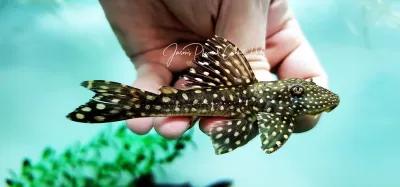
Yellow Spotted Hypostomus - (Hypostomus margaritifer)
Yellow Spotted Hypostomus - (Hypostomus margaritifer)
Price of shipping is not included.
was $175.00
Save 14%
$150.00
Out of stock
Captive Bred
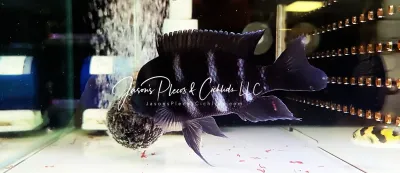
Kitumba Blue Zaire Frontosa - (Cyphotilapia frontosa)
Kitumba Blue Zaire Frontosa - (Cyphotilapia frontosa)
Price of shipping is not included.
$180.00
Out of stock
Wild Caught
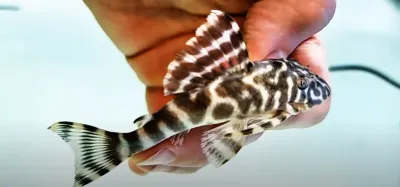
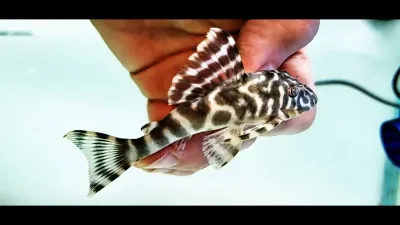
L015 Candy Striped Pleco - (Peckoltia vittata)
L015 Candy Striped Pleco - (Peckoltia vittata)
Price of shipping is not included.
was $50.00
Save 10%
$45.00
Out of stock
Captive Bred
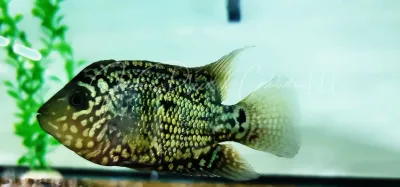
Thailand Kamfa Flowerhorn
Thailand Kamfa Flowerhorn
Price of shipping is not included.
was $100.00
Save 25%
$75.00
Out of stock
Captive Bred
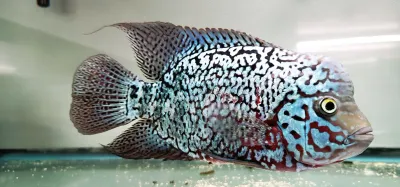
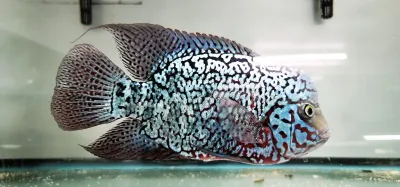
King Kamfa Flowerhorn
King Kamfa Flowerhorn
Price of shipping is not included.
$300.00
Out of stock
Wild Caught
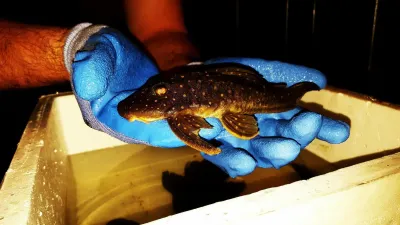
Giant White Spot Pleco - (Hypostomus regani)
Giant White Spot Pleco - (Hypostomus regani)
Price of shipping is not included.
$250.00
Out of stock
Captive Bred
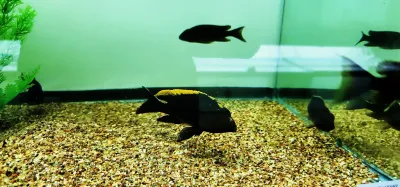
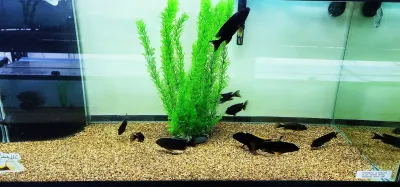
Black Orange Dorsal - (Otopharynx Lithobates) Breeding Colony
Black Orange Dorsal - (Otopharynx Lithobates) Breeding Colony
Price of shipping is not included.
$400.00
Out of stock
Wild Caught
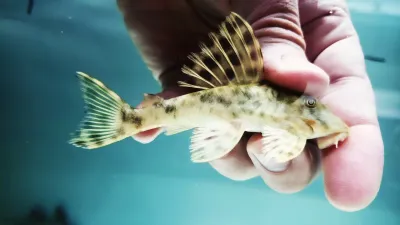
L006 Brown Dot Peckoltia - (Peckoltia oligospila)
L006 Brown Dot Peckoltia - (Peckoltia oligospila)
Price of shipping is not included.
$40.00
Out of stock
Wild Caught
Cobra Pike - (Crenicichla sp. Red Tapajos I)
Cobra Pike - (Crenicichla sp. Red Tapajos I)
Price of shipping is not included.
$100.00
Out of stock
Powered by Lightspeed
Display prices in:USD