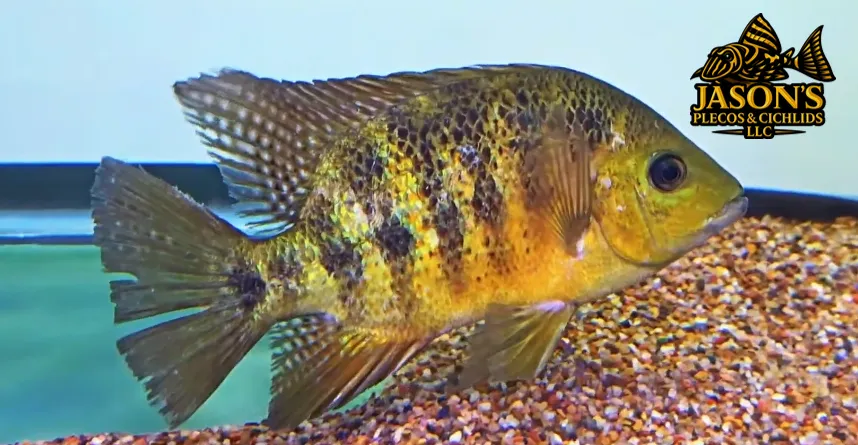
Bocourti Cichlid - (Cincelichthys bocourti)
5.0
1 review
Reviews from verified customers who have purchased products at this store.
$90.00
Sold out
was $95.00 Save 5%
Size
Questions, Comments, Concerns? Let us know!
Enter your text
Price of shipping is not included.
Sold out
Save this fish to my favorites.
Customer reviews
Reviews only from verified customers
Reviews are only accepted from verified customers who have signed in and purchased the products. This ensures that each review is based on genuine customer experiences. All reviews are checked before publication to prevent spam.
Tim C.
Monongahela,
United States
Nov 9, 2025
Very active and visible. Beautiful striping but still gray color. Maybe the yellow coloring comes with time . Blends well with other cichlids .
Bocourti Cichlid - (Cincelichthys bocourti)
Fish Details, Description and Information Below:
🐟 Bocourti Cichlid – (Cincelichthys bocourti) – Rare Golden Central American Cichlid
The Bocourti Cichlid (Cincelichthys bocourti), also known as the Golden Mojarra or Chisel-Tooth Cichlid, is a rare and impressive Central American cichlid native to Guatemala and Belize.
Adults develop beautiful golden-yellow to orange coloration accented by dark vertical markings and blue-green highlights in the fins. During breeding, their colors can intensify dramatically, producing a striking combination of brilliant yellow, black, and blue tones.
Unlike many large Central American cichlids, Cincelichthys bocourti is generally considered relatively manageable in temperament when given sufficient space. However, adults become large, powerful fish and can become strongly territorial during reproduction.
One of the most important aspects of Bocourti care is its diet. This species has specialized chisel-like teeth and is believed to consume a substantial amount of plant material in nature. Captive fish should therefore receive a diet rich in vegetables and plant-based foods rather than being maintained primarily on high-protein foods.
For experienced cichlid keepers with a large aquarium, the Bocourti is an unusual and beautiful species that becomes increasingly impressive as it matures.
🔎 Quick Facts – Bocourti Cichlid
- 📛 Common Names: Bocourti Cichlid, Golden Mojarra, Chisel-Tooth Cichlid
- 🔬 Scientific Name: Cincelichthys bocourti
- 🐟 Family: Cichlidae
- 🧬 Tribe: Therapsini
- 🌎 Origin: Central America
- 🇬🇹 Native Country: Guatemala
- 🇧🇿 Native Country: Belize
- 🌊 Native Range: Atlantic-slope drainages of Guatemala and Belize
- 📍 Type Locality: Lake Izabal, Guatemala
- 💧 Water Type: Freshwater
- 📏 FishBase Maximum: 20 cm standard length
- 📏 Aquarium Adult Size: Approximately 12–14 inches for large adults; males typically grow larger than females
- 🏠 Recommended Aquarium: Approximately 180 gallons or larger for adults
- 📐 Tank Length: Approximately 6 feet or longer strongly recommended
- 🌡️ Temperature: Approximately 75–82°F
- 💧 pH: Approximately 7.0–8.0
- 🍽️ Diet: Herbivorous-leaning omnivore
- 🌿 Plant Matter: Important part of the diet
- 😌 Temperament: Generally moderate for a large Central American cichlid; territorial when breeding
- 🐠 Swimming Area: Middle / Lower
- 🥚 Breeding: Biparental open-substrate spawner
- ⭐ Care Level: Intermediate
- 🏆 Availability: Uncommon / Rare in the aquarium hobby
🌎 Natural Range
Cincelichthys bocourti is native to the Atlantic slope of:
🇬🇹 Guatemala
including:
- Lake Izabal
- Lower Río Polochic
- Río Dulce region
- Río Tunico
🇧🇿 Belize
including:
- Río Moho
- Temash River
The original type specimen came from:
Lake Izabal, Guatemala
This is important because older aquarium listings sometimes incorrectly place the species in Honduras or Nicaragua.
🌊 Natural Habitat
The Bocourti is not primarily a fast-water river cichlid.
One of its best-known natural habitats, Lake Izabal, is a large, relatively shallow lowland lake.
The species occurs in habitats containing:
- Muddy substrate
- Submerged wood
- Vegetation
- Protected shoreline areas
- Slow to moderate water movement
This makes a large aquarium containing sand, driftwood, rocks, and open swimming space an appropriate captive setup.
🎨 Appearance
Young Bocourti Cichlids may initially appear relatively plain.
Juveniles can display:
- Gray
- Silver
- Olive
- Dark vertical bars
This is completely normal.
As the fish matures, coloration can change dramatically.
Adults may develop:
- Golden-yellow coloration
- Orange coloration
- Greenish head coloration
- Black vertical markings
- Blue or turquoise highlights
- Blue spotting in the fins
Be Patient With Juveniles
A young Bocourti may not immediately display the intense yellow coloration seen in mature adults.
Color develops with:
- Age
- Size
- Diet
- Dominance
- Breeding condition
- Aquarium environment
This is a species that can become considerably more impressive with maturity.
🌟 Breeding Coloration
During breeding, Bocourti coloration can become spectacular.
The normal golden-yellow coloration intensifies while the vertical black markings become darker and more prominent.
Breeding adults may develop:
- Brilliant yellow-orange sides
- Strong black vertical markings
- Blue edging around darker areas
- Dark coloration underneath the head and throat
A mature breeding pair can look dramatically different from juveniles or nonbreeding adults.
🦷 Why “Chisel-Tooth Cichlid”?
One of the unusual characteristics of Cincelichthys bocourti is its specialized dentition.
The fish has chisel-like teeth, which strongly suggest adaptation for consuming and scraping plant-based material.
Its closely related species Cincelichthys pearsei is well known for feeding heavily on vegetation and fruit.
Observations of Bocourti behavior and tooth structure suggest that plant material also represents an important portion of the natural diet.
🍽️ Diet & Feeding
The Bocourti should be treated as a:
Herbivorous-Leaning Omnivore
Although captive fish readily consume many foods, the diet should contain substantial plant material.
Recommended staple foods include:
- Spirulina pellets
- Vegetable-based cichlid pellets
- Quality herbivore pellets
- Spirulina flakes
- Algae wafers
Fresh or prepared vegetable foods may include:
- Peas
- Spinach
- Romaine lettuce
- Zucchini
- Squash
- Dandelion greens
- Duckweed
- Other appropriate leafy greens
Protein foods can occasionally include:
- Mysis shrimp
- Krill
- Brine shrimp
- Quality omnivore pellets
⚠️ Avoid an Excessively High-Protein Diet
This is an important husbandry point.
Specialist Bocourti keepers have noted that these fish can become overweight in aquariums, particularly when housed with carnivorous cichlids and fed the same protein-heavy diet.
Do not maintain the fish primarily on:
- Shrimp
- Krill
- High-protein carnivore pellets
- Large quantities of meaty foods
Instead, make vegetables and plant-based prepared foods a major part of the diet.
A mature Bocourti should look:
Large and powerful — not obese.
📏 Adult Size
There is some variation among published size information.
FishBase currently lists:
20 cm standard length
or approximately:
7.9 inches excluding the tail.
However, long-term aquarium records cited by experienced Central American cichlid specialists report:
- Males: approximately 35.5 cm / 14 inches
- Females: approximately 25 cm / 10 inches
For customer planning, I recommend stating:
Approximately 12–14 inches for large adults
with males generally growing larger than females.
This is safer than telling customers the fish will only reach 8 inches.
🏠 Aquarium Size
Your current recommendation of approximately 180 gallons is good, and I would keep it.
For mature adults:
180 gallons or larger
is recommended.
Specialist husbandry guidance suggests an aquarium at least approximately:
6 feet / 1.8 meters long
with larger systems preferred.
For:
- A breeding pair
- Multiple Bocourti
- Other large Central American cichlids
a larger aquarium provides significantly better long-term flexibility.
🏠 Aquarium Setup
Recommended aquarium features include:
- Fine sand substrate
- Large pieces of driftwood
- Large smooth rocks
- Caves
- Visual barriers
- Open swimming space
- Powerful biological filtration
- Strong mechanical filtration
- Good oxygenation
Young Bocourti can be somewhat shy.
Providing substantial structure and hiding areas helps them feel secure.
🌿 Plants
A planted aquarium may look attractive initially.
The Bocourti may have other plans.
Because this species naturally consumes considerable plant material, many aquarium plants may eventually become:
Food.
Soft-leaved plants are particularly likely to be eaten or damaged.
If plants are desired, try hardy species such as:
- Anubias
- Java fern
- Tough plants attached to rock or wood
Even then, there is no guarantee they will remain untouched.
💧 Water Parameters
Recommended aquarium conditions:
- 🌡️ Temperature: 75–82°F
- 💧 pH: Approximately 7.0–8.0
- ☠️ Ammonia: 0 ppm
- ☠️ Nitrite: 0 ppm
- 🔄 Nitrate: Keep as low as reasonably possible
- 💨 Oxygenation: Good
FishBase gives approximately:
79–82°F / 26–28°C
for the species, while specialist aquarium sources use a somewhat broader range.
Important Correction
Do not carry over the older:
pH 6.5–7.5
recommendation.
For this Central American species:
7.0–8.0
is a better practical aquarium target.
💩 Filtration
Adult Bocourti are substantial fish that consume large quantities of food.
Strong filtration is required.
Recommended filtration can include:
- Large canister filters
- Sump filtration
- High-capacity biological filtration
- Strong mechanical filtration
- Good surface agitation
Because vegetable matter can create considerable debris, mechanical filtration and regular substrate cleaning are especially useful.
Regular partial water changes should be part of normal maintenance.
😌 Temperament
For its size, Cincelichthys bocourti is generally considered less aggressive than many large Central American cichlids.
Experienced keepers have successfully maintained them with other large Central American species.
However:
Less aggressive does not mean peaceful community fish.
They remain large territorial cichlids.
Aggression can increase dramatically when:
- A pair forms
- A spawning site is selected
- Eggs are present
- Fry are being guarded
🐠 Tankmates
Potential tankmates in a sufficiently large aquarium may include:
- Vieja species
- Other robust Central American cichlids
- Large peaceful catfish
- Large plecos
- Other similarly sized fish with compatible water requirements
Avoid:
- Small fish
- Very timid fish
- Delicate species
- Extremely aggressive cichlids in confined aquariums
A larger aquarium makes compatibility much easier.
♂️ Male vs. Female
Sexing juveniles can be difficult.
As adults mature:
Males
Males generally:
- Grow larger
- Become heavier-bodied
- May develop longer extensions on the dorsal and anal fins
- Develop a somewhat more powerful appearance
Females
Females generally:
- Remain smaller
- Become fuller through the abdomen when carrying eggs
One specialist source reports males reaching around 14 inches while females remain closer to approximately 10 inches.
🥚 Breeding
The Bocourti is a:
Monogamous Biparental Substrate Spawner
A compatible pair chooses and cleans an exposed spawning surface.
Common spawning surfaces include:
- Flat rocks
- Large stones
- Driftwood
- Slate
A normal aquarium clutch may contain approximately:
300–500 eggs
although clutch size varies with the size and condition of the female.
👨👩👧 Parental Care
Both parents participate in protecting the brood.
After spawning, the pair may:
- Fan eggs
- Remove damaged eggs
- Guard the spawning site
- Dig pits in the substrate
- Move newly hatched larvae
- Protect free-swimming fry
Aquarium observations report that the parents may move wrigglers between pre-dug pits before the fry become free-swimming.
👶 Raising Fry
Once free-swimming, the fry can accept:
- Newly hatched baby brine shrimp
- Decapsulated brine shrimp eggs
- Finely crushed flakes
- Crushed spirulina foods
- Fine quality pellets
- Appropriate powdered fry food
As they grow, begin introducing a greater amount of plant-based food.
Young Bocourti display stronger dark vertical barring than many mature nonbreeding adults.
🧠 Shy Juveniles
One interesting characteristic of this species is that juveniles can be surprisingly shy.
Young fish may spend substantial time:
- Behind driftwood
- Inside caves
- Behind rocks
- Near protected areas
This does not necessarily indicate poor health.
Providing a well-structured aquarium with numerous hiding places often allows the fish to become more confident and visible over time.
⭐ Why Keep the Bocourti Cichlid?
The Bocourti is an excellent choice for aquarists interested in unusual Central American cichlids.
Its combination of:
- 💛 Brilliant golden adult coloration
- 🖤 Dramatic black breeding markings
- 💙 Blue-green fin highlights
- 🦷 Specialized chisel-like teeth
- 🌿 Unusual plant-heavy diet
- 📏 Impressive adult size
- 😌 Relatively manageable temperament
- 🥚 Strong parental care
- 🇬🇹 Guatemala and Belize origin
- 🏆 Rare availability
makes Cincelichthys bocourti one of the more distinctive large Central American cichlids available.
⚠️ Important Considerations
Before purchasing a Bocourti Cichlid:
- Plan for an adult approximately 12–14 inches.
- Provide approximately 180 gallons or larger.
- A 6-foot or longer aquarium is strongly recommended.
- Feed a diet rich in plant material.
- Avoid excessive high-protein feeding.
- Provide sand, driftwood, rocks, and hiding areas.
- Expect aquarium plants to potentially be eaten.
- Maintain strong filtration.
- Maintain clean, stable water.
- Keep pH around neutral to alkaline.
- Expect aggression to increase during breeding.
- Give breeding pairs plenty of territory.
- Never release aquarium fish into local waterways.
🧬 Taxonomy
The Bocourti Cichlid has appeared under several scientific names over the years, including:
- Neetroplus bocourti
- Herichthys bocourti
- Cichlasoma bocourti
- Vieja bocourti
- Theraps bocourti
The current accepted name is:
Cincelichthys bocourti
Eschmeyer's Catalog of Fishes, updated August 13, 2026, recognizes Cincelichthys bocourti as the valid scientific name.
🚚 Live Fish Shipping
Live fish are professionally packed for safe transport.
Shipping availability depends on:
- Fish size
- Destination
- Weather conditions
- Carrier availability
- Applicable state and local regulations
Larger specimens may require larger insulated shipping boxes or specialized shipping arrangements.
Please review our Shipping & Payment Information and Live Arrival Guarantee / DOA Policy before ordering.
⚠️ Buyer Responsibility
Customers are responsible for confirming that this species may legally be purchased, possessed, transported, and received in their state or local jurisdiction before ordering.
Never release aquarium fish into local waterways.
Below are fish you may also like.
Wild Caught
Chubby Pleco - (Parancistrus aurantiacus)
Chubby Pleco - (Parancistrus aurantiacus)
Price of shipping is not included.
$350.00
Out of stock
Wild Caught
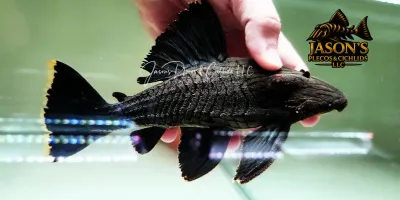
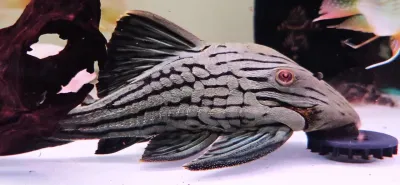
L418 Shampupa Royal Pleco - (Panaque titan)
L418 Shampupa Royal Pleco - (Panaque titan)
Price of shipping is not included.
5.0
(1)
$250.00
Out of stock
Wild Caught
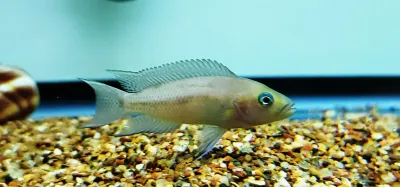
Neolamprologus cygnus
Neolamprologus cygnus
Price of shipping is not included.
$20.00
Out of stock
Wild Caught
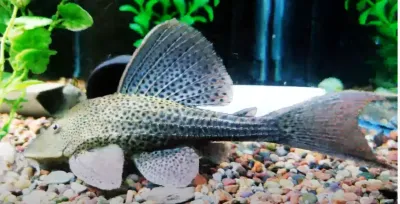
La Plata Pleco - (Hypostomus laplatae)
La Plata Pleco - (Hypostomus laplatae)
Price of shipping is not included.
$100.00
Out of stock
Captive Bred
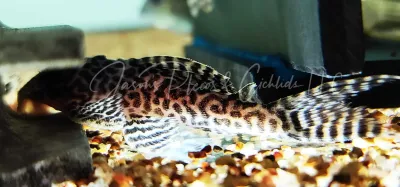
L173b Thinstriped Zebra Pleco Glaser - (Hypancistrus sp.)
L173b Thinstriped Zebra Pleco Glaser - (Hypancistrus sp.)
Price of shipping is not included.
was $120.00
Save 17%
$100.00
Out of stock
Wild Caught
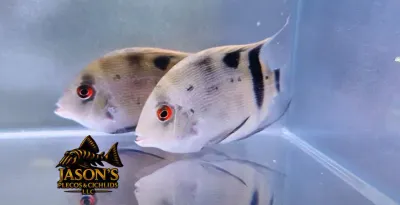
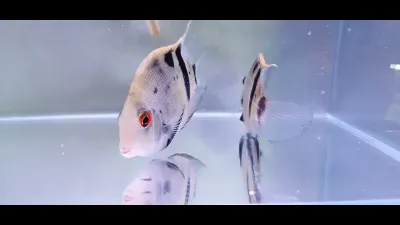
Panda Uaru - (Uaru fernandezyepezi)
Panda Uaru - (Uaru fernandezyepezi)
Price of shipping is not included.
was $95.00
Save 5%
$90.00
Out of stock
Wild Caught
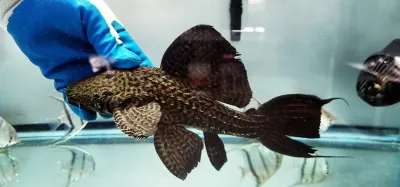
L380 Army Cactus Pleco - (Pseudacanthicus sp.)
L380 Army Cactus Pleco - (Pseudacanthicus sp.)
Price of shipping is not included.
$300.00
Out of stock
Wild Caught
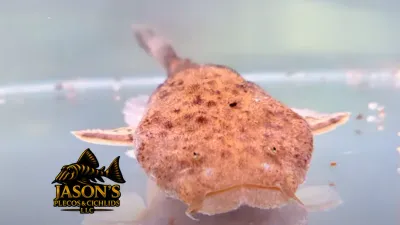
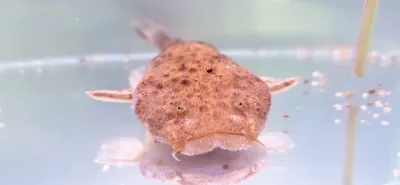
Pac-man Catfish - (Lophiosilurus alexandri)
Pac-man Catfish - (Lophiosilurus alexandri)
Price of shipping is not included.
$500.00
Out of stock
Captive Bred
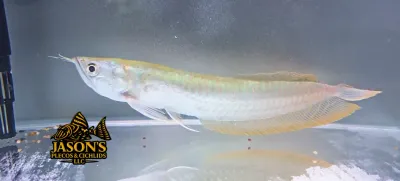
Silver Arowana - (Osteoglossum bicirrhosum)
Silver Arowana - (Osteoglossum bicirrhosum)
Price of shipping is not included.
5.0
(1)
$90.00
Out of stock
Wild Caught
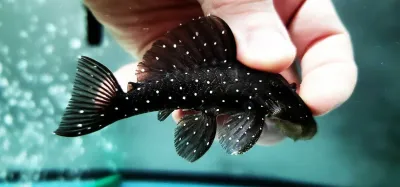
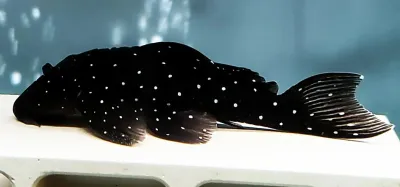
L391 Starry Sky Pleco - (Spectracanthicus sp.)
L391 Starry Sky Pleco - (Spectracanthicus sp.)
Price of shipping is not included.
$65.00
Out of stock
Wild Caught
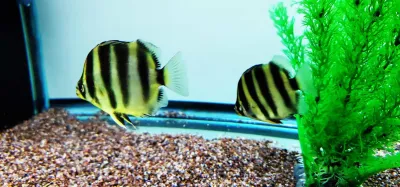
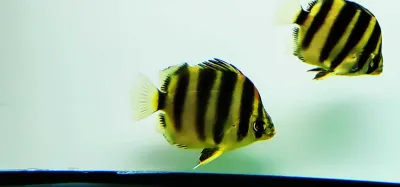
African Tiger Scat - (Scatophagus tetracanthus)
African Tiger Scat - (Scatophagus tetracanthus)
Price of shipping is not included.
$100.00
Out of stock
Wild Caught
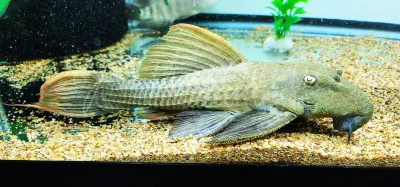
L024 Red Fin Cactus Pleco - (Pseudacanthicus pitanga)
L024 Red Fin Cactus Pleco - (Pseudacanthicus pitanga)
Price of shipping is not included.
$250.00
Out of stock
Powered by Lightspeed
Display prices in:USD