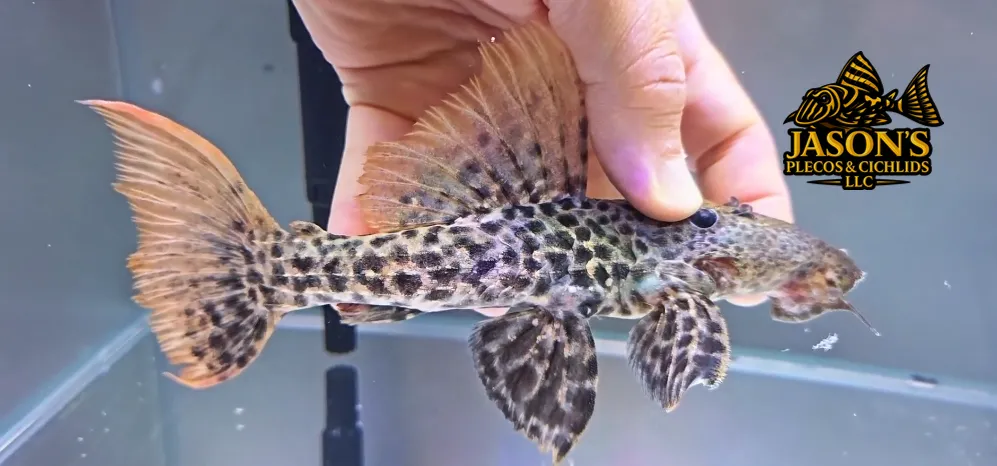
L273 Titanicus Pleco - (Pseudacanthicus sp.)
$410.00
Sold out
was $420.00 Save 2%
Size
Questions, Comments, Concerns? Let us know!
Enter your text
Required Reusable Shipping Bag
Price of shipping is not included.
Sold out
Save this fish to my favorites.
Customer reviews
Reviews only from verified customers
No reviews yet. You can buy this product and be the first to leave a review.
L273 Titanicus Pleco - (Pseudacanthicus sp.)
Fish Details, Description and Information Below:
🔥 L273 Titanicus Pleco – (Pseudacanthicus sp. L273) – Wild-Caught Rio Tapajós Cactus Pleco
The L273 Titanicus Pleco (Pseudacanthicus sp. L273), also commonly called the Titanic Pleco, Red Titanic Pleco, or Titanicus Cactus Pleco, is a spectacular large Brazilian pleco famous for its heavy armor, enormous fins, aggressive-looking odontodes, and highly variable black, olive, gold, yellow, orange, and reddish patterning.
Young and exceptionally colored specimens can show dramatic:
- Orange markings
- Golden coloration
- Yellow patches
- Red-orange fin coloration
- Black spots
- Reticulated patterns
while mature fish may develop a darker and more mottled appearance.
L273 originates from the:
RIO TAPAJÓS IN PARÁ, BRAZIL
and is a large, warm-water, highly oxygen-demanding member of the cactus pleco genus Pseudacanthicus.
Despite being known in the aquarium hobby for decades, L273 has not yet received a formally described scientific species name.
The correct identification remains:
Pseudacanthicus sp. L273
This listing is for:
WILD-CAUGHT L273 TITANICUS PLECOS
🔎 Quick Facts – L273 Titanicus Pleco
- 📛 Common Name: Titanicus Pleco
- 📛 Other Names: Titanic Pleco, Red Titanic Pleco, Titanic Cactus Pleco
- 🔢 L-Number: L273
- 🔬 Scientific Identification: Pseudacanthicus sp. L273
- 🧬 Taxonomic Status: Scientifically Undescribed
- 🐟 Family: Loricariidae
- 🧬 Subfamily: Hypostominae
- 🌵 Group: Cactus Pleco
- 🌿 Stock: Wild Caught
- 📏 Current Size: Approximately 8 inches
- 🇧🇷 Country: Brazil
- 📍 State: Pará
- 🌊 Native River: Rio Tapajós
- 🌊 River System: Amazon Basin
- 💧 Water Type: Clearwater Freshwater
- 🪨 Habitat: Deep, rocky, highly oxygenated river habitat
- 📏 Typical Large Adult: Approximately 12–14 inches
- 📏 Adult Planning Size: Approximately 14–16 inches
- 📏 Large Specimens: Can exceed 40 cm / approximately 16 inches
- 🏠 Minimum Permanent Adult Aquarium: Approximately 125 gallons
- 🏠 Preferred Adult Aquarium: 180+ gallons
- 📐 Recommended Aquarium Length: Approximately 5–6 feet or longer
- 🌡️ Temperature: Approximately 79–86°F
- 💧 pH: Approximately 5.5–7.2
- 💦 Water: Soft to moderately mineralized
- 💨 Oxygenation: Very High
- 🌊 Water Movement: Moderate to Strong
- 🍽️ Diet: Carnivorous / Protein-Leaning
- 🦐 Animal & Invertebrate Foods: Primary
- 🌿 Plant Foods: Minor / Supplemental
- 🚫 Algae Cleaner: No
- 🪵 Wood Eater: No
- 😠 Temperament: Territorial
- ⚠️ Pleco Aggression: Can become aggressive toward other large bottom dwellers
- 🌙 Activity: Primarily nocturnal
- 🥚 Breeding: Confirmed Cave Spawner
- 👨👧 Parental Care: Male guards the clutch
- ⭐ Care Level: Intermediate to Advanced
- 🌎 IUCN Status: Not Evaluated as an undescribed L-number form
- 📦 Shipping: Reusable / heavy-duty shipping bag required for current large specimen
🧬 L273 Is Still Scientifically Undescribed
The safest and most accurate identification remains:
Pseudacanthicus sp. L273
The abbreviation:
sp.
indicates that this fish clearly belongs to the genus:
Pseudacanthicus
but has not yet received a formally published species name.
Therefore:
DO NOT INVENT OR SUBSTITUTE A SPECIES NAME
For this product, use:
L273 Titanicus Pleco – (Pseudacanthicus sp. L273)
🔢 Why the L273 Number Matters
Because the fish remains scientifically undescribed, the aquarium designation:
L273
is especially important.
It preserves the identity of this particular:
RIO TAPAJÓS PSEUDACANTHICUS
within the aquarium trade.
Always preserve:
- L273 designation
- Supplier information
- Collection locality when known
- Breeding records
- Parentage of captive-bred fish
🌵 Cactus Pleco
Members of the genus:
Pseudacanthicus
are commonly called:
CACTUS PLECOS
because their bodies and fins develop extensive:
- Odontodes
- Spines
- Sharp bony projections
that give them an almost cactus-like armored appearance.
L273 is an especially impressive member of this group.
⚠️ Heavily Armored Fish
A mature L273 has:
- Thick bony plates
- Strong pectoral spines
- Large dorsal spine
- Extensive odontodes
- Powerful body
- Large fins
Handling requires care.
The fish's odontodes and spines can:
PUNCTURE SKIN AND SNAG NETS
🔥 Why Is It Called the Titanicus Pleco?
The aquarium name:
TITANICUS
reflects the fish's:
- Large adult size
- Heavy armor
- Powerful body
- Oversized fins
- Impressive coloration
It is also commonly called the:
TITANIC PLECO
in the international aquarium trade.
🎨 Highly Variable Coloration
L273 is famous for being:
EXTREMELY VARIABLE
Different specimens can look dramatically different.
Base coloration may include:
- Olive
- Brown
- Gray
- Charcoal
- Nearly black
- Golden brown
with markings ranging through:
- Black
- Yellow
- Orange
- Gold
- Salmon
- Red-orange
🔥 Exceptional Juveniles
Some juveniles are extraordinarily colorful.
High-quality specimens may display:
- Bright orange fins
- Golden body coloration
- Orange-red seams
- Strong black patterning
- Leopard-like spots
- Reticulated markings
These especially colorful fish are sometimes marketed as:
RED TITANIC L273
⚠️ Color Changes With Age
One of the most important things customers should understand is:
L273 COLORATION CAN CHANGE DRAMATICALLY AS THE FISH GROWS
Young fish may have extremely distinct:
- Spots
- Lines
- Orange areas
- Yellow areas
that become:
- More mottled
- More irregular
- Darker
- Less sharply defined
with maturity.
⚠️ Do Not Guarantee Adult Color
A beautifully colored juvenile does not guarantee that the fish will retain exactly the same:
- Orange intensity
- Spot pattern
- Yellow coloration
- Red coloration
- Contrast
through adulthood.
Pattern and coloration can change substantially with growth.
✨ Metallic Sheen
Many L273 develop an unusual:
METALLIC OR IRIDESCENT SHEEN
particularly toward the rear of the body.
Depending on lighting, this can create:
- Bronze
- Gold
- Copper
- Greenish
- Metallic-gray
reflections.
🐟 Large Fins
L273 develops extremely impressive:
- Dorsal fins
- Pectoral fins
- Caudal fins
Mature specimens may also develop elongated:
CAUDAL-FIN FILAMENTS
at the upper and lower tips of the tail.
⚠️ Fin Filaments Can Be Damaged
Large fin extensions can be damaged by:
- Fighting
- Rough décor
- Poor handling
- Shipping
- Inadequate aquarium space
Provide:
- Smooth décor
- Large caves
- Sufficient bottom area
🌎 Native Distribution
L273 originates from:
BRAZIL
in the state of:
PARÁ
within the:
RIO TAPAJÓS
🌊 Rio Tapajós
The Tapajós is one of the major tributaries of the:
AMAZON RIVER
and is generally classified as a:
CLEARWATER RIVER
The system is known for:
- Clear water
- Rocky formations
- Rapids
- Large channels
- Strong current
- High dissolved oxygen
📍 Aquarium Locality
Aquarium L-number records particularly associate L273 with portions of the Rio Tapajós around:
PIMENTAL – ITAITUBA
in Pará.
Collection locality should be preserved whenever available.
🌊 Deep-Water Habitat
Specialist field information reports L273 being collected from water approaching approximately:
20 METERS / 65 FEET DEEP
in some areas.
This does not mean every L273 permanently lives at exactly that depth.
It demonstrates that this is a:
LARGE RIVER PLECO
adapted to substantial river habitat rather than shallow stagnant ponds.
🪨 Natural Habitat
Natural L273 habitat includes:
- Large rocks
- Rocky crevices
- Deep cavities
- Boulders
- Submerged structure
- Flowing clear water
The aquarium should therefore provide substantial:
ROCK + CAVE STRUCTURE
💨 Very High Oxygenation
One of the most important husbandry requirements is:
VERY HIGH DISSOLVED OXYGEN
The Rio Tapajós habitats associated with L273 contain:
- Clean water
- Moving water
- High oxygen levels
🌡️ Warm Water Makes Oxygen More Important
L273 prefers warm water.
However:
WARMER WATER HOLDS LESS DISSOLVED OXYGEN
Therefore, high temperature must be accompanied by:
- Strong surface agitation
- High filtration turnover
- Air stones
- Powerheads
- Circulation pumps
- Sump returns
🌡️ Temperature
Specialist L273 references generally use approximately:
79–86°F / 26–30°C
This is a better target than maintaining the species continuously at cooler tropical temperatures.
A good general maintenance range is:
80–84°F
🌊 Water Movement
Provide:
MODERATE TO STRONG WATER MOVEMENT
L273 appreciates substantial circulation, but the aquarium should also contain:
- Caves
- Rock overhangs
- Driftwood
- Current breaks
where the fish can rest.
The goal is:
HIGH OXYGEN + HIGH WATER TURNOVER
rather than blasting the fish continuously.
💧 Water Parameters
A practical long-term range is:
- 🌡️ Temperature: Approximately 79–86°F
- 💧 pH: Approximately 5.5–7.2
- 💦 Hardness: Soft to moderately mineralized
- 💨 Oxygenation: Very High
- 🌊 Water Movement: Moderate to Strong
- ☠️ Ammonia: 0 ppm
- ☠️ Nitrite: 0 ppm
- 🔄 Nitrate: Keep low
⚠️ Water Quality Matters
Large wild L273 should not be maintained in:
- Dirty water
- Low oxygen
- Excessive nitrate
- Heavy organic waste
- Stagnant conditions
Regular water changes are essential.
🔄 Water Changes
A strong maintenance program may include:
REGULAR LARGE PARTIAL WATER CHANGES
The exact frequency depends on:
- Aquarium size
- Fish size
- Feeding
- Stocking
- Filtration
- Nitrate production
A large protein-fed pleco can create substantial organic waste.
💩 Strong Filtration Is Essential
Recommended filtration may include:
- Large canister filters
- Sump filtration
- Strong biological filtration
- High-capacity mechanical filtration
- Supplemental powerheads
- Prefilters
📏 Adult Size – Important Update
Many older aquarium references list L273 around:
30 CM / APPROXIMATELY 12 INCHES
However, modern specialist L-number references document fish reaching:
35–40 CM
with some records exceeding:
40 CM TOTAL LENGTH
Therefore:
12 INCHES SHOULD NOT BE USED AS A HARD MAXIMUM
📏 Responsible Adult Planning Size
For customer planning:
EXPECT APPROXIMATELY 14–16 INCHES
with some individuals potentially exceeding:
16 INCHES
under long-term conditions.
⚠️ This Is a Large Pleco
L273 should be treated as:
A LARGE PERMANENT AQUARIUM FISH
not a medium-sized pleco.
It also has:
- Heavy armor
- Large fins
- Territorial behavior
which make floor space especially important.
🏠 Aquarium Size
For one mature L273:
125 GALLONS SHOULD BE CONSIDERED THE PRACTICAL MINIMUM
I strongly prefer:
180+ GALLONS
for a large adult, especially when keeping:
- Other plecos
- Large catfish
- Large cichlids
- Multiple bottom-dwelling fish
📐 Aquarium Length
Specialist references recommend aquariums at least approximately:
150 CM / 5 FEET LONG
For a fish that may reach 14–16+ inches:
6 FEET OR LONGER IS BETTER
whenever possible.
📐 Width Is Extremely Important
Large plecos need room to:
- Turn
- Rest
- Extend their fins
- Defend territory
- Move around décor
Therefore:
FRONT-TO-BACK WIDTH MATTERS
A long, wide aquarium is much more useful than a narrow, tall aquarium with the same gallon volume.
🪨 Aquarium Setup
A suitable L273 aquarium should contain:
- Large caves
- Smooth boulders
- Slate
- Large rock formations
- Heavy driftwood
- Sand or smooth gravel
- Open bottom areas
- Strong filtration
- Strong circulation
- Very high oxygenation
🏠 Large Caves Are Essential
L273 requires shelters large enough to accommodate its:
- Heavy body
- Oversized fins
- Adult length
Suitable caves may be constructed from:
- Large ceramic pleco caves
- Slate
- Rock formations
- Heavy-duty tubes
- Large driftwood cavities
⚠️ Secure the Décor
A mature L273 is extremely powerful.
Loose rocks and decorations can be:
- Shifted
- Pushed
- Knocked over
All heavy décor should be positioned so it cannot:
COLLAPSE ON THE FISH
🪵 Driftwood
Driftwood is useful for:
- Shelter
- Shade
- Territory boundaries
- Natural structure
However:
L273 IS NOT A WOOD-EATING PLECO
It is not comparable to:
- Panaque
- Panaqolus
in feeding ecology.
🚫 Do Not Claim L273 Needs Wood for Digestion
Wood may be included in the aquarium, but:
IT IS NOT A DIETARY REQUIREMENT
and should not be described as necessary for digestion.
🍽️ Diet – Primarily Carnivorous
L273 is best described as:
CARNIVOROUS / STRONGLY PROTEIN-LEANING
It is not an algae-grazing pleco.
🦐 Recommended Foods
Excellent foods include:
- Shrimp
- Prawns
- Mysis shrimp
- Krill
- Mussel
- Cockle
- Bloodworms
- Mosquito larvae
- Insect larvae
- Quality carnivore pellets
- Insect-based sinking foods
- High-quality omnivore tablets
🦪 Mollusks
Foods such as:
- Mussel
- Cockle
- Clam meat
can be particularly useful for large cactus plecos.
Cut food into appropriately sized portions.
🦐 Crustaceans
Suitable crustacean foods include:
- Shrimp
- Prawn
- Krill
- Mysis
These provide high-quality animal protein.
🚫 Carnivore Does Not Mean Fish Predator
Although L273 is strongly carnivorous:
IT IS NOT PRIMARILY AN ACTIVE FISH-HUNTING PREDATOR
Its diet is better thought of as:
BENTHIC ANIMAL / INVERTEBRATE FEEDING
⚠️ Avoid Feeder Fish
Live feeder fish are unnecessary.
They can introduce:
- Parasites
- Bacteria
- Disease
- Poor nutrition
High-quality frozen, prepared, and fresh aquatic foods are safer.
🌿 Plant Foods
Some individuals may accept small amounts of:
- Vegetable-containing pellets
- Spirulina foods
- Zucchini
- Other vegetable matter
However:
PLANT FOODS SHOULD NOT FORM THE FOUNDATION OF THE DIET
🚫 Not an Algae Cleaner
L273 is:
NOT AN ALGAE-CONTROL PLECO
Do not purchase this species to clean:
- Aquarium glass
- Rocks
- Decorations
It requires intentional protein-rich feeding.
🌙 Nocturnal Behavior
L273 is primarily:
NOCTURNAL
and can be extremely secretive during the day.
It may spend daylight hours:
- Inside caves
- Behind rocks
- Beneath driftwood
Activity increases:
- At dusk
- During nighttime
- At feeding time
☀️ Established Fish May Become More Visible
Once acclimated, some individuals learn to:
- Feed during the day
- Leave caves before lights out
- Rest openly
However, adequate shelter should always be available.
🧪 Wild-Caught Acclimation
This listing is for:
WILD-CAUGHT L273 TITANICUS PLECOS
Wild fish deserve careful acclimation.
After arrival:
- Provide immediate shelter
- Keep lighting subdued
- Maintain very high oxygen
- Avoid abrupt temperature changes
- Avoid abrupt pH changes
- Maintain pristine water
- Confirm feeding
🍽️ Confirm Feeding
A newly imported L273 may refuse food when:
- Stressed
- Exposed
- Outcompeted
Offer food:
- Near the cave
- At dusk
- After lights out
- In several locations
⚠️ Watch Body Condition
Monitor for:
- Sunken abdomen
- Loss of muscle
- Hollow body appearance
- Persistent refusal to eat
An 8-inch wild specimen requires substantial nutrition and should not be allowed to lose significant body condition.
😠 Territorial Behavior
L273 can be:
STRONGLY TERRITORIAL
especially toward:
- Other L273
- Other Pseudacanthicus
- Large plecos
- Similar nocturnal bottom dwellers
⚔️ Large Adults Can Fight
Territorial disputes may involve:
- Pushing
- Pinning
- Cave blocking
- Tail striking
- Pectoral-spine contact
- Odontode injuries
Because of their heavy armor and spines, fights can cause serious damage.
👥 Multiple L273
Keeping several L273 is possible only when the aquarium provides:
- Large bottom area
- Multiple caves
- Multiple feeding locations
- Strong visual barriers
- Excellent filtration
Do not crowd mature adults.
🐠 Midwater Tankmates
Toward appropriately sized midwater fish, L273 is usually less problematic.
Potential tankmates can include compatible:
- Large tetras
- Silver dollars
- Large South American cichlids
- Other robust tropical fish
provided they tolerate:
- Warm water
- Strong oxygenation
⚠️ Bottom-Dwelling Tankmates Require More Caution
The greatest compatibility concern is with other:
LARGE BOTTOM-DWELLING FISH
because they compete for:
- Caves
- Food
- Territory
🛡️ Handling L273
A large L273 should be handled with extreme care.
It possesses:
- Sharp odontodes
- Strong pectoral spines
- Large dorsal spine
- Heavy armor
🚫 Ordinary Nets Can Be a Problem
The fish's spines can become:
BADLY ENTANGLED IN FINE NETTING
For larger specimens, safer transfer methods may include:
- Rigid containers
- Large tubs
- Heavy-duty fish bags
- Large coarse transfer nets when appropriate
🩸 Sharp Odontodes
The odontodes covering a mature cactus pleco can:
SCRATCH OR PUNCTURE HUMAN SKIN
Avoid grabbing large adults with bare hands.
♂️ Male vs. Female
Sex differences become clearer in mature fish.
Mature Males
Often develop:
- Wider head
- Stronger head profile
- More prominent odontodes
- Stronger pectoral-fin odontodes
- Larger dorsal fin
- More intense coloration in some individuals
Mature Females
Generally:
- Have a somewhat narrower head
- Develop a fuller abdomen when carrying eggs
- May show somewhat less extensive odontode development
⚠️ Color Is Not a Guaranteed Sexing Tool
Although some males can be more colorful:
DO NOT SEX L273 BY COLOR ALONE
Juveniles and subadults are particularly difficult to sex confidently.
Unless confidently identified:
SELL AS UNSEXED
🥚 Captive Breeding – Confirmed
Older aquarium literature often stated that breeding L273 was:
UNKNOWN
That information is now outdated.
L273 has been:
SUCCESSFULLY BRED IN CAPTIVITY
🏠 Cave Spawner
L273 is a:
CAVE-SPAWNING PLECO
Mature adults require exceptionally large caves because of their:
- Adult body size
- Large fins
- Heavy armor
💕 Documented Captive Breeding
One specialist breeding report involved approximately:
- Male: 30 cm
- Female: 20 cm
The adults were initially maintained separately because of their:
TERRITORIAL BEHAVIOR
After acclimating the pair together, a large spawning cave was introduced.
🏠 Large Breeding Cave
The documented breeding cave was approximately:
10 CM WIDE × 40 CM LONG
demonstrating how much larger breeding structures need to be compared with caves used for:
- Hypancistrus
- Peckoltia
- Small Ancistrus
💕 Spawning
The breeding pair reportedly remained inside the spawning cave for approximately:
THREE DAYS
before the female exited.
The male remained to:
GUARD THE CLUTCH
👨👧 Male Parental Care
After spawning:
THE MALE GUARDS AND FANS THE EGGS
as is typical for many cave-spawning loricariids.
He protects:
- Eggs
- Developing embryos
- Newly hatched larvae
🥚 Documented Fry
In one documented breeding attempt:
20 LARVAE WERE SUCCESSFULLY RAISED
after the clutch was removed for artificial incubation.
This demonstrates conclusively that:
L273 CAN BE CAPTIVE BRED
⚠️ Breeding Is Still Difficult
Captive breeding remains:
RARE AND ADVANCED
because adult L273:
- Grow very large
- Mature slowly
- Require large breeding aquariums
- Can be aggressive toward one another
- Need huge caves
- Require excellent oxygenation
⚠️ Pair Compatibility Matters
One of the greatest challenges is finding:
A COMPATIBLE PAIR
Introducing two large territorial cactus plecos without sufficient space can result in serious injury.
🌧️ Possible Breeding Triggers
Specialist breeding observations suggest that spawning may sometimes be associated with:
- Large water changes
- Softer incoming water
- High temperatures
- Changes in atmospheric pressure
- Seasonal/weather changes
However:
NO SINGLE TRIGGER GUARANTEES SPAWNING
👶 Fry Can Be Challenging
Young L273 require:
- Very clean water
- High dissolved oxygen
- Frequent feeding
- Strong growth nutrition
- Careful stocking density
⚠️ Juvenile Aggression
Specialist breeders have reported that young L273 may:
DAMAGE ONE ANOTHER
when overcrowded.
For intensive breeding projects, separating young fish into smaller groups can reduce:
- Injuries
- Fin damage
- Abnormal growth
🍽️ Fry Diet
Growing L273 fry require:
PROTEIN-RICH FOODS
Suitable options include:
- Fine crustacean foods
- Baby brine shrimp
- Fine insect foods
- Quality protein-rich sinking foods
while maintaining extremely clean water.
🧬 Preserve L273 Lines
Because L273 remains scientifically undescribed:
ACCURATE BREEDING RECORDS ARE ESPECIALLY IMPORTANT
Preserve:
- L273 identification
- Parent information
- Collection locality when known
- Breeder information
⚠️ Do Not Mix Pseudacanthicus Lines
Avoid deliberately breeding L273 with:
- L024
- L025
- L097
- L114
- Other Pseudacanthicus
and later selling the offspring as:
PURE L273
🌎 Conservation Status
Because L273 remains:
SCIENTIFICALLY UNDESCRIBED
it does not currently have its own formal species-level IUCN Red List assessment.
Therefore:
IUCN STATUS: NOT EVALUATED
is the most accurate wording.
⚠️ Not Evaluated Does Not Mean Unlimited
The lack of a formal IUCN assessment does not mean wild populations face no potential pressures.
Possible concerns throughout Amazonian river systems can include:
- Habitat alteration
- Water-quality changes
- Mining
- Development
- Hydroelectric projects
- Ornamental collection
Responsible sourcing remains important.
🌱 Captive Breeding Is Valuable
Because L273 is now proven capable of captive reproduction, responsible breeding can:
- Reduce reliance on wild collection
- Preserve aquarium bloodlines
- Improve husbandry knowledge
- Increase captive availability
⭐ Why Keep an L273 Titanicus Pleco?
The L273 combines:
- 🔥 Spectacular orange, gold, and dark patterning
- 🌵 Massive cactus-like odontodes
- 🛡️ Heavy armored body
- 🐟 Huge fins
- 🌊 Rio Tapajós origin
- 📏 Approximately 14–16 inch adult potential
- 🦐 Specialized protein-oriented feeding
- 🌙 Nocturnal behavior
- 😠 Powerful territorial personality
- 🥚 Confirmed captive breeding
- 👨👧 Male parental care
- 🧬 Scientifically undescribed L-number identity
into one of the most impressive large plecos in the aquarium hobby.
⚠️ Important Considerations
Before purchasing an L273 Titanicus Pleco:
- Keep the scientific identification as Pseudacanthicus sp. L273.
- L273 remains scientifically undescribed.
- Do not invent a species name.
- L273 originates from the Rio Tapajós in Pará, Brazil.
- Preserve collection locality whenever possible.
- This listing is for wild-caught fish.
- The current specimen is approximately 8 inches.
- Coloration is highly variable.
- Juvenile coloration may change dramatically with age.
- Do not guarantee that bright orange or red coloration will remain unchanged.
- Adults commonly exceed 12 inches.
- Specialist records document 35–40+ cm fish.
- Plan for approximately 14–16 inches.
- Provide approximately 125 gallons minimum.
- 180+ gallons is preferred for a large adult.
- A long, wide aquarium is strongly recommended.
- Provide large caves and strong structural cover.
- Secure all heavy décor.
- Maintain approximately 79–86°F.
- Maintain very high dissolved oxygen.
- Provide moderate to strong water movement.
- Maintain ammonia and nitrite at zero.
- Keep nitrate low.
- Use powerful mechanical and biological filtration.
- Feed a strongly protein-oriented diet.
- Shrimp, prawn, mussel, krill, and insect foods are excellent choices.
- Do not purchase L273 as an algae cleaner.
- L273 is not a specialized wood eater.
- Do not claim wood is required for digestion.
- Expect territorial behavior toward large bottom dwellers.
- Mature adults can injure one another.
- Handle carefully because of powerful spines and odontodes.
- Captive breeding has been documented.
- L273 is a cave spawner.
- Males guard the eggs.
- Breeding should be considered an advanced project.
- Keep breeding lines separate from other Pseudacanthicus.
- L273 has no formal species-level IUCN assessment.
- Never release aquarium fish into natural waterways.
🧬 Taxonomy
The safest current identification is:
Pseudacanthicus sp. L273
Classification:
- Order: Siluriformes
- Family: Loricariidae
- Subfamily: Hypostominae
- Tribe: Acanthicini
- Genus: Pseudacanthicus
- Species: Undescribed
- L-Number: L273
Native aquarium locality:
RIO TAPAJÓS – PARÁ, BRAZIL
For this product, use:
L273 Titanicus Pleco – (Pseudacanthicus sp. L273)
🔢 L-Number & Lineage Disclaimer
Because L273 has not yet received a formal scientific species name:
THE L-NUMBER IS ESPECIALLY IMPORTANT
Preserve:
- L273 designation
- Rio Tapajós locality information
- Supplier records
- Breeding records
- Parentage
Do not intentionally mix L273 with other Pseudacanthicus lines and later market the offspring as pure Titanicus Plecos.
🚚 Live Fish Shipping
Live fish are professionally packed for safe transport.
Shipping availability depends on:
- Fish size
- Destination
- Weather conditions
- Carrier availability
- Applicable state and local regulations
The current large L273 requires:
A REUSABLE / HEAVY-DUTY SHIPPING BAG
Large L273 specimens require extra packing care because of their:
- Strong pectoral spines
- Large dorsal spine
- Heavy armor
- Extensive odontodes
These structures can puncture ordinary thin fish bags.
Larger specimens may require:
- Heavy-duty or reusable bags
- Multiple protective bag layers
- Larger insulated shipping containers
- Additional water
- Specialized packing
- Airline cargo shipping depending on size and destination
Please review our Shipping & Payment Information and Live Arrival Guarantee / DOA Policy before ordering.
⚠️ Buyer Responsibility
Customers are responsible for confirming that Pseudacanthicus sp. L273 may legally be purchased, possessed, transported, and received in their state or local jurisdiction before ordering.
Never release aquarium fish into natural waterways.
Below are fish you may also like.
Captive Bred

Loiselle Cichlid - (Parachromis loisellei)
Loiselle Cichlid - (Parachromis loisellei)
Price of shipping is not included.
was $50.00
Save 10%
$45.00
Out of stock
Wild Caught
Wreath Pleco - (Pseudancistrus barbatus)
Wreath Pleco - (Pseudancistrus barbatus)
Price of shipping is not included.
$250.00
Out of stock
Wild Caught
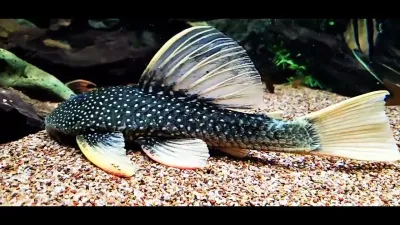
Phase II Luteus Pleco/Golden Sailfin Pleco - (Hypostomus Luteus) Argentina
Phase II Luteus Pleco/Golden Sailfin Pleco - (Hypostomus Luteus) Argentina
Price of shipping is not included.
$700.00
Out of stock
Wild Caught
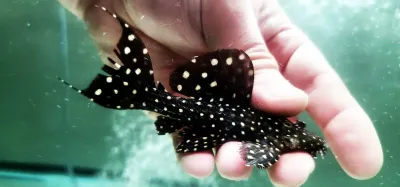
L097 Polka Dot Cactus Pleco - (Pseudacanthicus sp.)
L097 Polka Dot Cactus Pleco - (Pseudacanthicus sp.)
Price of shipping is not included.
$125.00
Out of stock
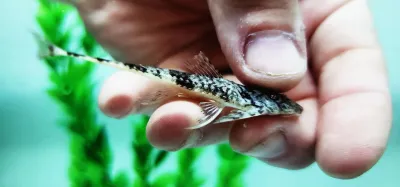
Captive Bred

Super Yellow Oscar - (Astronotus ocellatus)
Super Yellow Oscar - (Astronotus ocellatus)
Price of shipping is not included.
$65.00
Out of stock
Captive Bred
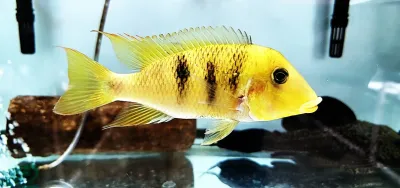
Yellowhump Eartheater Cichlid - (Geophagus pellegrini)
Yellowhump Eartheater Cichlid - (Geophagus pellegrini)
Price of shipping is not included.
$75.00
Out of stock
Captive Bred
L021 Common Pleco - (Pterygoplichthys pardalis)
L021 Common Pleco - (Pterygoplichthys pardalis)
Price of shipping is not included.
5.0
(1)
was $50.00
Save 10%
$45.00
Out of stock
Wild Caught
Caqueta Gold Eartheater - (Geophagus sp. ‘Caqueta’)
Caqueta Gold Eartheater - (Geophagus sp. ‘Caqueta’)
Price of shipping is not included.
$30.00
Out of stock
Captive Bred
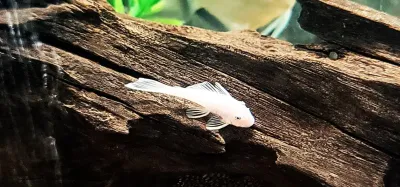
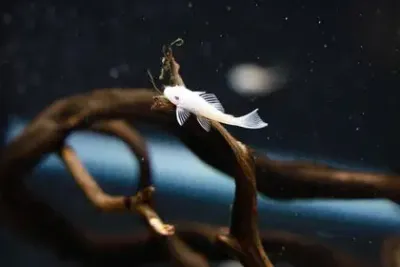
Snow White Shortfin Bristlenose- (Ancistrus cf. cirrhosus)
Snow White Shortfin Bristlenose- (Ancistrus cf. cirrhosus)
Price of shipping is not included.
$70.00
Out of stock
Sold out
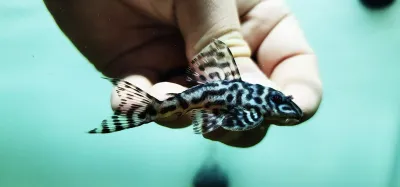
L173 Wavy Zebra Pleco - (Hypancistrus sp.)
L173 Wavy Zebra Pleco - (Hypancistrus sp.)
Price of shipping is not included.
$350.00
Out of stock
Captive Bred
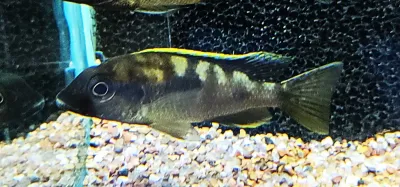
Black Orange Dorsal - (Otopharynx Lithobates)
Black Orange Dorsal - (Otopharynx Lithobates)
Price of shipping is not included.
$60.00
Out of stock
Powered by Lightspeed
Display prices in:USD