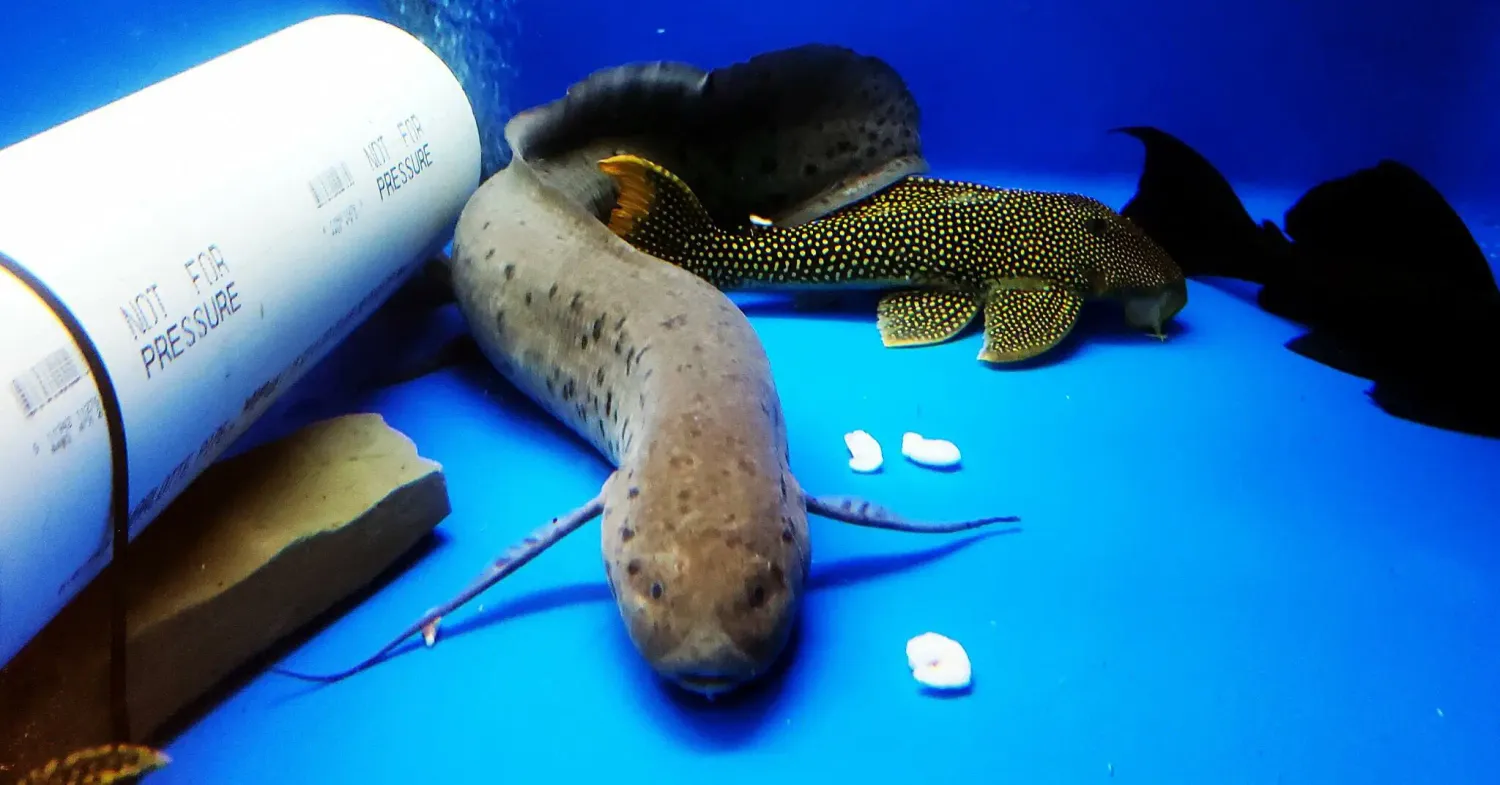
West African lungfish - (Protopterus annectens)
$120.00
Sold out
Special Shipping Bag
Price of shipping is not included.
Sold out
Save this fish to my favorites.
Customer reviews
Reviews only from verified customers
No reviews yet. You can buy this product and be the first to leave a review.
West African lungfish - (Protopterus annectens)
Fish Details, Description and Information Below:
🐟 West African Lungfish – (Protopterus annectens) – Primitive Air-Breathing African Lungfish
The West African Lungfish (Protopterus annectens) is one of the most unusual and prehistoric freshwater fish available in the aquarium hobby. Native to seasonal rivers, floodplains, swamps, and backwaters of Africa, this ancient species is famous for its ability to breathe atmospheric air and survive harsh seasonal conditions that many other fish could not tolerate.
With its long eel-like body, filament-like paired fins, mottled coloration, and unmistakably primitive appearance, the West African Lungfish is an impressive centerpiece species for experienced aquarists who have the space and equipment to properly house a very large fish.
One of its most remarkable natural adaptations is aestivation. When seasonal waters dry, lungfish can burrow into the substrate, surround themselves with a protective mucus cocoon, dramatically reduce their activity, and survive until wet conditions return.
This listing is for:
WEST AFRICAN LUNGFISH – Protopterus annectens
🔎 Quick Facts – West African Lungfish
- 📛 Common Name: West African Lungfish
- 🔬 Scientific Name: Protopterus annectens
- 🐟 Family: Protopteridae
- 🌍 Origin: Africa
- 🌊 Natural Habitat: Seasonal floodplains, swamps, backwaters, rivers, and wetlands
- 💧 Water Type: Freshwater
- 📏 Maximum Documented Size: Approximately 39 inches / 100 cm total length
- 🏠 Recommended Aquarium: 200+ gallons for a mature specimen, with larger accommodations preferred
- 🌡️ Temperature: Approximately 77–86°F
- 💧 pH: Approximately 6.0–8.0
- 💨 Air Breathing: Obligatory – must always have access to the water surface
- 🍽️ Diet: Omnivorous with a strong preference for meaty foods
- 😈 Temperament: Predatory and potentially aggressive
- 👤 Social Behavior: Best maintained individually
- ⭐ Care Level: Intermediate to Advanced
- 🦖 Special Feature: Primitive lungfish capable of breathing atmospheric air
🦖 A Living Fossil
Lungfish represent one of the most ancient surviving groups of freshwater fishes.
Unlike most aquarium fish, the West African Lungfish possesses functional lungs and regularly travels to the surface to breathe atmospheric air.
This adaptation allows it to survive environments where dissolved oxygen may become extremely low.
Because it must breathe air, the aquarium should always provide completely unobstructed access to the surface.
💨 An Air-Breathing Fish
The West African Lungfish should never be maintained in an aquarium where it cannot easily reach the surface.
It regularly rises to take a breath and then returns to the bottom.
Provide:
- Open access to the surface
- Adequate space above decorations
- Good water quality
- A secure aquarium cover
- No barriers that could trap the fish below the surface
Even though this species breathes atmospheric air, good aquarium maintenance and filtration are still extremely important.
💤 Aestivation – Surviving the Dry Season
One of the most fascinating adaptations of African lungfish is their ability to survive seasonal drought.
In nature, when floodplains and wetlands begin drying, the lungfish can:
- Burrow into soft substrate
- Create a chamber
- Produce a protective mucus cocoon
- Greatly reduce its metabolism
- Remain inactive until favorable conditions return
This process is known as:
AESTIVATION
This extraordinary adaptation is one reason lungfish are often described as some of the most resilient freshwater fishes on Earth.
Aquarium owners should not intentionally attempt to induce aestivation. Maintain the fish under stable aquatic conditions.
🎨 Appearance
The West African Lungfish has a very distinctive primitive appearance.
Typical characteristics include:
- Long, cylindrical or eel-like body
- Mottled brown, gray, olive, or tan coloration
- Irregular darker markings
- Small eyes
- Long filament-like paired fins
- Powerful mouth and jaws
- Continuous-looking rear fin structure
The mottled coloration provides excellent camouflage in muddy, vegetated, and seasonally flooded habitats.
📏 Adult Size
West African Lungfish are very large aquarium fish.
A maximum length of approximately:
39 INCHES / 100 CM
has been scientifically documented.
Because of their potential adult size, they should only be purchased by aquarists prepared to provide a very large aquarium for the life of the fish.
Do not purchase a juvenile assuming that it will remain small.
🏠 Aquarium Size
For a mature West African Lungfish, we recommend planning for:
200+ GALLONS
with larger accommodations preferred whenever possible.
Floor space is particularly important because adults become long, thick-bodied fish.
The aquarium should provide enough room for the lungfish to:
- Turn comfortably
- Rest along the bottom
- Reach the surface easily
- Move without constantly contacting decorations
- Grow to its adult size
A custom large aquarium may eventually be appropriate for exceptionally large individuals.
🔒 A Secure Lid Is Extremely Important
African Lungfish are powerful fish and should be kept in a securely covered aquarium.
Use:
A STRONG, SECURE LID
Make sure openings around:
- Filters
- Plumbing
- Heaters
- Airline tubing
- Electrical cords
are properly secured.
At the same time, the fish must still have access to atmospheric air at the water surface.
🪵 Aquarium Setup
A West African Lungfish aquarium can be relatively simple.
Suitable furnishings include:
- Sand or another smooth substrate
- Large smooth pieces of driftwood
- Large secure shelters
- Rounded rocks
- Open bottom space
- Dim to moderate lighting
Avoid sharp decorations that could injure the fish.
All large decorations should be very stable because a powerful adult lungfish can move lightweight objects.
💧 Water Parameters
A practical aquarium range is:
- 🌡️ Temperature: Approximately 77–86°F
- 💧 pH: Approximately 6.0–8.0
- ☠️ Ammonia: 0 ppm
- ☠️ Nitrite: 0 ppm
- 🔄 Nitrate: Keep controlled through routine maintenance
Stable water conditions are more important than constantly trying to achieve one exact pH value.
💩 Filtration & Water Quality
Large lungfish can produce substantial waste.
Use strong biological and mechanical filtration appropriate for a very large predatory fish.
Regular:
- Water changes
- Substrate cleaning
- Filter maintenance
- Waste removal
are important for maintaining good long-term water quality.
Do not assume that the lungfish's ability to breathe air means that poor water quality is acceptable.
🍽️ Diet
West African Lungfish are opportunistic feeders and consume a variety of foods in nature.
In captivity, offer a varied diet appropriate for a large fish, such as:
- Quality sinking carnivore pellets
- Fish fillets
- Mollusks
- Worms
- Crustaceans from safe sources
- Other appropriate meaty foods
A varied diet is preferable to relying on a single food item.
Avoid feeder fish as a routine food source because they can introduce parasites, disease, and nutritional problems.
😈 Behavior & Temperament
The West African Lungfish is best considered a:
LARGE PREDATORY SPECIES
It may eat fish small enough to fit into its mouth and can injure larger tankmates.
Individuals can also become territorial or unpredictable.
Because of this, the safest recommendation is:
KEEP INDIVIDUALLY
Even tankmates that appear compatible initially may not remain safe as the lungfish grows.
⚠️ Powerful Bite
West African Lungfish possess powerful jaws.
Do not:
- Hand-feed the fish
- Place fingers near the mouth
- Attempt unnecessary handling
- Assume a calm fish cannot bite
Use appropriate aquarium tools when performing maintenance around a large specimen.
🐟 Tankmates
This species is best kept alone.
Keeping one with other large fish always involves risk because the lungfish may:
- Bite tankmates
- Consume smaller fish
- Damage fins
- Become territorial
- Be injured by aggressive tankmates
A dedicated species aquarium is generally the safest long-term setup.
🥚 Breeding
Breeding West African Lungfish in home aquariums is extremely uncommon.
In nature, breeding is associated with seasonal wetlands and nesting behavior.
Males guard the nesting area and provide parental protection to developing young.
Because of their adult size, specialized reproductive behavior, and environmental requirements, breeding should be considered an advanced undertaking.
⭐ Who Should Keep a West African Lungfish?
This species is best suited for experienced aquarists who:
- Enjoy primitive and unusual freshwater fish
- Have experience with large predatory species
- Can provide a 200+ gallon aquarium
- Understand long-term aquarium commitments
- Can provide secure housing
- Are comfortable maintaining strong filtration
- Want a true centerpiece oddball species
This is not an appropriate fish for a typical community aquarium.
📦 Live Fish Shipping
West African Lungfish may be shipped via UPS Next Day Air or approved airline cargo, depending on the size of the fish, destination, weather conditions, and current shipping eligibility.
Shipping is not included in the listed fish price unless specifically stated otherwise.
Please review our current:
- Shipping & Payment Information
- Live Arrival Guarantee
- DOA Policy
- Terms & Conditions
before placing an order.
🛡️ Important Buyer Information
Please research this species thoroughly before purchasing.
West African Lungfish can become very large, possess powerful jaws, require permanent access to atmospheric air, and are generally best housed alone.
Buyers are responsible for providing:
- Proper aquarium size
- Secure aquarium covering
- Appropriate filtration
- Safe water conditions
- Suitable diet
- Long-term housing
- Any permits or legal requirements applicable to their location
Individual fish may vary naturally in coloration, pattern, body shape, behavior, and appearance.
✨ Why Keep a West African Lungfish?
Few freshwater aquarium fish combine:
- Prehistoric appearance
- Atmospheric air breathing
- Aestivation ability
- Large adult size
- Remarkable resilience
- Unusual behavior
quite like the West African Lungfish.
For the properly prepared aquarist, Protopterus annectens is one of the most fascinating primitive freshwater fish available in the aquarium hobby.
Below are fish you may also like.
Wild Caught
Black Arowana/Blue Arowana - (Osteoglossum ferreirai)
Black Arowana/Blue Arowana - (Osteoglossum ferreirai)
Price of shipping is not included.
$150.00
Out of stock
Wild Caught
Giant Upside Down Catfish - (Synodontis batensoda)
Giant Upside Down Catfish - (Synodontis batensoda)
Price of shipping is not included.
$25.00
Out of stock
Wild Caught
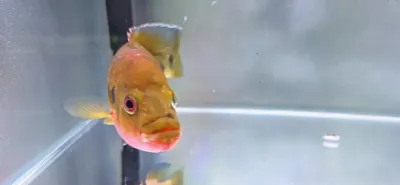
Banded Jewelfish - (Hemichromis Fasciatus)
Banded Jewelfish - (Hemichromis Fasciatus)
Price of shipping is not included.
was $90.00
Save 11%
$80.00
Out of stock
Wild Caught
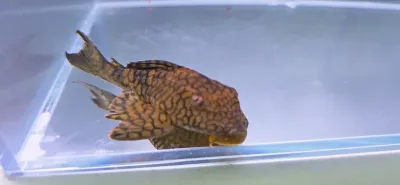
L037 Honeycomb Pleco - (Hypostomus faveolus)
L037 Honeycomb Pleco - (Hypostomus faveolus)
Price of shipping is not included.
was $50.00
Save 10%
$45.00
Out of stock
Captive Bred
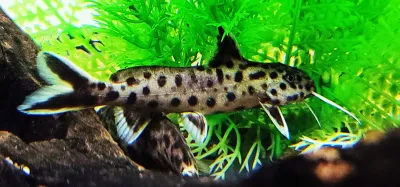
Synodontis Petricola - (Pygmy Leopard Catfish) Breeding Group 8 Qty.
Synodontis Petricola - (Pygmy Leopard Catfish) Breeding Group 8 Qty.
Price of shipping is not included.
$250.00
Out of stock
Captive Bred
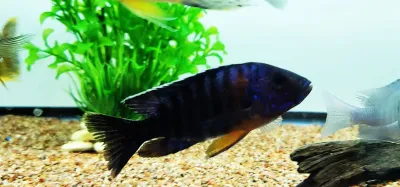
Blue Regal Peacock Cichlid - (Aulonocara sp.)
Blue Regal Peacock Cichlid - (Aulonocara sp.)
Price of shipping is not included.
$40.00
Out of stock
Wild Caught
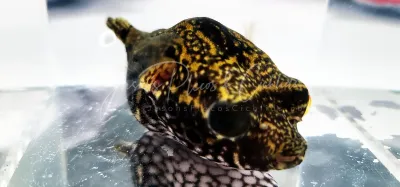
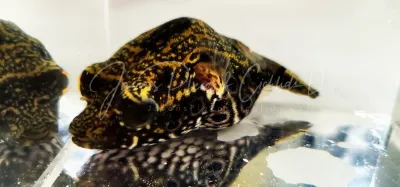
Humpback Puffer/King Kong Puffer - (Tetraodon palembangensis)
Humpback Puffer/King Kong Puffer - (Tetraodon palembangensis)
Price of shipping is not included.
5.0
(1)
was $110.00
Save 9%
$100.00
Out of stock
Wild Caught
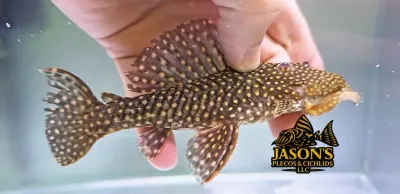
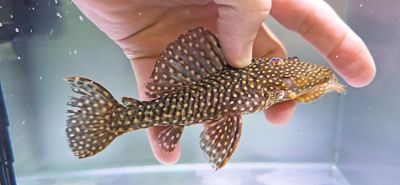
L029 Galaxy Pleco - (Leporacanthicus galaxias)
L029 Galaxy Pleco - (Leporacanthicus galaxias)
Price of shipping is not included.
5.0
(1)
was $65.00
Save 8%
$60.00
Out of stock
Captive Bred
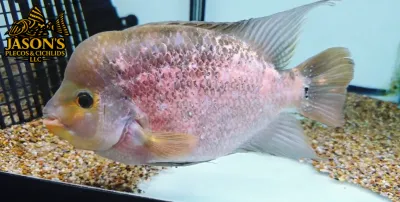
Flowerhorn x Midas Hybrid
Flowerhorn x Midas Hybrid
Price of shipping is not included.
5.0
(1)
was $160.00
Save 6%
$150.00
Out of stock
Captive Bred
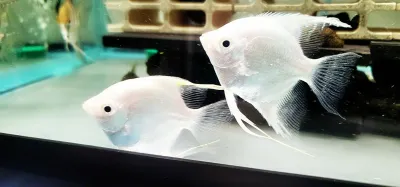
Platinum Angelfish - (Pterophyllum scalare)
Platinum Angelfish - (Pterophyllum scalare)
Price of shipping is not included.
$15.00
Out of stock
Wild Caught
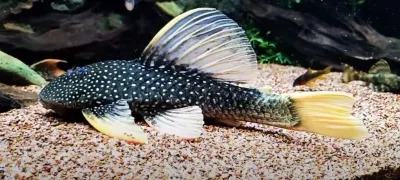
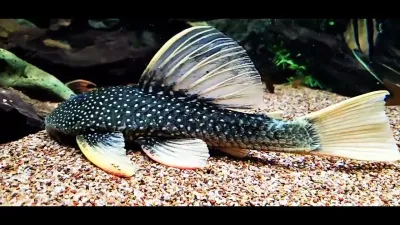
Phase II Luteus Pleco/Golden Sailfin Pleco - (Hypostomus Luteus) Argentina
Phase II Luteus Pleco/Golden Sailfin Pleco - (Hypostomus Luteus) Argentina
Price of shipping is not included.
$700.00
Out of stock
Captive Bred
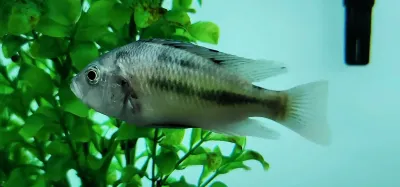
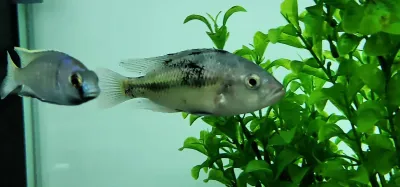
Kyoga flameback - (Haplochromis sp. Flameback)
Kyoga flameback - (Haplochromis sp. Flameback)
Price of shipping is not included.
$40.00
Out of stock
Powered by Lightspeed
Display prices in:USD