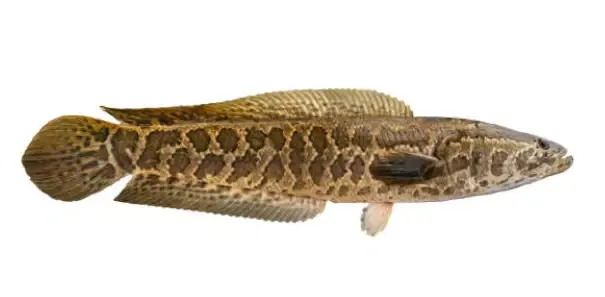
Snakehead - (Channa argus) ILLEGAL IN USA!
$10 000.00
Sold out
Snakeheads are ILLEGAL IN USA! This is for informational purposes ONLY!
Sold out
Save this fish to my favorites.
Customer reviews
Reviews only from verified customers
No reviews yet. You can buy this product and be the first to leave a review.
Snakehead - (Channa argus) ILLEGAL IN USA!
Fish Details, Description and Information Below:
🐍 Northern Snakehead – (Channa argus) – Federally Listed Injurious & Invasive Freshwater Predator
The Northern Snakehead (Channa argus) is a large, predatory, air-breathing freshwater fish native to temperate regions of East Asia.
It is well known for its:
- Long snake-like body
- Large predatory mouth
- Sharp teeth
- Python-like brown and black pattern
- Long dorsal and anal fins
- Ability to breathe atmospheric air
- Extreme cold tolerance
- Strong parental care
- Ability to establish invasive populations outside its native range
Northern Snakeheads have established invasive populations within portions of the United States and are considered a serious aquatic invasive species.
🚨 INFORMATION ONLY — NOT FOR SALE
Jason’s Plecos & Cichlids does not offer live Northern Snakeheads (Channa argus) for sale.
Kentucky law prohibits live members of the genus Channa from being:
- Imported
- Bought
- Sold
- Possessed in aquaria
except for limited authorized scientific or educational purposes.
🔎 Quick Facts – Northern Snakehead
- 📛 Common Name: Northern Snakehead
- 📛 Other Name: Snakehead
- 🔬 Scientific Name: Channa argus
- 🐟 Family: Channidae
- 🌎 Native Region: East Asia
- 🇨🇳 Native: China
- 🇷🇺 Native: Russia
- 🇰🇵 Native: North Korea
- 🇰🇷 Native: South Korea
- 🌎 Introduced: Several regions outside its native range, including the United States
- 💧 Water Type: Freshwater
- 🌡️ Climate: Temperate / Subtropical
- 🌡️ Natural Temperature Range: Approximately 39–72°F / 4–22°C
- 📏 Maximum Documented Length: Approximately 100 cm / 39 inches total length
- ⚖️ Maximum Published Weight: Approximately 8 kg / 17.6 pounds
- 🍽️ Diet: Carnivore / Predominantly Piscivorous Adult
- 🐟 Adult Diet: Primarily fish
- 🦐 Other Foods: Crustaceans, aquatic insects, frogs and other suitable animal prey
- 💨 Air Breathing: Yes — Obligate Air Breather
- 🌬️ Surface Access: Essential
- 🚪 Escape Risk: Very High
- 🥚 Reproduction: Floating eggs associated with vegetation nests
- 👨👩👧 Parental Care: Both parents guard eggs and young
- 🥚 Female Fecundity: Can reach tens of thousands of eggs
- 🐣 Egg Development: Can hatch rapidly under suitable warm conditions
- 🌎 Global Conservation Status: Least Concern
- 🚨 U.S. Status: Federally Listed Injurious Wildlife
- 🚫 Kentucky Aquarium Status: Prohibited
- ⚠️ Invasive Potential: Extremely High
- 🚫 Release: Never
🚨 Kentucky Law – Live Snakeheads Are Prohibited
For a Kentucky-based aquarium business, this is the most important part of the page.
Kentucky regulation:
301 KAR 1:122
specifically includes:
GENUS CHANNA – SNAKEHEADS
among aquatic organisms that shall not be:
- Imported
- Bought
- Sold
- Possessed in aquaria
Therefore:
LIVE CHANNA ARGUS CANNOT BE SOLD AS AN AQUARIUM FISH IN KENTUCKY.
🔬 Limited Scientific / Educational Exception
Kentucky regulations provide a limited mechanism under which the commissioner may approve importation of a prohibited aquatic species when it is demonstrated that the animal will be used for legitimate:
- Scientific purposes
- Educational purposes
This is not a normal pet or aquarium-sale exemption.
🇺🇸 Federal Injurious Wildlife Status
All snakeheads in the family:
CHANNIDAE
were federally listed as:
INJURIOUS WILDLIFE
under the Lacey Act beginning in 2002.
This classification was created because of the risk that snakeheads could establish invasive populations and affect native aquatic ecosystems.
🚫 Importation Into the United States
Importation of federally listed injurious wildlife into the United States remains:
PROHIBITED WITHOUT APPROPRIATE U.S. FISH & WILDLIFE SERVICE AUTHORIZATION
Permits for injurious wildlife are generally limited to qualifying:
- Zoological
- Educational
- Medical
- Scientific
purposes.
They are not ordinary aquarium-pet import permits.
⚠️ Important Federal Interstate-Transport Clarification
You may still find older information stating:
“Federal law makes it illegal to transport any snakehead across any state line.”
That is no longer a complete description of current federal law.
Following the 2017 federal court decision in:
United States Association of Reptile Keepers v. Zinke
the injurious-wildlife portion of the Lacey Act generally does not itself prohibit transportation between the:
49 CONTINENTAL STATES
including the contiguous 48 states and Alaska.
However:
STATE LAW STILL MATTERS.
A state may independently prohibit:
- Possession
- Sale
- Purchase
- Transportation
- Importation
of snakeheads.
Transport or commerce involving wildlife possessed or sold contrary to state law can also create federal Lacey Act problems.
⚠️ Do Not Interpret This as “Snakeheads Are Legal Interstate”
Whether a particular movement is lawful depends on:
- Origin state
- Destination state
- Possession laws
- Sale laws
- Transportation laws
- Permit conditions
- Federal import history
- Other applicable regulations
For a Kentucky aquarium business, the issue is simpler:
KENTUCKY PROHIBITS LIVE CHANNA IN AQUARIA.
🌎 Native Distribution
The Northern Snakehead is native to temperate East Asia.
Its natural range includes portions of:
- China
- Russia
- North Korea
- South Korea
The native range extends from the:
AMUR RIVER SYSTEM
southward through large portions of China.
🌊 Native Waters
Natural populations occur in habitats including:
- Rivers
- Floodplains
- Lakes
- Ponds
- Marshes
- Backwaters
- Vegetated freshwater areas
Northern Snakeheads tolerate conditions much cooler than tropical snakehead species.
🌡️ Not a Tropical Snakehead
One especially important biological point is that:
CHANNA ARGUS IS A TEMPERATE / SUBTROPICAL SPECIES
FishBase gives a natural temperature range of approximately:
4–22°C / 39–72°F
This species should not be described as requiring permanently hot tropical water.
❄️ Exceptional Cold Tolerance
Northern Snakeheads can survive winters in climates that would kill many tropical aquarium fish.
This cold tolerance is one reason the species has been able to establish invasive populations well beyond warm subtropical areas.
📏 Adult Size
The Northern Snakehead is a:
VERY LARGE PREDATORY FISH
FishBase documents a maximum length of:
100 CM / APPROXIMATELY 39 INCHES TOTAL LENGTH
with a published maximum weight of approximately:
8 KG / 17.6 POUNDS
📏 Common Large Adults
U.S. Geological Survey information describes Northern Snakeheads exceeding:
33 INCHES
in length.
For realistic adult planning:
THINK 30–40 INCHES
rather than treating this as a normal home-aquarium fish.
🐍 Snake-Like Appearance
The fish has an elongated cylindrical body with:
- Long dorsal fin
- Long anal fin
- Large head
- Large mouth
- Strong jaws
- Sharp teeth
The head shape and elongated body give snakeheads their familiar common name.
🎨 Coloration
Typical Northern Snakehead coloration includes:
- Olive brown
- Dark brown
- Tan
- Gray-brown
with irregular:
- Dark blotches
- Saddle markings
- Python-like patterns
along the sides.
The belly is generally lighter.
🆚 Northern Snakehead vs. Bowfin
Northern Snakeheads can be confused with the native North American:
BOWFIN – AMIA CALVA
They are not the same fish.
Northern Snakehead
Typically has:
- Scales on top of the head
- Very long anal fin
- Long dorsal fin
- Pelvic fins located relatively far forward
- Python-like body pattern
Bowfin
Typically has:
- No scales on top of the head
- Much shorter anal fin
- Pelvic fins positioned farther back
- Different body pattern
- A distinctive bony gular plate beneath the lower jaw
⚠️ Do Not Kill Native Bowfin Because of Misidentification
Anyone encountering a suspected snakehead in the wild should learn the differences between:
NORTHERN SNAKEHEAD
and:
NATIVE BOWFIN
and follow the fish-and-wildlife regulations of the state where the fish was captured.
💨 Obligate Air Breather
The Northern Snakehead is an:
OBLIGATE AIR-BREATHING FISH
It possesses specialized structures that allow it to breathe atmospheric oxygen.
This means it requires:
ACCESS TO THE WATER SURFACE
to breathe normally.
🌬️ Surviving Outside Water
Northern Snakeheads can survive outside water for surprisingly long periods when conditions remain:
- Cool
- Moist
Scientific references document survival for approximately:
3–4 DAYS
under favorable cool conditions.
⚠️ “Walking Fish” Is Often Exaggerated
Snakeheads are frequently described as fish that:
WALK ACROSS LAND
That description is overly sensational.
Northern Snakeheads can wriggle while outside water, and smaller juveniles are better capable of limited overland movement.
Large adults are not efficient land-walking animals.
The real concern is their ability to:
- Survive temporary exposure
- Escape poorly secured containers
- Remain alive during transport
- Establish new populations when released
🚪 Extreme Escape Risk
Any institution legally maintaining a snakehead should understand that:
AN OPEN OR LOOSE-FITTING LID IS UNACCEPTABLE
Snakeheads are:
- Powerful
- Flexible
- Air-breathing
- Capable jumpers
Escape prevention must be extremely secure.
🐟 Diet – Predatory Carnivore
Adult Northern Snakeheads are primarily:
PISCIVOROUS
meaning fish form the majority of their natural diet.
Research on established Potomac River populations found that:
MORE THAN 97% OF IDENTIFIED ADULT GUT CONTENTS WERE FISH
🍽️ Natural Foods
Northern Snakeheads consume:
- Fish
- Crayfish
- Other crustaceans
- Aquatic insects
- Insect larvae
- Frogs
Smaller juveniles initially consume:
- Zooplankton
- Small crustaceans
- Insect larvae
- Fish fry
⚠️ Powerful Ambush Predator
Northern Snakeheads commonly hunt as:
AMBUSH PREDATORS
They wait for suitable prey and strike rapidly.
Adults are capable of consuming surprisingly large fish.
🚫 Not a Community Aquarium Fish
Because of its:
- Large adult size
- Predatory diet
- Territorial behavior
- Powerful jaws
the Northern Snakehead should never be described as a normal community aquarium species.
Smaller tankmates can become:
FOOD
🦷 Teeth & Handling
Snakeheads possess:
SHARP TEETH
A large fish should never be handled carelessly.
Potential risks include:
- Bites
- Lacerations
- Thrashing injuries
Wild or institutional specimens should be handled using appropriate professional fish-handling procedures.
🥚 Reproduction
Northern Snakeheads are highly successful reproductive fish.
Sexual maturity can occur around:
30 CM / APPROXIMATELY 12 INCHES
and roughly:
2 YEARS OF AGE
under suitable conditions.
🌿 Nest Building
Adults reproduce in shallow vegetated areas.
The pair can create a nest within:
- Aquatic vegetation
- Surface plant material
- Cleared vegetation areas
The eggs:
FLOAT
and become associated with the vegetation near the surface.
👨👩👧 Both Parents Guard the Young
Northern Snakeheads display:
STRONG BIPARENTAL CARE
Both adults may protect:
- Eggs
- Newly hatched larvae
- Schools of young fry
🥚 Extremely High Reproductive Potential
Large females can carry:
TENS OF THOUSANDS OF EGGS
with estimates reaching approximately:
50,000
in mature females.
Not every egg survives, but the reproductive potential is substantial.
🐣 Rapid Hatching
Under warm spawning conditions:
EGGS MAY HATCH WITHIN APPROXIMATELY 24–48 HOURS
The adults continue protecting the young after hatching.
🟠 Fry Schools
Young Northern Snakeheads can form conspicuous schools near the surface.
Parents remain close and may aggressively defend the brood.
This strong parental care contributes to successful recruitment.
🇺🇸 Invasive Populations in the United States
Northern Snakeheads have established populations in portions of the United States.
They became particularly well known following discoveries in:
- Maryland
- Virginia
- Potomac River watershed
and have subsequently been reported from additional states and watersheds.
🚨 Why Northern Snakeheads Are an Invasive Concern
The species combines several traits that make establishment possible:
- Large adult size
- Predatory diet
- Broad temperature tolerance
- Cold tolerance
- Atmospheric air breathing
- High reproductive output
- Parental protection
- Ability to use varied freshwater habitats
🐟 Ecological Effects
Northern Snakeheads can:
- Prey on native fish
- Compete with native predators
- Consume recreationally important species
- Affect food-web relationships
Their ability to establish reproducing populations is the primary reason agencies work to prevent new introductions.
⚠️ Invasive Does Not Mean Every Myth Is True
Northern Snakeheads are serious invasive fish, but accurate information is better than sensational claims.
They do not:
- Routinely chase people on land
- Walk long distances like terrestrial animals
- Instantly destroy every ecosystem they enter
The genuine concerns are already substantial without exaggeration:
- Predation
- Competition
- Reproduction
- Dispersal
- Ecological establishment
🌎 Conservation Status
Within its native range, Channa argus is currently classified globally as:
LEAST CONCERN
This conservation status is completely separate from its:
INVASIVE / INJURIOUS STATUS IN THE UNITED STATES
A species can simultaneously be:
- Common or secure in its native range
and:
- Highly invasive somewhere else.
🚫 Never Release a Snakehead
No aquarium fish should ever be released into natural waterways.
With Northern Snakeheads, this warning is especially important.
NEVER RELEASE A SNAKEHEAD INTO:
- Rivers
- Creeks
- Streams
- Lakes
- Reservoirs
- Ponds
- Canals
- Wetlands
- Storm drains
🚨 If a Snakehead Is Found
People who encounter a suspected Northern Snakehead should follow the instructions of their:
- State fish and wildlife agency
- State natural-resource department
- Local invasive-species program
Requirements differ depending on jurisdiction.
⭐ Why This Species Is Important
Although the Northern Snakehead is not an aquarium fish that we can legally offer in Kentucky, it is worth understanding because it represents an important example of how aquarium and live-food species can affect ecosystems when introduced outside their native range.
The Northern Snakehead combines:
- 🐍 Unique snake-like appearance
- 🦷 Specialized predatory anatomy
- 💨 Atmospheric air breathing
- ❄️ Exceptional cold tolerance
- 📏 Nearly 40-inch maximum size
- 🐟 Highly piscivorous adult diet
- 🥚 High reproductive potential
- 👨👩👧 Strong parental care
- 🌎 Major invasive-species importance
- ⚖️ Extensive legal regulation
into one of the most recognizable invasive freshwater fishes in North America.
⚠️ Important Facts
- The correct scientific name is Channa argus.
- Northern Snakehead is native to East Asia.
- Native countries include China, Russia, North Korea, and South Korea.
- It is a temperate/subtropical fish rather than a tropical snakehead.
- Natural temperature records extend approximately from 39–72°F.
- Maximum documented length is approximately 100 cm / 39 inches.
- Maximum published weight is approximately 8 kg / 17.6 pounds.
- It is an obligate air breather.
- Surface access is essential.
- It can survive outside water for extended periods under cool, moist conditions.
- The idea that large adults routinely “walk across land” is exaggerated.
- Adults are primarily fish predators.
- U.S. diet research found more than 97% fish in adult gut contents.
- Adults may consume additional crustaceans and amphibians.
- Females can produce tens of thousands of eggs.
- Both parents guard eggs and fry.
- The species is globally Least Concern in its native range.
- It is federally listed as injurious wildlife in the United States.
- Federal importation is prohibited without qualifying authorization.
- Federal interstate-transport rules changed following the 2017 USARK v. Zinke decision.
- State laws remain extremely important.
- Kentucky specifically prohibits live members of the genus Channa from being imported, bought, sold, or possessed in aquaria.
- This species should not be offered as a live aquarium fish by a Kentucky aquarium business.
- Never release snakeheads or any aquarium fish into natural waterways.
🧬 Taxonomy
The currently accepted scientific name is:
Channa argus (Cantor, 1842)
Classification:
- Order: Anabantiformes
- Family: Channidae
- Genus: Channa
- Species: argus
Older scientific names include:
- Ophicephalus argus
- Ophiocephalus argus
For an informational page, use:
Northern Snakehead – (Channa argus)
🚨 Kentucky Legal Disclaimer
Live members of the genus Channa are prohibited aquarium species under Kentucky law.
They may not ordinarily be:
- Imported
- Bought
- Sold
- Possessed in aquaria
within Kentucky.
Limited governmental approval may exist for legitimate scientific or educational purposes.
THIS PAGE IS FOR INFORMATIONAL PURPOSES ONLY.
THIS SPECIES IS NOT OFFERED FOR SALE.
⚖️ Federal Legal Disclaimer
Snakeheads are federally listed as injurious wildlife under the Lacey Act.
Importation into the United States remains prohibited without appropriate federal authorization.
Federal rules concerning movement among continental states have changed through court decisions, while state and local laws may independently prohibit possession, sale, purchase, or transportation.
Anyone dealing with snakeheads for an authorized scientific, educational, zoological, or governmental purpose should verify all applicable federal, state, and local requirements before any possession or movement occurs.
🌎 Never Release
NEVER RELEASE A NORTHERN SNAKEHEAD OR ANY AQUARIUM FISH INTO THE WILD.
Introduced fish can permanently affect native ecosystems.
Powered by Lightspeed
Display prices in:USD