Watch Out for Sodium Tripolyphosphate (STPP) in Frozen Shrimp
🦐 Watch Out for Sodium Tripolyphosphate (STPP) in Frozen Shrimp
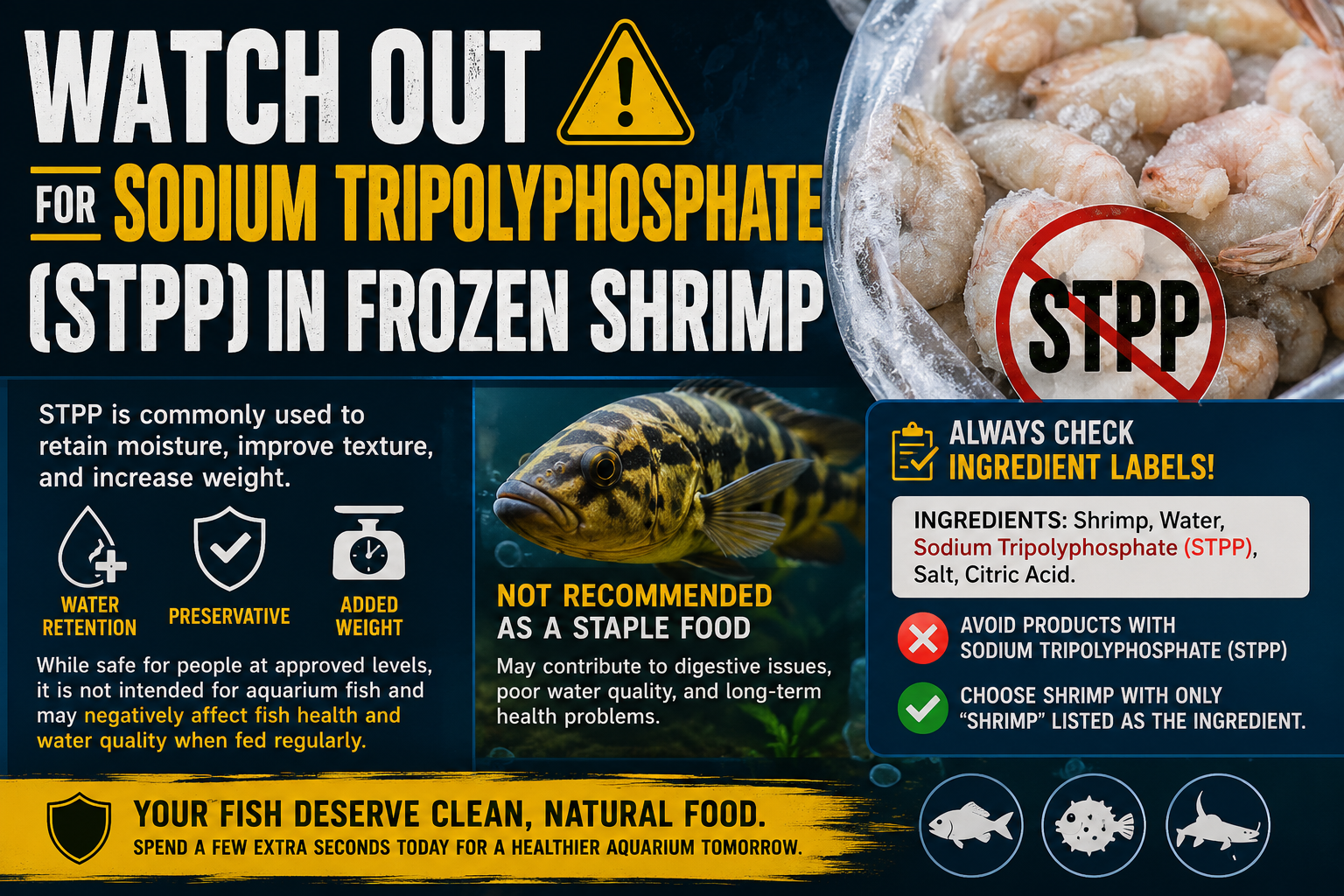
Sodium tripolyphosphate (STPP), also known as sodium triphosphate (Na₅P₃O₁₀), is a common additive used in many frozen shrimp products. It helps retain moisture, improves texture, and increases the product's weight by allowing the shrimp to hold more water. It is commonly found in seafood processed for human consumption.
While STPP is considered safe for people at approved levels, it is not an ideal ingredient for aquarium fish food. Some hobbyists and breeders prefer to avoid shrimp treated with STPP because it is an added chemical that isn't intended for aquarium feeds and may contribute to poor water quality due to excess phosphates.
My Personal Experience
I want to be clear that I am not aware of any specific freshwater or saltwater species that has been scientifically proven to be affected by STPP. What I am sharing is based solely on my own experience.
Beginning in early 2023, I experienced unexplained fish losses in both my home aquariums and at my fish store. After eliminating other possible causes, I narrowed the issue down to the frozen shrimp I was feeding, which contained Sodium Tripolyphosphate (STPP). Once I switched to untreated shrimp without STPP, the problem stopped, and I have not experienced those unexplained losses again.
I also spoke with several well-known and respected individuals in the aquarium hobby who shared similar experiences. Their advice was simple: if frozen shrimp contains STPP, don't use it as fish food.
While this is anecdotal evidence rather than scientific proof, it has been convincing enough for me to avoid STPP-treated shrimp altogether.
Today, I feed tilapia as my primary food source for most of my fish. When I keep puffer fish, I feed them untreated, STPP-free shrimp so they can still benefit from shrimp without the added chemicals. Since making this change, I have not experienced the unexplained losses that I saw previously.
✅ Tips When Buying Frozen Shrimp for Fish
- Read the ingredient list carefully.
- Choose shrimp with only "Shrimp" listed as the ingredient whenever possible.
- Avoid products containing Sodium Tripolyphosphate (STPP) or other added preservatives and water-retaining chemicals.
- Wild-caught, untreated shrimp are generally the best option for aquarium fish.
Every aquarist has their own experiences, but after seeing the difference firsthand, I personally recommend spending a few extra moments checking the ingredient label before feeding frozen shrimp to your fish.
Impulsada por Lightspeed
Mostrar precios en:USD