Acanthicus adonis vs. Acanthicus hystrix — what’s the difference?
🐟 Acanthicus adonis vs. Acanthicus hystrix — what’s the difference?
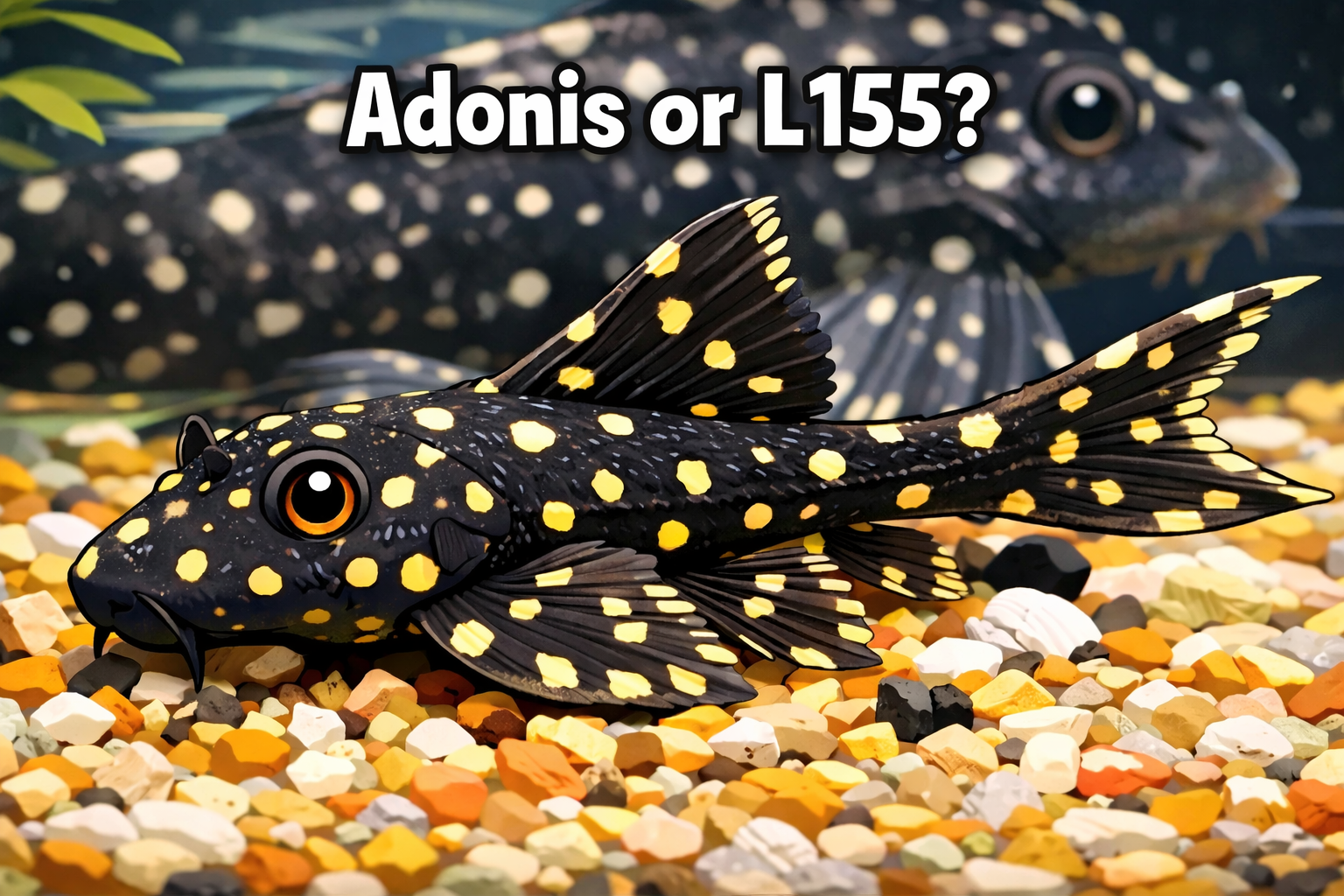
Acanthicus adonis and Acanthicus hystrix are two closely related giant South American plecos that are frequently confused in the aquarium trade. Adding to the confusion, many exporters and fish people alike still incorrectly label both species as “Adonis Pleco” or L155, despite them being distinct species.
⚠️ Similar but rarely exported: Acanthicus sp. L193 and L407 look similar to these species, but they are rarely available in the trade and remain largely unknown to most hobbyists.
🧬🔍 Genus: Acanthicus — how to recognize it
The genus Acanthicus can be distinguished from other similar loricariid genera by a unique combination of traits:
- 🚫🪽 No adipose fin
- 🪨⚔️ Well-developed, rough lateral keels along the body
These features immediately separate Acanthicus from other large armored plecos.
🐟⚫ Acanthicus adonis
- ✨⚪ Juveniles and sub-adults display white spots on the body and fins
- 📏🕒 Spots are present until roughly 12–18 inches (30–45 cm)
- ⚫➡️ As adults, the spots fade completely, leaving a solid black fish, but on some individuals, you can see some faint spotting on the edges of their fins.
- 🧱 Smoother body armor with less extreme odontode development
- 🐘 Develops a broad, heavy body and massive head with age
🐟🪓 Acanthicus hystrix
- ❌⚪ Never displays white spots at any life stage
- 🎨 Maintains uniform coloration from juvenile to adult
- 🗡️🛡️ Displays heavy odontode growth, giving a spiky, armored appearance
- 🪨 Overall texture is rougher and more aggressive-looking
📛⚠️ The L155 / “Adonis Pleco” problem
- 🏷️❌ L155 is widely misused for both species
- 👶⚪ Spotted juvenile A. adonis are frequently sold as L155
- 🔄 Mislabeling remains common among exporters, importers, and hobbyists
⚔️🚨 Aggression, compatibility & safety
- 🔥 Extremely aggressive and territorial, even toward their own species
- ☠️ Sub-adult to adult Acanthicus can easily kill other plecos
- 🦴 Injuries occur through chewing, body slamming, and pectoral spine jabs
- 🚫🐠 Mixing with other bottom-dwellers is high risk
🏡🪵 Tank layout: critical for success
- 📐 Use aquariums with a wide footprint, not just height
- 🌲🪵 Provide large amounts of timber, caves, and visual barriers
- 🕳️ Multiple hiding zones help fish claim territory and feel secure
- ⚠️ Crowding or insufficient cover dramatically increases aggression
🩸🔍 Warning signs of fighting
Check fish regularly for:
- 🩹 Scratches or abrasions on body or belly
- 📍 Puncture wounds
- ✂️ Ripped or torn fins
- 👁️⬇️ Sunken eyes, a sign of severe stress or injury
🚨 Immediate separation is recommended if any of these signs appear.
📏🐋 Size & care considerations
- 📐 Both species can exceed 40 inches (100+ cm)
- 💪 Require massive tanks or ponds, heavy-duty filtration, and strong water flow
- 🚫🏠 Not suitable for typical home aquariums, even as juveniles
✅ Bottom line
- ⚪➡️⚫ Spotted juveniles = Acanthicus adonis
- ❌⚪ Never spotted = Acanthicus hystrix (often mislabeled as L155)
- ⚔️🐟 Both are giant, highly territorial, and potentially lethal tankmates
- 🐾 Rare relatives: Acanthicus sp. L193 and L407 appear similar but are seldom exported
These fish demand space, structure, constant observation, and advanced experience.
Impulsada por Lightspeed
Mostrar precios en:USD